
Precision Prevention: UK Government's Role in Unlocking Biology-Based Cancer Prevention Research
Cancer Research UK report urges UK Government to fund precision prevention research, targeting biological cancer drivers to reduce burden and boost life
- Publisher
- [email protected]
- Length
- 28 pages
- File
- 0 B PDF
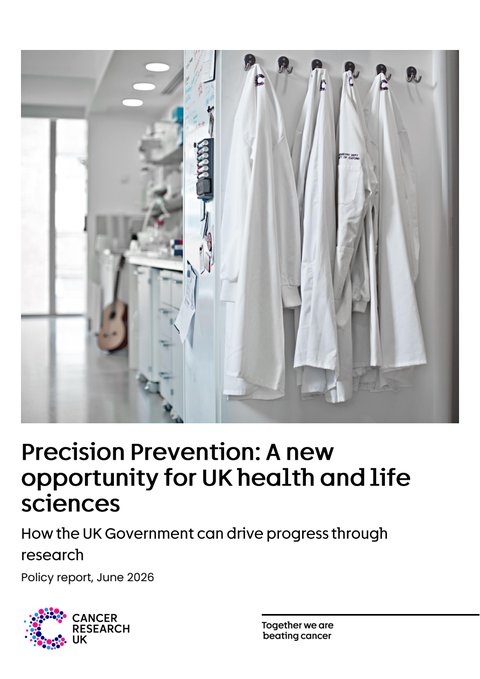
Quick answer
Precision Prevention: UK Government's Role in Unlocking Biology-Based Cancer Prevention Research is a 28-page whitepaper from [email protected] covering US pharma intelligence. Currently, 40% of cancers are preventable via known risk factors; precision prevention could increase this proportion by targeting the biological changes that drive cancer.
Why this matters
Currently, 40% of cancers are preventable via known risk factors; precision prevention could increase this proportion by targeting the biological changes that drive cancer.
Executive summary
- Currently, 40% of cancers are preventable via known risk factors; precision prevention could increase this proportion by targeting the biological changes that drive cancer.
- The UK Government must prioritise precision prevention within the Life Sciences Sector Plan delivery and secure coordinated, long-term funding through UKRI and NIHR.
- Critical barriers include insufficient researcher capacity, a lack of targeted training programmes, and a regulatory environment not yet adapted for precision prevention trials.
- Strategic investment in this emerging field offers a clear economic opportunity for the UK to attract pharmaceutical investment and establish global leadership.
AI research brief
Cancer Research UK report urges UK Government to fund precision prevention research, targeting biological cancer drivers to reduce burden and boost life
Market Impact
| Regulatory | high |
|---|---|
| Commercial | high |
| Competitive | medium |
| Investment | high |
Who should read this
- Regulatory professionals
- Clinical operations
- BD & strategy teams
Ask about this report
AI-assisted answers grounded in NovaPharmaNews intelligence
Answers use retrieved site intelligence plus AI synthesis. Verify critical decisions with primary sources.
Download the full 28-page PDF
Free · 0 B · Instant access after email
Precision Prevention new opportunity for UK life-sciences strategy sits in plain sight on GOV.UK. The Life Sciences Sector Plan, Cancer Healthcare Goals, and 10 Year Health Plan all push biology-based prediction and prevention—not only classic risk-factor messaging—as industrial and NHS priorities.
Key Takeaways
- Cancer Healthcare Goals launched November 2022 to channel industry investment into early-stage and late-stage cancer diagnostics and therapeutics.
- The programme contributed £5 million to Innovate UK’s Advancing Precision Medicine round for digital and multi-modal cancer tools.
- The Life Sciences Sector Plan links a “sickness to prevention” shift to genomics and personalised medicine.
- By 2030, Genomics England-linked programmes target more than 500,000 genomes in research databases that also return results to participants.
What does “precision prevention” mean in UK policy text?
The Life Sciences Sector Plan lists a strategic shift “from sickness to prevention,” using genomics, early detection, and personalised medicine to keep people healthier for longer.
That language is the government-side framing of a Precision Prevention new opportunity for research funders and industry: intervene on biological risk pathways before late-stage cancer care dominates NHS cost.
It is not a single new statute. It is a portfolio of goals, funding competitions, and data infrastructure commitments.
How do Cancer Healthcare Goals fund the pipeline?
According to GOV.UK Cancer Healthcare Goals, the programme launched in November 2022 to maximise industrial investment in cancer diagnostic and therapeutic technologies.
Documented actions include research investments early in the development pathway and support for later-stage technologies entering the NHS. The page cites a £5 million contribution toward Innovate UK’s Advancing Precision Medicine competition for digital and data-enabled cancer diagnosis and treatment stratification tools.
It also describes a funding call with the Health Technology Assessment Programme to evaluate multi-cancer detection tests in primary care patients with non-specific abdominal symptoms.
Where does the 10 Year Health Plan reinforce the shift?
The 10 Year Health Plan for England says the NHS should predict and prevent ill health rather than only diagnose and treat, and calls out genomics and AI as core enablers.
Concrete prevention examples in the plan include higher HPV vaccine uptake toward eliminating cervical cancer by 2040 and fuller rollout of lung cancer screening for people with a smoking history.
- Policy vector: prevention and early detection as industrial strategy.
- Funding vector: Cancer Goals + Innovate UK precision medicine pots.
- Data vector: large genomic cohorts returning results by 2030.
- Care vector: screening and vaccine goals with dated public targets.
What should BD and investors watch next?
Track Innovate UK award notices tied to Advancing Precision Medicine and HTA multi-cancer detection contracts once published.
Map UK assets to Sector Plan prevention KPIs and Genomics England capacity milestones before sizing UK partnership value.
Prefer GOV.UK primary pages over charity white papers when the diligence question is “what did government commit?”
What remains unproven?
Charity claims that precision prevention will raise the share of “preventable cancers” by a stated percentage are not repeated here without a government-primary figure.
Funding competitions do not guarantee that every digital diagnostic will enter NHS pathways.
Genomic database size targets are programme goals, not completed 2030 outcomes.
How should industry partners engage the UK prevention agenda?
Companies with multi-cancer detection, genomic risk tools, or vaccine-adjacent assets should align proposals to Cancer Healthcare Goals KPIs and Sector Plan prevention milestones.
Use the published £5 million Advancing Precision Medicine contribution as a signal of co-fund appetite, then confirm current competition windows on Innovate UK notices.
For BD, UK value is not only NHS uptake. It is also the genomic data densification path to 500,000-plus genomes that can feed companion diagnostics and trial recruitment.
Related NovaPharma coverage
- Cardiff Oncology pipeline and FDA meeting catalysts
- Oncology disease hub
- May 2026 FDA oncology actions at a glance
Frequently Asked Questions
What is the UK government’s Precision Prevention new opportunity for cancer research?
UK government Life Sciences documents frame a shift from sickness to prevention using genomics, early detection, and personalised medicine. The Life Sciences Sector Plan and 10 Year Health Plan both call for prediction and prevention as core NHS and industrial strategy aims.
How does the Cancer Healthcare Goals programme fund precision approaches?
GOV.UK’s Cancer Healthcare Goals page says the programme launched in November 2022 to steer industrial investment into cancer diagnostics and therapeutics. It reports a £5 million contribution toward Innovate UK’s Advancing Precision Medicine competition for digital, data, and multi-modal cancer projects.
What capacity goals support biology-based prevention?
The Life Sciences Sector Plan states that by 2030 Genomics England programmes aim to host one of the largest genomic research databases globally, with over 500,000 genomes across sequencing services and related programmes that return results to participants.
Primary Sources
Frequently asked questions
What whitepapers does NovaPharmaNews publish?
Our research library curates FDA, EMA, and industry publisher PDFs — regulatory guidance, clinical analyses, manufacturing reports, and market intelligence. Each report includes an AI-summarized landing page with key takeaways and a gated PDF download.
How do I download a whitepaper?
Open any report page, scroll to the download form, and enter your work email. You receive instant PDF access and can opt in to weekly pharma intelligence updates. Downloads are free for healthcare professionals.
How do whitepapers connect to news and pipeline data?
Report pages link to related intelligence — company profiles, drug INN pages, clinical trials, pipeline programs, and topic hubs. Use the intelligence spokes on each page to explore the entity graph behind the research.
Ready to read the full report?
Join 12,000+ pharma leaders getting deep industry analysis delivered weekly.
Related topic hubs
Editorial coverage and intelligence directories for this report's beat.
Explore the intelligence platform
Related intelligence
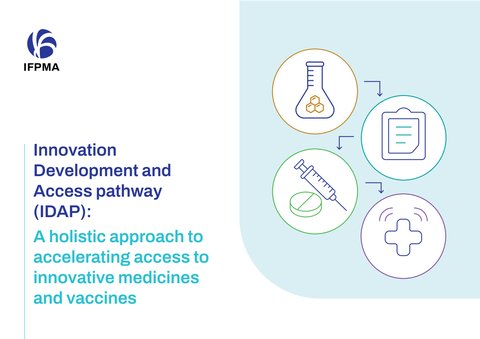 🔒
🔒 PDF Innovation Development and Access pathway
IDAP is a holistic framework spanning four linked phases: Research and Development; regulatory processes and product registration; listing, …
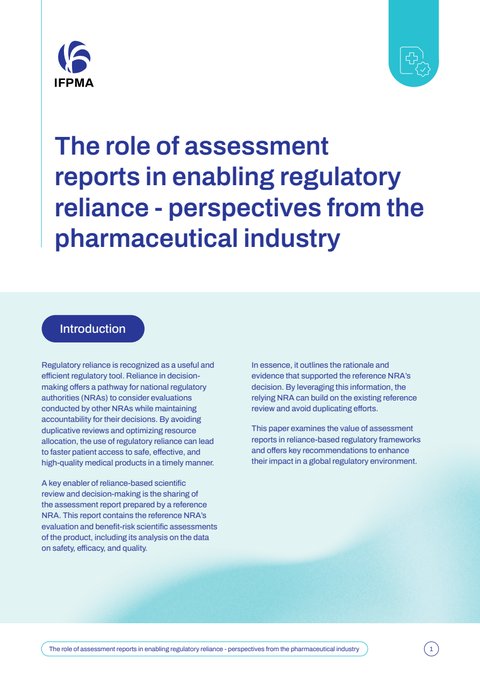 🔒
🔒 IFPMA whitepaper: How assessment reports enable regulatory reliance in pharma
Regulatory reliance helps NRAs avoid duplicative reviews and allocate resources more efficiently by leveraging prior scientific evaluations …
 🔒
🔒 Integrated delivery networks in Middle East healthcare: what PwC says about the next phase of care
Scale creates value only when healthcare assets are connected through shared systems, referral flows and coordinated management disciplines