
IFPMA whitepaper: How assessment reports enable regulatory reliance in pharma
Assessment reports can reduce duplicate review and speed reliance-based decisions when terminology, structure, and confidentiality rules are clearer.
- Publisher
- www.ifpma.org
- Length
- 6 pages
- File
- 0 B PDF
Quick answer
IFPMA whitepaper: How assessment reports enable regulatory reliance in pharma is a 6-page whitepaper from www.ifpma.org covering US pharma intelligence. Regulatory reliance helps NRAs avoid duplicative reviews and allocate resources more efficiently by leveraging prior scientific evaluations from reference authorities.
Why this matters
Regulatory reliance helps NRAs avoid duplicative reviews and allocate resources more efficiently by leveraging prior scientific evaluations from reference authorities.
Executive summary
- Regulatory reliance helps NRAs avoid duplicative reviews and allocate resources more efficiently by leveraging prior scientific evaluations from reference authorities.
- Assessment reports summarizing the reference NRA's safety, efficacy, and quality evaluations are essential to reliance-based decision-making and should be the primary source of information for relying authorities.
- Clearer terminology—using NPAR (non-public assessment report) and PAR (public assessment report)—improves accuracy and supports appropriate handling of confidential and proprietary information.
- Standardized report structure and content across jurisdictions enhance readability, enable comparative evaluation, and streamline reliance-based review processes.
- Public assessment reports should be the primary source where available; non-public reports may support decision-making under formal confidentiality agreements and secure information-sharing mechanisms.
AI research brief
Assessment reports can reduce duplicate review and speed reliance-based decisions when terminology, structure, and confidentiality rules are clearer.
Market Impact
| Regulatory | high |
|---|---|
| Commercial | high |
| Competitive | medium |
| Investment | high |
Who should read this
- Regulatory professionals
- Clinical operations
- BD & strategy teams
Ask about this report
AI-assisted answers grounded in NovaPharmaNews intelligence
Answers use retrieved site intelligence plus AI synthesis. Verify critical decisions with primary sources.
Download the full 6-page PDF
Free · 0 B · Instant access after email
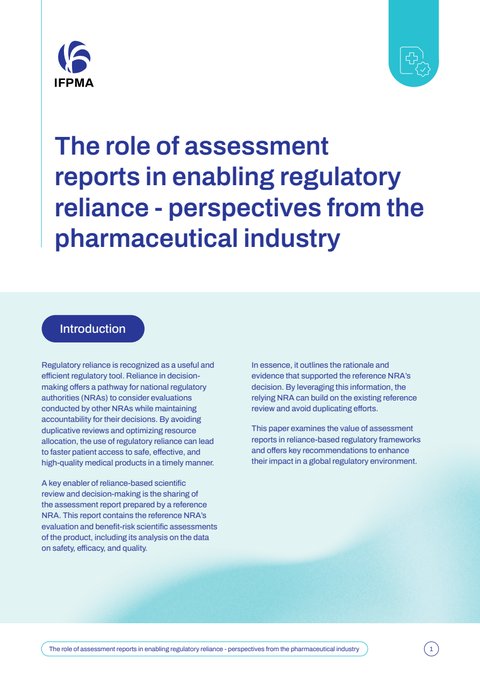
Assessment reports from reference national regulatory authorities (NRAs) are central to enabling efficient regulatory reliance, allowing NRAs to avoid duplicative reviews and optimize resource allocation. This IFPMA whitepaper outlines how standardized terminology, consistent report structure, and secure information-sharing frameworks can strengthen reliance-based pathways and accelerate patient access to safe, effective medicines globally.
Key Takeaways
- Regulatory reliance helps NRAs avoid duplicative reviews and allocate resources more efficiently by leveraging prior scientific evaluations from reference authorities.
- Assessment reports summarizing the reference NRA's safety, efficacy, and quality evaluations are essential to reliance-based decision-making and should be the primary source of information for relying authorities.
- Clearer terminology—using NPAR (non-public assessment report) and PAR (public assessment report)—improves accuracy and supports appropriate handling of confidential and proprietary information.
- Standardized report structure and content across jurisdictions enhance readability, enable comparative evaluation, and streamline reliance-based review processes.
- Public assessment reports should be the primary source where available; non-public reports may support decision-making under formal confidentiality agreements and secure information-sharing mechanisms.
Why Assessment Reports Matter for Reliance
Assessment reports contain the reference NRA's detailed evaluation and benefit-risk scientific assessments, including analysis of safety, efficacy, and quality data. By sharing these reports in a timely manner and under appropriate confidentiality safeguards, relying NRAs can build on existing evaluations without duplicating efforts. This approach reduces review timelines and supports faster patient access to medicines across multiple markets.
What Terminology Changes Does IFPMA Recommend?
The whitepaper recommends replacing the term "unredacted assessment report" with "non-public assessment report" (NPAR), as the former is misleading—these reports still contain redactions to protect personal data and confidential information. A "public assessment report" (PAR) refers to assessments intended for public release with appropriate redactions. This clearer classification supports consistent handling of privacy and intellectual property rights while fostering greater trust between NRAs and applicants.
How Can Report Standardization Improve Reliance?
Harmonizing the structure and content of assessment reports across jurisdictions improves regulatory efficiency. Standardized formats enhance readability, enable comparative evaluation of dossiers, and help streamline reliance-based review processes. Initiatives such as the International Pharmaceutical Regulators Programme's Common Quality Assessment Report template demonstrate the value of coordinated effort to align report-writing practices and improve communication of scientific information between NRAs.
What Role Do Public Assessment Reports Play?
Where available, public assessment reports should serve as the primary source for reliance-based procedures, consistent with WHO guidance on Good Reliance Practices. Transparent and timely access to PARs through NRA websites promotes global knowledge sharing, supports regulatory convergence, and streamlines decision-making across jurisdictions. While PARs are subject to varying levels of redaction to protect sensitive commercial information and personal data, this transparency strengthens stakeholder trust and advances regulatory maturity.
How Should Non-Public Reports Be Shared?
When public assessment reports are unavailable or insufficient, relying NRAs may request access to non-public assessment reports, which typically provide more detailed information with fewer redactions. Sharing of NPARs must be governed by formal confidentiality agreements that ensure secure handling of sensitive data while protecting intellectual property rights. The EMA's pre-authorization guidance permits marketing authorization holders to share final assessment reports directly with relying NRAs, subject to compliance with data protection legislation. Advances in digital infrastructure and secure cloud-based platforms present opportunities to further streamline information-sharing between NRAs and industry.
Frequently Asked Questions
Why should only one assessment report from a reference NRA be required?
Requesting multiple assessment reports from different reference NRAs adds limited additional scientific or practical value and reduces regulatory agility. A single comprehensive assessment report alongside the product dossier should serve as the main source of information for reliance-based procedures. However, industry should have flexibility in selecting the most suitable reference NRA based on prior experience, regulatory strategy, and trust relationships.
Should interim documents such as collated questions be included in reliance requirements?
No. Interim documents and exchanges between applicants and reference NRAs are not considered core documents for reliance purposes. Assessment reports reflect all results of exchanges between the applicant and NRA, making them the appropriate single source. Requesting interim documentation as mandatory material for reliance procedures is impractical, as such materials are not consistently available across most NRAs worldwide.
How does timely issuance of assessment reports support reliance procedures?
Timely and predictable release of assessment reports—as demonstrated by European public assessment reports—enables companies to plan and support their use in subsequent reliance applications. Efficient, resource-lean requirements for report provision, clearly stipulated in national regulations, maintain regulatory agility and allow applicants to integrate assessment reports into their global regulatory strategy without unnecessary delays.
What role does digital infrastructure play in improving assessment report sharing?
Emerging technologies and secure cloud-based platforms enable more dynamic, real-time data exchange between industry and NRAs, and among NRAs themselves. Enhanced digital connectivity has the potential to accelerate review timelines, deepen regulatory collaboration, and support higher levels of regulatory maturity, particularly as systems advance toward Maturity Level 3 and beyond.
Conclusion
Assessment reports are key enablers in reliance-based regulatory pathways, offering trusted scientific evaluations that support faster and more efficient decision-making. When shared in a timely manner, structured clearly, and under appropriate confidentiality frameworks, they reduce duplication of effort, strengthen NRA collaboration, and ensure patients gain access to high-quality, safe, and effective medicines without unnecessary delay. Realizing these benefits requires greater consistency and transparency in how assessment reports are developed, shared, and used across regulatory systems globally.
Frequently asked questions
What whitepapers does NovaPharmaNews publish?
Our research library curates FDA, EMA, and industry publisher PDFs — regulatory guidance, clinical analyses, manufacturing reports, and market intelligence. Each report includes an AI-summarized landing page with key takeaways and a gated PDF download.
How do I download a whitepaper?
Open any report page, scroll to the download form, and enter your work email. You receive instant PDF access and can opt in to weekly pharma intelligence updates. Downloads are free for healthcare professionals.
How do whitepapers connect to news and pipeline data?
Report pages link to related intelligence — company profiles, drug INN pages, clinical trials, pipeline programs, and topic hubs. Use the intelligence spokes on each page to explore the entity graph behind the research.
Ready to read the full report?
Join 12,000+ pharma leaders getting deep industry analysis delivered weekly.
Related topic hubs
Editorial coverage and intelligence directories for this report's beat.
Explore the intelligence platform
Related intelligence
 🔒
🔒 Integrated delivery networks in Middle East healthcare: what PwC says about the next phase of care
Scale creates value only when healthcare assets are connected through shared systems, referral flows and coordinated management disciplines
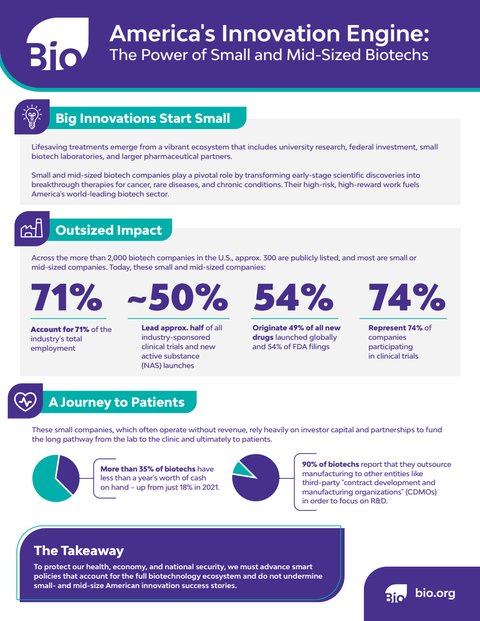 🔒
🔒 America's Innovation Engine: Small and Mid-Sized Biotechs Drive U.S. Clinical Trials, FDA Filings
Small and mid-sized biotechs represent approximately 99% of U.S. biotech business establishments and account for 71% of total industry emplo…
 🔒
🔒 FDA CBER Patient Listening Meeting on Gene Therapy Safety: Patient and Care Partner Perspectives
FDA CBER held a dedicated patient listening meeting focused on two core themes: safety considerations in gene therapy treatment decisions an…