
Integrated delivery networks in Middle East healthcare: what PwC says about the next phase of care
Integrated delivery networks are reshaping Middle East healthcare as providers link assets, improve referrals and manage care as one system.
- Publisher
- www.pwc.com
- Length
- 9 pages
- File
- 0 B PDF

Quick answer
Integrated delivery networks in Middle East healthcare: what PwC says about the next phase of care is a 9-page whitepaper from www.pwc.com covering US pharma intelligence. Scale creates value only when healthcare assets are connected through shared systems, referral flows and coordinated management disciplines
Why this matters
Scale creates value only when healthcare assets are connected through shared systems, referral flows and coordinated management disciplines
Executive summary
- Scale creates value only when healthcare assets are connected through shared systems, referral flows and coordinated management disciplines
- Patients increasingly expect seamless, end-to-end care journeys rather than navigating fragmented providers
- Healthcare reform in Saudi Arabia and the UAE is structuring delivery around accountable care organisations and coordinated referral pathways
- Operators are linking services, expanding across markets and broadening platforms, but these moves do not automatically create true integration
- Owning multiple assets is insufficient; networks require shared data systems, clear accountability structures and active operational management
AI research brief
Integrated delivery networks are reshaping Middle East healthcare as providers link assets, improve referrals and manage care as one system.
Market Impact
| Regulatory | high |
|---|---|
| Commercial | high |
| Competitive | medium |
| Investment | high |
Who should read this
- Regulatory professionals
- Clinical operations
- BD & strategy teams
Ask about this report
AI-assisted answers grounded in NovaPharmaNews intelligence
Answers use retrieved site intelligence plus AI synthesis. Verify critical decisions with primary sources.
Download the full 9-page PDF
Free · 0 B · Instant access after email
Healthcare competition in the Middle East is shifting from asset ownership to how well those assets work together. According to PwC's analysis of integrated delivery networks across the region, true competitive advantage now depends on connecting hospitals, clinics, laboratories, pharmacies, insurers and digital services into functioning networks—not simply acquiring them.
Key Takeaways
- Scale creates value only when healthcare assets are connected through shared systems, referral flows and coordinated management disciplines
- Patients increasingly expect seamless, end-to-end care journeys rather than navigating fragmented providers
- Healthcare reform in Saudi Arabia and the UAE is structuring delivery around accountable care organisations and coordinated referral pathways
- Operators are linking services, expanding across markets and broadening platforms, but these moves do not automatically create true integration
- Owning multiple assets is insufficient; networks require shared data systems, clear accountability structures and active operational management
What is driving the shift to integrated networks?
PwC identifies four market forces reshaping care delivery. First, scale matters—but only when connected. In Saudi Arabia, major operators expanding across the market are raising competitive pressure on smaller providers. Without scale, providers struggle to compete on procurement, clinician attraction, insurer negotiations and digital investment. However, scale alone does not create value; it must be paired with integration.
Second, patient expectations are changing. Patients increasingly demand seamless, end-to-end experiences rather than navigating disconnected providers. A leading Saudi Arabian retail pharmacy chain evolved into a primary care platform supported by polyclinics, increasing visits by 120% to around 1.4 million annually—reflecting this shift toward more accessible and integrated care models.
Third, healthcare reform is pushing systems to organise care more coherently. Saudi Arabia's Health Sector Transformation Program consolidates public services into 20 regional clusters structured as accountable care organisations. The UAE's Abu Dhabi Primary Healthcare Model emphasizes family doctor-led approaches with coordinated referral pathways.
Fourth, investors show stronger interest in scaled healthcare platforms with integration potential. A regional healthcare provider's US$1 billion initial public offering illustrates investor appetite for larger platforms where operators can demonstrate how assets work together to improve utilisation and support resilient performance.
How are operators responding?
Across the region, three common strategies are emerging. Operators are linking services more closely across care pathways—connecting hospitals, clinics, laboratories and pharmacies to reduce duplication and improve referral capture. They are expanding scale across markets to reduce reliance on single markets and strengthen supplier positions. Some are broadening healthcare platforms into related services to diversify earnings and strengthen strategic positioning.
PwC emphasises that geographic expansion and portfolio broadening should not be confused with true integration. A Dubai-listed investment company built a cross-GCC platform through acquisitions in Saudi Arabia and the UAE, but regional presence alone does not constitute functioning integration.
What are the practical priorities for making integration work?
PwC identifies four priorities. First, build around strong anchor assets—leading hospital groups, clinic networks or diagnostics platforms that provide patient volumes and clinical reputation. Second, use shared systems to connect the network, including interoperable records, coordinated scheduling and clearer referral pathways. A UAE-based healthcare provider's integrated digital network connecting more than 100 facilities demonstrates how shared systems improve coordination across capacity.
Third, manage the network actively through clear accountability structures and operational management. Fourth, use partnerships to extend capabilities—governments, pharmaceutical innovators and technology providers can bring specialist expertise that strengthens delivery models, provided partnerships support core care pathways.
What does this mean for pharmaceutical teams?
Provider consolidation changes account structures, stakeholder mapping and access pathways for medicines and services. Integrated networks may standardise referral flows, formulary decisions and care pathways across larger patient populations. Partnership opportunities may increasingly sit at the network level, particularly where digital tools, data-sharing or coordinated care support existing pathways. Commercial teams should avoid assuming larger provider groups are fully integrated; operating model maturity varies significantly.
Frequently Asked Questions
Does owning multiple healthcare assets automatically create an integrated delivery network?
No. According to PwC, owning more hospitals, clinics, laboratories or pharmacies is not sufficient. Those assets must be connected by shared systems, clear accountability and management disciplines that allow the network to operate as one organisation. A leading UAE healthcare provider manages more than 25 hospitals and over 100 clinics and diagnostic centres, but PwC notes that owning a broad portfolio does not automatically mean assets are fully integrated in practice.
What are the common challenges in executing integrated delivery networks?
PwC identifies several challenges: incompatible data environments, weak referral discipline, fragmented cultures following acquisitions and unclear accountability across the network. Operators often underestimate the complexity of aligning systems, incentives and ways of working across different assets.
How does geographic expansion across the GCC contribute to integration?
Geographic expansion can broaden access to demand, extend clinical capabilities and increase resilience across markets. However, PwC emphasises that expansion only creates value when the business operates as an integrated network rather than a collection of standalone assets. Regional presence alone should not be mistaken for true integration.
Why are anchor assets important for integration?
Integration works best when it starts from a strong core such as a leading hospital group, clinic network or diagnostics platform. Anchor assets provide the patient volumes, clinical reputation and operational foundation needed to connect broader services across the network. Without that centre of gravity, integration can become fragmented and difficult to manage.
How can shared systems improve network performance?
Shared systems, data and processes—including interoperable records, coordinated scheduling and clearer referral pathways—improve visibility across the patient journey and better utilisation of capacity. PwC cites a UAE-based healthcare provider whose integrated digital network connects more than 100 facilities nationwide, demonstrating how shared systems improve coordination across the healthcare system.
Frequently asked questions
What whitepapers does NovaPharmaNews publish?
Our research library curates FDA, EMA, and industry publisher PDFs — regulatory guidance, clinical analyses, manufacturing reports, and market intelligence. Each report includes an AI-summarized landing page with key takeaways and a gated PDF download.
How do I download a whitepaper?
Open any report page, scroll to the download form, and enter your work email. You receive instant PDF access and can opt in to weekly pharma intelligence updates. Downloads are free for healthcare professionals.
How do whitepapers connect to news and pipeline data?
Report pages link to related intelligence — company profiles, drug INN pages, clinical trials, pipeline programs, and topic hubs. Use the intelligence spokes on each page to explore the entity graph behind the research.
Ready to read the full report?
Join 12,000+ pharma leaders getting deep industry analysis delivered weekly.
Related topic hubs
Editorial coverage and intelligence directories for this report's beat.
Explore the intelligence platform
Related intelligence
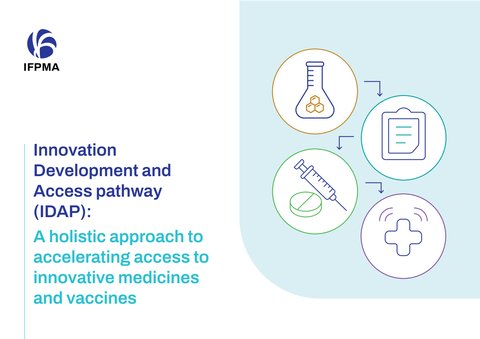 🔒
🔒 IFPMA IDAP whitepaper: end-to-end access pathway for innovative medicines and vaccines
IDAP is a holistic framework spanning four linked phases: Research and Development; regulatory processes and product registration; listing, …
 🔒
🔒 IFPMA whitepaper: How assessment reports enable regulatory reliance in pharma
Regulatory reliance helps NRAs avoid duplicative reviews and allocate resources more efficiently by leveraging prior scientific evaluations …
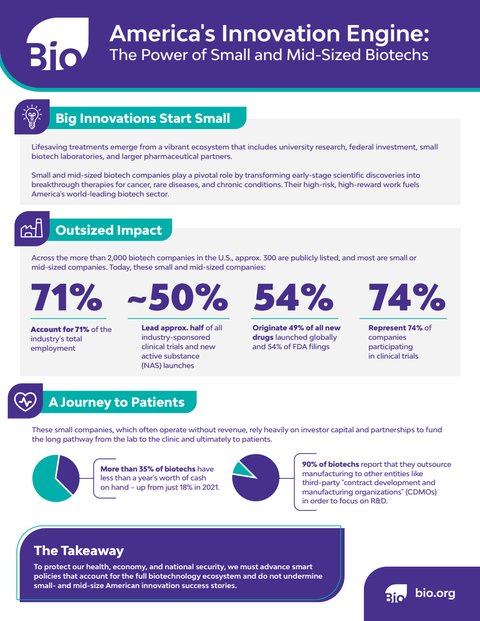 🔒
🔒 America's Innovation Engine: Small and Mid-Sized Biotechs Drive U.S. Clinical Trials, FDA Filings
Small and mid-sized biotechs represent approximately 99% of U.S. biotech business establishments and account for 71% of total industry emplo…