
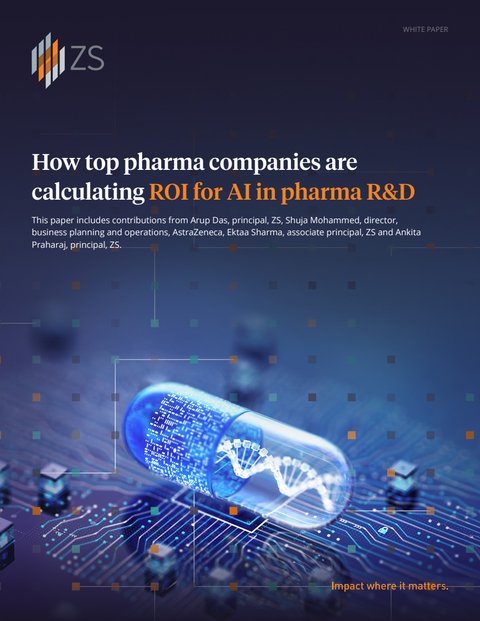
Pharma R&D ROI: A Multidimensional Framework for AI Investment Success
Discover how top pharma companies are calculating ROI for AI in R&D with a multidimensional framework combining scientific, operational, and commercial metrics.
- Publisher
- www.zs.com
- Length
- 14 pages
- File
- 0 B PDF
Quick answer
Pharma R&D ROI: A Multidimensional Framework for AI Investment Success is a 14-page whitepaper from www.zs.com covering US pharma intelligence. Top pharma companies are adopting a multidimensional ROI framework that combines scientific, operational, and commercial metrics to evaluate AI investments in R&D.
Why this matters
Top pharma companies are adopting a multidimensional ROI framework that combines scientific, operational, and commercial metrics to evaluate AI investments in R&D.
Executive summary
- Top pharma companies are adopting a multidimensional ROI framework that combines scientific, operational, and commercial metrics to evaluate AI investments in R&D.
- This approach enables a more transparent demonstration of AI's bottom-line impact, moving well beyond traditional cost and time savings.
- A predictive study indicated that heavy AI investment could drive ROI increases of more than 45% for the pharmaceutical industry.
- The framework helps pharma teams justify AI investments, demonstrate tangible value beyond initial hype, and align R&D efforts with commercial success.
- Better strategic decision-making and resource allocation for AI initiatives result from adopting this multidimensional measurement approach.
AI research brief
Discover how top pharma companies are calculating ROI for AI in R&D with a multidimensional framework combining scientific, operational, and commercial metrics.
Market Impact
| Regulatory | high |
|---|---|
| Commercial | high |
| Competitive | medium |
| Investment | high |
Who should read this
- Regulatory professionals
- Clinical operations
- BD & strategy teams
Ask about this report
AI-assisted answers grounded in NovaPharmaNews intelligence
Answers use retrieved site intelligence plus AI synthesis. Verify critical decisions with primary sources.
Download the full 14-page PDF
Free · 0 B · Instant access after email
Pharma R&D ROI for AI works only when teams score scientific quality, operational throughput, and commercial impact together. FDA's risk-based AI guidance makes credibility and context of use part of that scorecard—not optional compliance paperwork after the pilot.
Key Takeaways
- Replace cost-only AI ROI with a multidimensional Pharma R&D ROI scorecard spanning science, operations, and commercial outcomes.
- FDA draft guidance centers a risk-based credibility assessment tied to each model's context of use.
- CDER and CBER, with EMA, published 10 good AI practice principles spanning data governance through lifecycle management.
- Nature reviews note FDA CDER has received more than 800 submissions with AI components since 2016—scale that requires disciplined measurement.
What Should a Pharma R&D ROI Framework Include?
A usable framework separates three score families. Scientific metrics track assay quality, hit validity, biomarker reproducibility, and whether model outputs change go/no-go decisions. Operational metrics track cycle time, FTE hours, protocol amendments avoided, and data-query burden. Commercial metrics track probability-adjusted NPV shifts, indication prioritization, and partner diligence readiness. Single-line “hours saved” claims rarely survive portfolio review.
Each AI use case needs a written context of use: what decision the model supports, who can override it, and what happens if the model is wrong. That discipline mirrors regulatory expectations and keeps ROI claims auditable.
How Does FDA Guidance Inform AI Investment Success?
FDA's draft guidance on considerations for AI supporting regulatory decision-making describes a risk-based credibility assessment framework for models that produce information intended to support safety, effectiveness, or quality decisions. High-influence models need stronger evidence packages. Low-influence decision support still needs documentation, but the depth scales with consequence.
For finance and R&D ops leaders, that means ROI dashboards should include credibility milestones—data lineage complete, performance locked for the stated context, human review gates defined—alongside dollar and timeline metrics. An AI tool that cuts weeks from screening but cannot explain training data provenance is a false economy if it later fails diligence.
Which Good AI Practice Principles Map to ROI Gates?
CDER and CBER collaborated with EMA on 10 guiding principles of good AI practice in drug development. Several map directly to investment gates:
- Human-centric design and clear context of use
- Risk-based approach and risk-based performance assessment
- Data governance and documentation
- Model design and development practices
- Lifecycle management and clear essential information
Treat each principle as a go/no-go check before scaling spend. Pilots that skip lifecycle monitoring inflate early ROI and create rework when models drift in production.
What Does Submission Volume Imply for Measurement?
A 2026 npj Digital Medicine review on causal AI in drug development notes that FDA CDER has received more than 800 submissions with AI components since 2016. That volume shows AI is no longer experimental theater; it is entering regulated evidence packages. Sponsors that cannot state how AI changed a development decision will struggle to defend R&D capital allocation internally and externally.
Related FDA commentary on AI in clinical trial design emphasizes efficiency potential alongside a flexible, risk-based regulatory stance. Efficiency claims still need baseline and after measurements—protocol draft cycles, screen-fail rates, or query closure times—tied to named studies rather than anecdotal pilots.
How Should Teams Build the Scorecard in Practice?
Start with one indication or platform program. Baseline 90 days of pre-AI metrics. Define three leading indicators and two lagging outcomes. Require a model card: training data window, exclusion rules, performance thresholds, and owner. Review quarterly whether the model still matches its context of use. Kill or retrain tools that miss thresholds even if license fees look “cheap.”
Link commercial ROI only when scientific and operational gates pass. That sequencing prevents marketing decks from claiming launch acceleration based on unverified discovery-stage tools.
What Remains Unproven
Public FDA and journal materials do not publish a universal dollar-per-AI-model ROI formula for pharma R&D. Vendor whitepapers that claim fixed percentage savings without disclosed denominators should not be treated as primary evidence. This article does not endorse any specific commercial ROI calculator; it maps regulatory and methodological requirements that any credible framework must satisfy.
Related NovaPharma coverage
- Sepsis AI algorithms need real-time data, not hindsight
- Biotech AI, capital efficiency, and China
- AI citation gap in CDMO capacity and manufacturing
Frequently Asked Questions
What is a multidimensional Pharma R&D ROI framework for AI?
It measures AI value across scientific outputs, operational cycle-time and cost effects, and commercial or portfolio outcomes—not cost savings alone—while documenting context of use and model risk.
How does FDA guidance shape AI ROI measurement?
FDA's risk-based credibility assessment framework asks sponsors to define context of use, assess decision risk, and maintain lifecycle evidence—metrics that belong in any R&D AI ROI scorecard.
Why do single-metric AI ROI scores fail in pharma R&D?
Cost-only KPIs ignore scientific validity, regulatory credibility, and portfolio impact. FDA and EMA good AI practice principles emphasize risk, data governance, and human oversight that pure dollar ROI cannot capture.
Primary Sources
Frequently asked questions
What whitepapers does NovaPharmaNews publish?
Our research library curates FDA, EMA, and industry publisher PDFs — regulatory guidance, clinical analyses, manufacturing reports, and market intelligence. Each report includes an AI-summarized landing page with key takeaways and a gated PDF download.
How do I download a whitepaper?
Open any report page, scroll to the download form, and enter your work email. You receive instant PDF access and can opt in to weekly pharma intelligence updates. Downloads are free for healthcare professionals.
How do whitepapers connect to news and pipeline data?
Report pages link to related intelligence — company profiles, drug INN pages, clinical trials, pipeline programs, and topic hubs. Use the intelligence spokes on each page to explore the entity graph behind the research.
Ready to read the full report?
Join 12,000+ pharma leaders getting deep industry analysis delivered weekly.
Related topic hubs
Editorial coverage and intelligence directories for this report's beat.
Explore the intelligence platform
Related intelligence
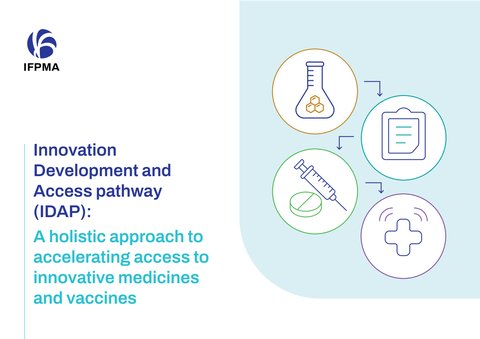 🔒
🔒 PDF Innovation Development and Access pathway
IDAP is a holistic framework spanning four linked phases: Research and Development; regulatory processes and product registration; listing, …
 🔒
🔒 IFPMA whitepaper: How assessment reports enable regulatory reliance in pharma
Regulatory reliance helps NRAs avoid duplicative reviews and allocate resources more efficiently by leveraging prior scientific evaluations …
 🔒
🔒 Integrated delivery networks in Middle East healthcare: what PwC says about the next phase of care
Scale creates value only when healthcare assets are connected through shared systems, referral flows and coordinated management disciplines