
Sepsis AI algorithms need real-time data

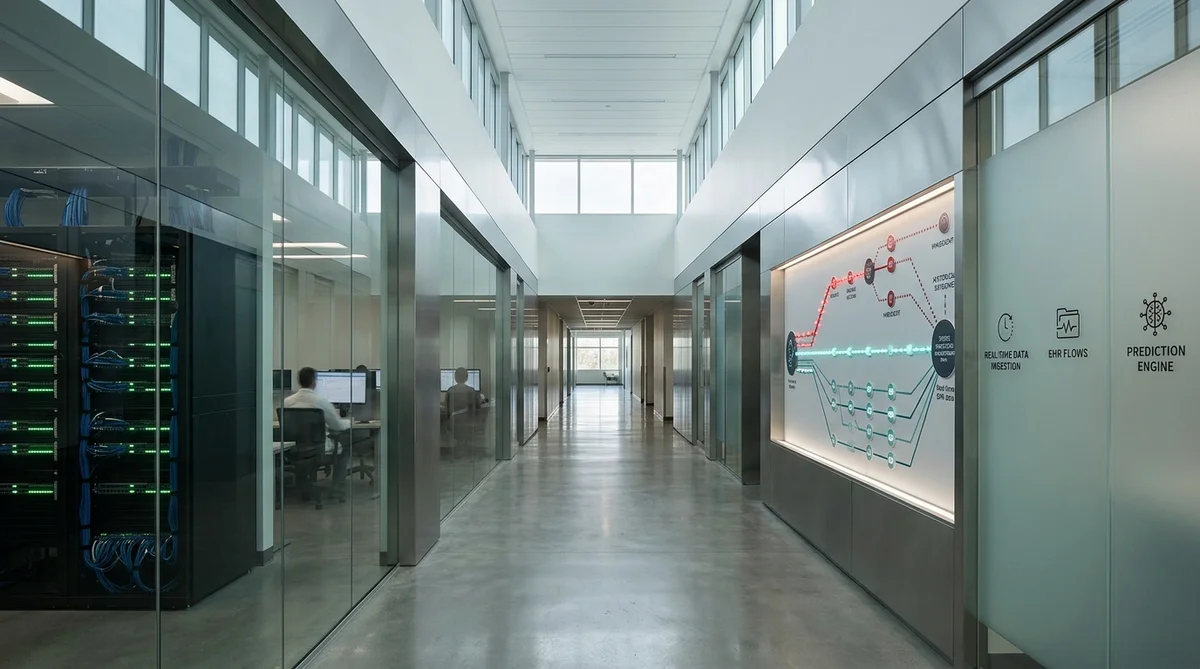
Decision brief
Answer first · skim in under a minute
STAT’s sepsis algorithm story centers on a core problem: sepsis prediction models can fail when they rely on data that already reflects the outcome. The grounded takeaway is that EHR-based, real-time models are designed to improve timing and accuracy in clinical settings.
Sepsis AI algorithms need real-time data, not retrospective hindsight. Models that read live electronic health record (EHR) streams can flag risk hours before bedside recognition, while tools locked to delayed chart extracts often rediscover what clinicians already documented. Peer-reviewed ICU work and a 2024 FDA authorization show why architecture and timing matter as much as model accuracy.
Contents10 sections
Key Takeaways
- AISE predicted ICU sepsis 4–12 hours before clinical recognition from real-time ICU data (AUROC ~0.83–0.85).
- TREWS monitored 590,736 patients across five hospitals; action within 3 hours linked to a 3.3-point absolute mortality drop.
- FDA authorized Prenosis Sepsis ImmunoScore in April 2024 for 24-hour sepsis risk assessment, not as a stand-alone diagnosis.
- CDC estimates at least 1.7 million U.S. adult sepsis cases and nearly 270,000 deaths each year—urgency for earlier detection.
Why do sepsis AI algorithms need real-time data?
Retrospective EHR training teaches patterns that already include documented labs, vitals, and notes after clinical suspicion. That creates a “time machine” problem: the label and the features can leak future information. Real-time deployment must score only data available at the prediction moment, so alerts can change care before recognition is complete.
A CADTH horizon scan on AI for adult sepsis prediction describes these tools as machine learning models built from EHR variables—vitals, labs, demographics, and therapies—meant to improve accuracy and timeliness, especially in intensive care units (ICUs).
How far ahead can ICU models warn clinicians?
The Artificial Intelligence Sepsis Expert (AISE) study tested hourly ICU features against sepsis-3 onset definitions. Using data available in the ICU in real time, AISE predicted onset 4 to 12 hours prior to clinical recognition, with area under the receiver operating characteristic (AUROC) in the 0.83–0.85 range for 4-, 6-, 8-, and 12-hour horizons.
Performance on development and validation cohorts was indistinguishable in the published Crit Care Med analysis available via PMC5851825. That lead-time window is the clinical case for streaming data over batch chart exports.
What TREWS showed in multi-hospital deployment
Nature Medicine reported patient outcomes after the Targeted Real-time Early Warning System (TREWS) for sepsis. During the study, TREWS monitored 590,736 patients across five hospitals. Analysts focused on 6,877 sepsis patients identified by the alert before antibiotic or culture milestones typical of delayed recognition.
- Provider confirmation of the alert within 3 hours: 3.3 percentage-point adjusted absolute mortality reduction (95% CI 1.7–5.1).
- Corresponding adjusted relative mortality reduction: 18.7% (95% CI 9.4–27.0).
- Larger absolute mortality gains (about 4.5 points) among patients who still needed escalation after the alert.
The TREWS Nature Medicine paper ties benefit to clinician interaction with a live alert—not to offline scoring of completed charts.
FDA authorization raises the bar for sepsis AI tools
On April 2, 2024, the U.S. Food and Drug Administration authorized Prenosis Inc.’s Sepsis ImmunoScore, AI/ML software that identifies patients at risk for having or developing sepsis. Per the FDA’s April 5, 2024 roundup, the device uses laboratory results and clinical assessments to aid risk assessment for presence of or progression to sepsis within 24 hours for qualifying emergency department or hospital patients.
The agency stressed it should not be the sole basis to determine sepsis. Authorization also sets device-type expectations for software validation and clinical performance testing. The same announcement cited CDC burden figures: at least 1.7 million U.S. adults develop sepsis yearly, and nearly 270,000 die as a result. See the FDA Roundup: April 5, 2024.
Hospital and informatics implications
Buyers evaluating sepsis AI should ask whether the product scores continuous EHR streams or delayed extracts, how features are time-stamped, and whether alerts require clinician acknowledgment within a defined window. TREWS mortality gains clustered when providers engaged within 3 hours; AISE’s value proposition is the 4–12 hour pre-recognition window.
For hospital quality and cost programs—also a theme in NovaPharma’s HFMA hospital-cost coverage—earlier antibiotics and organ-support decisions depend on that data path, not only on model AUROC slides.
What remains unproven
Published AUROC and mortality associations do not guarantee every commercial dashboard will match AISE or TREWS performance at a new site. External validation of other EHR sepsis models has been mixed in the literature, and alert fatigue can erase theoretical lead time if clinicians ignore flags. FDA authorization of ImmunoScore establishes a regulated pathway for one intended use; it does not prove superiority over every competing screening score, and ImmunoScore is intended alongside clinical suspicion rather than as unsupervised screening alone.
Related NovaPharma coverage
- Sepsis disease intelligence hub
- Biotech AI and capital-efficiency trends
- CDC public-health data reporting patterns
Frequently Asked Questions
How far ahead can real-time sepsis AI predict onset?
The Artificial Intelligence Sepsis Expert (AISE) model predicted ICU sepsis onset 4 to 12 hours before clinical recognition using data available in the ICU in real time, with AUROC about 0.83–0.85 for 4- to 12-hour horizons.
What outcomes did TREWS show when clinicians acted quickly?
In a Nature Medicine evaluation of TREWS across five hospitals monitoring 590,736 patients, sepsis patients whose alerts were confirmed by a provider within 3 hours had a 3.3 percentage-point adjusted absolute reduction in in-hospital mortality (18.7% relative).
Has the FDA authorized any AI tool for sepsis risk?
On April 2, 2024, the FDA authorized Prenosis Inc.’s Sepsis ImmunoScore, an AI/ML software that aids risk assessment for presence of or progression to sepsis within 24 hours for qualifying emergency department or hospital patients; it is not a sole diagnostic.
Primary Sources
Sources & references 1 primary sources
Sources verified at publication. See our editorial policy and data sources.
This article follows our editorial standards. Report a correction via editorial contact.


