
Navigating Human Research: Mass General Brigham's IRB Guidance for Ethical Clinical Trials
Explore Mass General Brigham's comprehensive IRB guidance for ethical human subject research, crucial for clinical trial compliance and oversight.
- Publisher
- Leary, Michael
- Length
- 288 pages
- File
- 0 B PDF
Quick answer
Navigating Human Research: Mass General Brigham's IRB Guidance for Ethical Clinical Trials is a 288-page whitepaper from Leary, Michael covering US pharma intelligence. IRBs provide an independent, ethics-focused evaluation of proposed research, including checks on clinical investigators' potential biases ( PMC ).
Why this matters
IRBs provide an independent, ethics-focused evaluation of proposed research, including checks on clinical investigators' potential biases ( PMC ).
Executive summary
- IRBs provide an independent, ethics-focused evaluation of proposed research, including checks on clinical investigators' potential biases ( PMC ).
- Guidance covers IRB review and oversight procedures aligned with federal regulations and institutional policies ( FDA Written Procedures ).
- Clear documentation is critical, including the study's IRB-assigned protocol number and assigned participant ID on all relevant files.
- An IRB is an independent group of people who review and monitor biomedical and behavioral research involving human subjects ( Advarra ).
AI research brief
Explore Mass General Brigham's comprehensive IRB guidance for ethical human subject research, crucial for clinical trial compliance and oversight.
Market Impact
| Regulatory | high |
|---|---|
| Commercial | high |
| Competitive | medium |
| Investment | high |
Who should read this
- Regulatory affairs teams
Ask about this report
AI-assisted answers grounded in NovaPharmaNews intelligence
Answers use retrieved site intelligence plus AI synthesis. Verify critical decisions with primary sources.
Download the full 288-page PDF
Free · 0 B · Instant access after email
Mass General Brigham’s Human Research Protection Program and IRB guidance translate U.S. federal human-subjects rules into operational policy for investigators and industry sponsors. Understanding how MGB maps FDA 21 CFR Parts 50 and 56 and HHS 45 CFR 46—plus OHRP engagement guidance—reduces protocol delays in multi-site and reliance arrangements.
Key Takeaways
- MGB states its IRB is registered with OHRP and FDA and reviews human research conducted by system employees or agents.
- Federal baselines include HHS 45 CFR 46 and FDA 21 CFR 50/56 for clinical investigations of drugs and devices.
- OHRP’s engagement guidance determines when an institution is engaged in human subjects research and needs IRB oversight.
- Sponsors should budget parallel ancillary reviews; MGB notes final release follows IRB determination after other approvals.
What federal rules sit under Mass General Brigham IRB review?
U.S. clinical investigations of drugs and biologics must meet FDA informed-consent and IRB regulations in 21 CFR Parts 50 and 56. Federally funded research also follows the Common Rule at 45 CFR 46. MGB’s compliance statements explicitly list these frameworks alongside institutional Federalwide Assurances.
Practical FDA IRB materials remain useful baselines for protocol writers: FDA guidance on IRB responsibilities and the broader FDA IRB human subjects protection pages.
How does OHRP engagement guidance affect multi-site trials?
OHRP’s guidance on engagement of institutions clarifies when an organization is engaged in human subjects research and therefore needs IRB review or a reliance agreement. MGB policy documents cite that OHRP framework when deciding whether employees, agents or external vendors trigger institutional oversight.
Sponsors opening Boston-area sites should map which activities (recruitment, consent, investigational product administration, identifiable data analysis) engage MGB versus commercial service vendors. See OHRP engagement guidance.
What operational lessons do IRBs teach about investigator bias and oversight?
Classic IRB scholarship emphasizes independent ethics review as a counterweight to investigator conflicts. A widely cited overview of IRB purpose and structure is available on PubMed Central: PMC2827840.
For industry, the takeaway is procedural: incomplete investigator brochures, missing DSMB charters or vague data-retention plans trigger stipulations. MGB’s HRPP materials also stress that institutional officials cannot approve research the IRB has not approved—sponsors should not treat department chair sign-off as a substitute.
How should sponsors prepare submissions for MGB review?
Budget time for cancer-center scientific review when oncology protocols use Dana-Farber/Harvard Cancer Center pathways, and for parallel ancillary committees (radiation safety, biosafety, pharmacy). MGB describes coordinated review in Insight with IRB final release after ancillary clearances.
Reliance (cede) agreements matter when MGB is not the reviewing IRB. Confirm single-IRB plans under NIH policy early. Unproven assumptions—such as treating PDF “guidance” excerpts as negotiated contract language—create audit risk.
What remains outside this explainer?
This article summarizes federal anchors and publicly described MGB HRPP structure. It is not legal advice and does not reproduce copyrighted IRB manuals in full. Always verify the current PDF version date on MGB’s research site before filing.
What training gaps slow industry studies at academic IRBs?
Common delays include incomplete Form FDA 1572 packages, missing device risk analyses, unclear data-retention timelines and consent language that overpromises benefit. IRBs also flag inadequate non-English consent plans and weak plans for incidental findings.
Sponsors that pre-map engagement under OHRP guidance avoid last-minute fights over whether a CRO pharmacy or imaging vendor needs separate IRB coverage. Written confirmations that a vendor is not engaged can unblock supply-chain contracting.
Single-IRB mandates for NIH-funded multisite studies require early reliance negotiations. MGB may review as the relying or reviewing IRB depending on the lead site. Budget legal time for those agreements in 2026 protocol start-up calendars.
Finally, keep version control. MGB posts dated PDF guidance; citing an outdated section in a cover letter creates avoidable stipulations. Pair institutional PDFs with current FDA and OHRP pages every submission cycle.
Related NovaPharma coverage
For device-software and digital endpoint add-ons increasingly common in 2026 protocols, expect extra MGB scrutiny on cybersecurity, data provenance and whether software is a medical device under FDA rules. Aligning IRB language with FDA SaMD guidance early prevents conflicting consent statements between U.S. sites.
Frequently Asked Questions
Which U.S. regulations govern IRB review of drug trials?
FDA clinical investigations must comply with 21 CFR Parts 50 (informed consent) and 56 (IRBs). Federally funded research also follows HHS 45 CFR 46 (Common Rule).
What is OHRP engagement guidance?
OHRP’s guidance on engagement of institutions helps determine when an organization is engaged in human subjects research and therefore requires IRB oversight or a reliance arrangement.
Is Mass General Brigham’s IRB federally registered?
MGB’s HRPP policy states that its IRB is registered with DHHS/OHRP and the FDA and reviews human research under its scope of authority for system employees and agents.
Primary Sources
Frequently asked questions
What whitepapers does NovaPharmaNews publish?
Our research library curates FDA, EMA, and industry publisher PDFs — regulatory guidance, clinical analyses, manufacturing reports, and market intelligence. Each report includes an AI-summarized landing page with key takeaways and a gated PDF download.
How do I download a whitepaper?
Open any report page, scroll to the download form, and enter your work email. You receive instant PDF access and can opt in to weekly pharma intelligence updates. Downloads are free for healthcare professionals.
How do whitepapers connect to news and pipeline data?
Report pages link to related intelligence — company profiles, drug INN pages, clinical trials, pipeline programs, and topic hubs. Use the intelligence spokes on each page to explore the entity graph behind the research.
Ready to read the full report?
Join 12,000+ pharma leaders getting deep industry analysis delivered weekly.
Related topic hubs
Editorial coverage and intelligence directories for this report's beat.
Explore the intelligence platform
Related intelligence
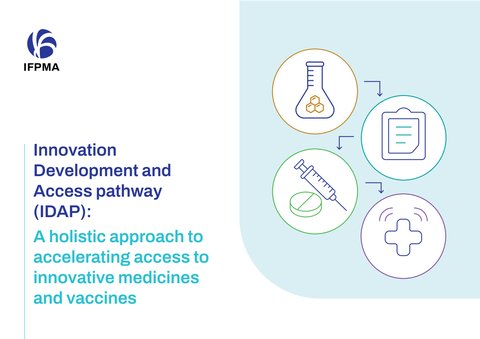 🔒
🔒 PDF Innovation Development and Access pathway
IDAP is a holistic framework spanning four linked phases: Research and Development; regulatory processes and product registration; listing, …
 🔒
🔒 IFPMA whitepaper: How assessment reports enable regulatory reliance in pharma
Regulatory reliance helps NRAs avoid duplicative reviews and allocate resources more efficiently by leveraging prior scientific evaluations …
 🔒
🔒 Integrated delivery networks in Middle East healthcare: what PwC says about the next phase of care
Scale creates value only when healthcare assets are connected through shared systems, referral flows and coordinated management disciplines