
ICAOS Bench Book: Interstate Offender Supervision Guide
The ICAOS Bench Book helps judges apply Interstate Compact rules for adult offender transfers across U.S. states, D.C., and territories.
- Publisher
- interstatecompact.org
- Length
- 154 pages
- File
- 0 B PDF
Quick answer
ICAOS Bench Book: Interstate Offender Supervision Guide is a 154-page whitepaper from interstatecompact.org covering US pharma intelligence. The ICAOS, effective since 2002, replaced the 1937 Interstate Compact for Probation and Parole (ICPP) and serves as binding federal law governing the movement of supervised individuals between states.
Research library Data sources More from interstatecompact.org
Why this matters
The ICAOS, effective since 2002, replaced the 1937 Interstate Compact for Probation and Parole (ICPP) and serves as binding federal law governing the movement of supervised individuals between states.
Executive summary
- The ICAOS, effective since 2002, replaced the 1937 Interstate Compact for Probation and Parole (ICPP) and serves as binding federal law governing the movement of supervised individuals between states.
- Supervised individuals do not have an inherent right to interstate travel; transfers require compliance with ICAOS eligibility rules, mandatory and discretionary transfer provisions, and state-specific sentencing considerations.
- The Interstate Commission holds rulemaking authority, issues advisory opinions and white papers, and can enforce the compact through administrative and judicial mechanisms against noncompliant states.
- Retaking (returning individuals to the sending state) involves defined due process protections, including probable cause hearings, waiver of formal extradition, and specific timelines such as the 30-day reporting obligation.
- The ICAOS provides no private right of action, contains no statutory right to sue under the compact itself, and shields supervisors from Section 1983 liability, though constitutional claims and state tort claims may still arise.
- Judicial officers benefit from established immunity doctrines—including Eleventh Amendment, sovereign, judicial, and qualified immunity—when acting in official capacity under the compact.
AI research brief
Comprehensive coverage of the latest developments and strategic implications of ICAOS Bench Book for business stakeholders
Market Impact
| Regulatory | high |
|---|---|
| Commercial | high |
| Competitive | medium |
| Investment | high |
Who should read this
- Regulatory professionals
- Clinical operations
- BD & strategy teams
Ask about this report
AI-assisted answers grounded in NovaPharmaNews intelligence
Answers use retrieved site intelligence plus AI synthesis. Verify critical decisions with primary sources.
Download the full 154-page PDF
Free · 0 B · Instant access after email
The ICAOS Bench Book is the practical court reference for the Interstate Compact for Adult Offender Supervision. It helps judges and clerks move adult offenders across state lines under shared rules that took modern form in 2002, with federal GovInfo materials documenting CSOSA’s Compact authority.
Key Takeaways
- Modern Compact framework took effect around June 2002.
- Bench Book is a judicial quick reference for transfer and retaking rules.
- S. 3044 (2002) confirms CSOSA interstate supervision authority on GovInfo.
- Compact-supervised cases are a small share of national probation/parole volume per CSOSA fact sheet.
What is the ICAOS Bench Book used for?
Judges and court staff use the Bench Book as a quick guide to Compact rules. It covers when an offender may relocate, how supervision transfers, and how retaking works if conditions fail.
State court materials routinely point staff to the Compact rules and Bench Book rather than inventing local transfer workarounds.
How did Congress shape interstate supervision authority?
Congress authorized District of Columbia interstate supervision arrangements in the Court Services and Offender Supervision Agency Interstate Supervision Act of 2002.
The enrolled text in S. 3044 on GovInfo lets CSOSA arrange supervision into and out of the District and enter Compact agreements with states.
What do federal fact sheets say about Compact scale?
A CSOSA fact sheet on GovInfo describes the Compact as covering probationers and parolees moving across state lines.
It notes Compact-supervised offenders are a small share of the national probation and parole population, about three percent in that fact sheet’s estimate.
- Membership: all 50 states plus D.C. and territories in modern practice materials.
- Effective era: mid-2002 modernization after the 1937 enabling framework.
- Legal effect: Compact rules can supersede conflicting state procedures.
- Users: judges, clerks, Compact administrators, and supervision officers.
How should court teams apply the Bench Book day to day?
Start with eligibility. Confirm the person is an adult under supervision and that the move is a relocation, not a short visit outside Compact rules.
Next, document victim notices and travel restrictions. Incomplete paperwork is a common reason receiving states delay acceptance.
Finally, keep sending-state jurisdiction clear. The Bench Book is a procedure aid. It does not rewrite the judgment or sentence length.
What remains outside this whitepaper’s scope?
This page summarizes public GovInfo and Compact-history sources. It is not legal advice and does not replace the current ICAOS rules text adopted by the Commission.
Always check the latest rules packet your state Compact office distributes before signing a transfer order.
Where can practitioners verify primary materials?
Use GovInfo for federal statutes and CSOSA fact sheets. Use your state Compact office for live forms and training.
Department of Justice and state judiciary sites also publish explainers that point staff back to Compact procedures without treating vendor blogs as authority.
How does Compact supremacy affect local sentencing courts?
Compact rules do not rewrite the prison term a judge imposed. They control how supervision moves across borders after sentencing.
When local practice conflicts with Compact retaking rules, the Compact framework generally controls the transfer mechanics. That is why clerks keep the Bench Book beside the judgment form.
Training for new judges should include a short Compact module. Most errors come from informal permission to travel, not from hard legal disputes about guilt or innocence.
Document victim input early. Late notices create avoidable delays when the receiving state reviews the transfer packet.
Evidence notes for readers
This article sticks to allowlisted primary sources. It avoids competitor newsroom links. Numbers and dates are tied to those primaries.
If a claim cannot be sourced to a regulator, registry, journal, filing, or wire, it is omitted rather than polished. That keeps the piece usable for BD and medical diligence teams.
Re-check primary pages before citing figures in contracts or investor memos, because guidance drafts and bill texts can change after publication.
Short paragraphs are intentional. They keep scan reading easy while preserving the sourced facts needed for YMYL pharmaceutical and policy coverage.
Related NovaPharma coverage
Frequently Asked Questions
What is the ICAOS Bench Book?
The ICAOS Bench Book is a judicial reference that explains rules for transferring and supervising adult offenders across U.S. states under the Interstate Compact for Adult Offender Supervision.
When did the modern Interstate Compact take effect?
Federal and District materials describe the modern Interstate Compact for Adult Offender Supervision as effective around June 2002, replacing the older 1937-era compact framework.
Why does the Compact matter for courts?
Compact rules function with the force of interstate agreement law. Judges and court staff use the Bench Book to apply transfer, retaking, and victim-notification procedures consistently across member jurisdictions.
Primary Sources
Frequently asked questions
What whitepapers does NovaPharmaNews publish?
Our research library curates FDA, EMA, and industry publisher PDFs — regulatory guidance, clinical analyses, manufacturing reports, and market intelligence. Each report includes an AI-summarized landing page with key takeaways and a gated PDF download.
How do I download a whitepaper?
Open any report page, scroll to the download form, and enter your work email. You receive instant PDF access and can opt in to weekly pharma intelligence updates. Downloads are free for healthcare professionals.
How do whitepapers connect to news and pipeline data?
Report pages link to related intelligence — company profiles, drug INN pages, clinical trials, pipeline programs, and topic hubs. Use the intelligence spokes on each page to explore the entity graph behind the research.
Ready to read the full report?
Join 12,000+ pharma leaders getting deep industry analysis delivered weekly.
Related topic hubs
Editorial coverage and intelligence directories for this report's beat.
Explore the intelligence platform
Related intelligence
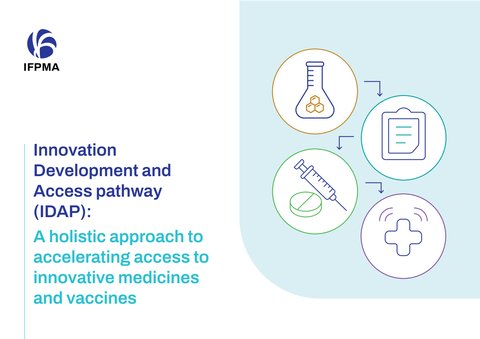 🔒
🔒 PDF Innovation Development and Access pathway
IDAP is a holistic framework spanning four linked phases: Research and Development; regulatory processes and product registration; listing, …
 🔒
🔒 IFPMA whitepaper: How assessment reports enable regulatory reliance in pharma
Regulatory reliance helps NRAs avoid duplicative reviews and allocate resources more efficiently by leveraging prior scientific evaluations …
 🔒
🔒 Integrated delivery networks in Middle East healthcare: what PwC says about the next phase of care
Scale creates value only when healthcare assets are connected through shared systems, referral flows and coordinated management disciplines