
Digital Money report summary: monetary architecture, CBDC, stablecoins and regulation
Digital money is reshaping monetary architecture, with questions around CBDCs, stablecoins, liquidity, and regulation for public and private money.
- Publisher
- www.iese.edu
- Length
- 196 pages
- File
- 0 B PDF
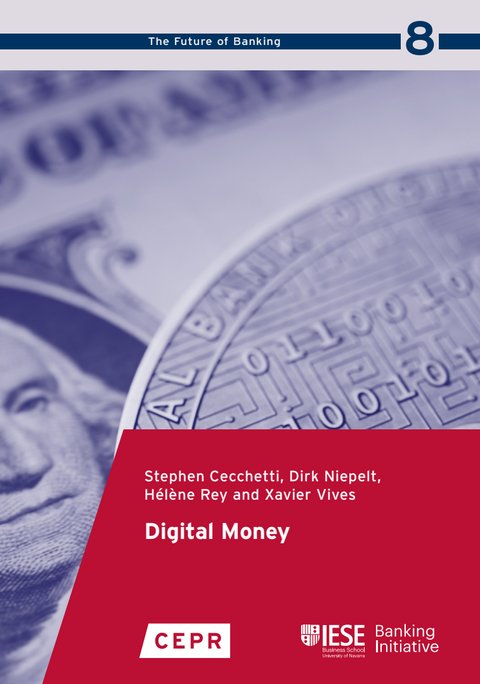
Quick answer
Digital Money report summary: monetary architecture, CBDC, stablecoins and regulation is a 196-page whitepaper from www.iese.edu covering US pharma intelligence. Digital money is fundamentally an institutional and policy issue, not merely a technical one. The critical questions concern who creates money, under what safeguards, and how liquidity is preserved during stress.
Why this matters
Digital money is fundamentally an institutional and policy issue, not merely a technical one. The critical questions concern who creates money, under what safeguards, and how liquidity is preserved during stress.
Executive summary
- Digital money is fundamentally an institutional and policy issue, not merely a technical one. The critical questions concern who creates money, under what safeguards, and how liquidity is preserved during stress.
- Cash is disappearing from daily payments while private digital liabilities expand domestically and internationally, prompting public authorities to reevaluate the role of sovereign money.
- The report addresses three interconnected angles: domestic monetary architecture, the international role of digital money, and regulatory frameworks governing digital currencies.
- Central questions include the social value of private money creation, the case for central bank digital currencies, and implications of cryptocurrencies and stablecoins for the international monetary system.
AI research brief
Digital money is reshaping monetary architecture, with questions around CBDCs, stablecoins, liquidity, and regulation for public and private money.
Market Impact
| Regulatory | high |
|---|---|
| Commercial | high |
| Competitive | medium |
| Investment | high |
Who should read this
- Regulatory professionals
- Clinical operations
- BD & strategy teams
Ask about this report
AI-assisted answers grounded in NovaPharmaNews intelligence
Answers use retrieved site intelligence plus AI synthesis. Verify critical decisions with primary sources.
Download the full 196-page PDF
Free · 0 B · Instant access after email
A PDF Stephen Cecchetti Dirk Niepelt co-authored Barcelona Report 8 (IESE/CEPR, June 2026) argues digital money’s value lies in institutions that keep money reliable—not in rails alone. For pharma treasurers and payers, CBDC, stablecoins and MiCA-style rules change how cross-border settlement and escrow may work.
Key Takeaways
- Report authors include Stephen Cecchetti, Dirk Niepelt, Hélène Rey and Xavier Vives (CEPR/IESE Future of Banking series, June 2026).
- EU Markets in Crypto-Assets Regulation (MiCA, Regulation (EU) 2023/1114) applies from 30 December 2024; ART/e-money token rules applied from 30 June 2024 (EUR-Lex summary).
- European Commission opened a MiCA functioning consultation on 20 May 2026, open until 31 August 2026 (finance.ec.europa.eu).
- Stablecoin and CBDC debates matter for pharma because dollar claims can circulate outside bank perimeters; treat report claims as analysis, not binding law.
What does the Digital Money report argue?
The eighth Future of Banking report shifts focus from technological novelty to who creates money, under what safeguards, and who bears stress-period liquidity risk. Authors Stephen Cecchetti and Dirk Niepelt (with Rey and Vives) frame cryptoisation as an institutional problem first.
That framing matters for life-science finance teams tracking escrow, milestone payments, and cross-border royalty rails that may touch tokenised settlement products.
How does EU MiCA regulate stablecoins and crypto-assets?
The EU EUR-Lex MiCA summary states Regulation (EU) 2023/1114 sets uniform rules for crypto-asset issuers and service providers not already covered by other EU financial-services acts.
- Applies from 30 December 2024 overall.
- Titles III–IV on asset-referenced tokens and e-money tokens applied from 30 June 2024.
- Covers transparency, authorisation, supervision, and market-abuse measures.
The Commission’s crypto-assets policy page lists MiCA as the dedicated EU framework for crypto-assets and related services.
What changed in 2026 EU crypto-asset policy review?
On 20 May 2026 the Commission launched a consultation on whether MiCA remains fit for purpose as markets evolve, with feedback due by 31 August 2026 (Commission news release).
That review does not rewrite Barcelona Report 8; it is a separate regulatory-feedback process analysts should track alongside any U.S. stablecoin bills.
Why CBDC and private digital money matter for pharma finance
Report themes—private digital liabilities expanding beyond bank perimeters, cash retreat from daily payments, and sovereign money roles—map to treasury questions: settlement finality, custody risk, and sanctions compliance when counterparties propose stablecoin rails.
Do not treat CBDC deployment timelines as settled. Public authorities are still evaluating design choices; cite primary legal texts when modeling cash conversion risk.
What U.S. disclosure context should teams watch?
U.S. market structure still relies on SEC and banking supervisors for many crypto-adjacent products. Use SEC press release archives and congressional bill texts on govinfo.gov rather than secondary summaries when checking issuer claims.
What remains unproven about digital money architecture?
Barcelona Report 8 is analysis, not statute. It does not prove any CBDC will launch on a fixed date, nor that stablecoins will displace bank deposits in pharma working capital. Independent stress-test evidence for programmable settlement in regulated life-science payments remains limited.
How should life-science CFOs use the 2026 report?
Treat the June 2026 Barcelona Report 8 PDF by Stephen Cecchetti and Dirk Niepelt as a checklist: map any stablecoin or CBDC pilot against MiCA dates of 30 June 2024 and 30 December 2024, then stress-test custody and sanctions controls before changing escrow language in 2026 contracts.
Keep a dated dossier with the EUR-Lex MiCA summary, the 20 May 2026 Commission consultation notice (deadline 31 August 2026), and the govinfo H.R. 4763 text. That 3-source pack beats a single consultant slide when boards ask about programmable settlement in 2026–2027.
Related NovaPharma coverage
Frequently Asked Questions
What is Barcelona Report 8 on digital money?
It is the eighth Future of Banking report from IESE’s Banking Initiative, published with CEPR in June 2026 by Stephen Cecchetti, Dirk Niepelt, Hélène Rey and Xavier Vives. It examines CBDC, stablecoins and regulation as questions of monetary architecture.
When did EU MiCA start applying?
According to the EUR-Lex summary of Regulation (EU) 2023/1114, MiCA applies from 30 December 2024, while rules on asset-referenced tokens and e-money tokens have applied since 30 June 2024.
Is the report binding guidance for pharma treasurers?
No. It is academic/policy analysis. Binding rules come from instruments such as MiCA and national supervisors. Use the report for framing; verify settlement products against primary law and filings.
Primary Sources
Frequently asked questions
What whitepapers does NovaPharmaNews publish?
Our research library curates FDA, EMA, and industry publisher PDFs — regulatory guidance, clinical analyses, manufacturing reports, and market intelligence. Each report includes an AI-summarized landing page with key takeaways and a gated PDF download.
How do I download a whitepaper?
Open any report page, scroll to the download form, and enter your work email. You receive instant PDF access and can opt in to weekly pharma intelligence updates. Downloads are free for healthcare professionals.
How do whitepapers connect to news and pipeline data?
Report pages link to related intelligence — company profiles, drug INN pages, clinical trials, pipeline programs, and topic hubs. Use the intelligence spokes on each page to explore the entity graph behind the research.
Ready to read the full report?
Join 12,000+ pharma leaders getting deep industry analysis delivered weekly.
Related topic hubs
Editorial coverage and intelligence directories for this report's beat.
Explore the intelligence platform
Related intelligence
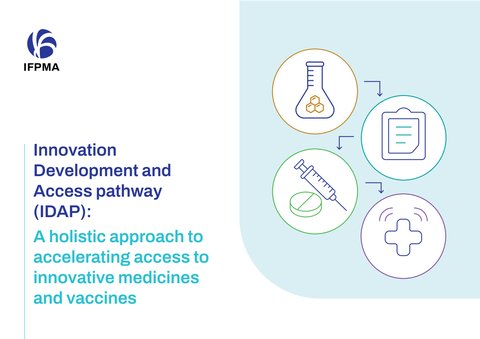 🔒
🔒 PDF Innovation Development and Access pathway
IDAP is a holistic framework spanning four linked phases: Research and Development; regulatory processes and product registration; listing, …
 🔒
🔒 IFPMA whitepaper: How assessment reports enable regulatory reliance in pharma
Regulatory reliance helps NRAs avoid duplicative reviews and allocate resources more efficiently by leveraging prior scientific evaluations …
 🔒
🔒 Integrated delivery networks in Middle East healthcare: what PwC says about the next phase of care
Scale creates value only when healthcare assets are connected through shared systems, referral flows and coordinated management disciplines