
RYBREVANT® Access and Reimbursement Guide Overview
Explore key insights on RYBREVANT® reimbursement and access strategies for NSCLC treatment.
- Publisher
- asset.jnjwithme.com
- Length
- 42 pages
- File
- 0 B PDF
Quick answer
RYBREVANT® Access and Reimbursement Guide Overview is a 42-page whitepaper from asset.jnjwithme.com covering US pharma intelligence. RYBREVANT® is indicated for specific NSCLC mutations, including EGFR exon 19 deletions, exon 21 L858R substitution mutations, and exon 20 insertion mutations.
Why this matters
RYBREVANT® is indicated for specific NSCLC mutations, including EGFR exon 19 deletions, exon 21 L858R substitution mutations, and exon 20 insertion mutations.
Executive summary
- RYBREVANT® is indicated for specific NSCLC mutations, including EGFR exon 19 deletions, exon 21 L858R substitution mutations, and exon 20 insertion mutations.
- Biomarker testing is essential for patient selection, with FDA-approved tests recommended to determine eligibility for RYBREVANT® treatment.
- Reimbursement policies for biomarker testing and RYBREVANT® vary by payer and plan, including Medicare, Medicare Advantage, Commercial, and Medicaid.
- Consulting payer organizations is recommended to obtain the most up-to-date information on reimbursement policies, prior authorization requirements, and patient cost-sharing.
- Important safety information regarding RYBREVANT®, including warnings and precautions, is included in the guide.
AI research brief
Explore key insights on RYBREVANT® reimbursement and access strategies for NSCLC treatment.
Market Impact
| Regulatory | high |
|---|---|
| Commercial | high |
| Competitive | medium |
| Investment | high |
Who should read this
- Regulatory affairs teams
Ask about this report
AI-assisted answers grounded in NovaPharmaNews intelligence
Answers use retrieved site intelligence plus AI synthesis. Verify critical decisions with primary sources.
Download the full 42-page PDF
Free · 0 B · Instant access after email
This executive summary provides an overview of the RYBREVANT® Access and Reimbursement Guide, which includes information relevant for RYBREVANT® when used in combination with chemotherapy (carboplatin + pemetrexed) or as a single agent.
Key Takeaways
- RYBREVANT® is indicated for specific NSCLC mutations, including EGFR exon 19 deletions, exon 21 L858R substitution mutations, and exon 20 insertion mutations.
- Biomarker testing is essential for patient selection, with FDA-approved tests recommended to determine eligibility for RYBREVANT® treatment.
- Reimbursement policies for biomarker testing and RYBREVANT® vary by payer and plan, including Medicare, Medicare Advantage, Commercial, and Medicaid.
- Consulting payer organizations is recommended to obtain the most up-to-date information on reimbursement policies, prior authorization requirements, and patient cost-sharing.
- Important safety information regarding RYBREVANT®, including warnings and precautions, is included in the guide.
What does this document cover?
The RYBREVANT® Access and Reimbursement Guide, published by asset.jnjwithme.com, provides comprehensive information on RYBREVANT®'s indications, coding, biomarker testing, and reimbursement strategies to facilitate patient access. The guide includes coding information, a list of specialty distributors, and important product information.
Why it matters for pharma teams
Understanding reimbursement processes is critical for ensuring patient access to RYBREVANT®, impacting commercial success and regulatory compliance.
Frequently asked questions
What whitepapers does NovaPharmaNews publish?
Our research library curates FDA, EMA, and industry publisher PDFs — regulatory guidance, clinical analyses, manufacturing reports, and market intelligence. Each report includes an AI-summarized landing page with key takeaways and a gated PDF download.
How do I download a whitepaper?
Open any report page, scroll to the download form, and enter your work email. You receive instant PDF access and can opt in to weekly pharma intelligence updates. Downloads are free for healthcare professionals.
How do whitepapers connect to news and pipeline data?
Report pages link to related intelligence — company profiles, drug INN pages, clinical trials, pipeline programs, and topic hubs. Use the intelligence spokes on each page to explore the entity graph behind the research.
Ready to read the full report?
Join 12,000+ pharma leaders getting deep industry analysis delivered weekly.
Related topic hubs
Editorial coverage and intelligence directories for this report's beat.
Explore the intelligence platform
Related intelligence
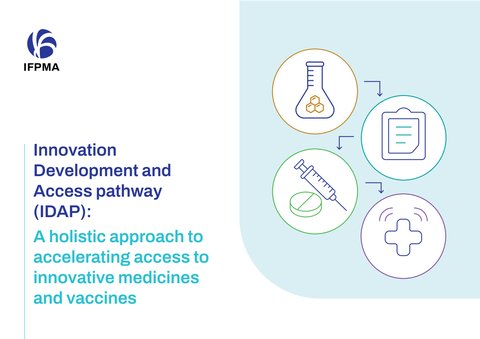 🔒
🔒 IFPMA IDAP whitepaper: end-to-end access pathway for innovative medicines and vaccines
IDAP is a holistic framework spanning four linked phases: Research and Development; regulatory processes and product registration; listing, …
 🔒
🔒 IFPMA whitepaper: How assessment reports enable regulatory reliance in pharma
Regulatory reliance helps NRAs avoid duplicative reviews and allocate resources more efficiently by leveraging prior scientific evaluations …
 🔒
🔒 Integrated delivery networks in Middle East healthcare: what PwC says about the next phase of care
Scale creates value only when healthcare assets are connected through shared systems, referral flows and coordinated management disciplines