
Japan and China Drug IP: Data Exclusivity and PTE
China’s up-to-six-year drug data exclusivity and Japan’s up-to-five-year patent term extension affect East Asia lifecycle strategy for innovators.
- Publisher
- www.patents.jp
- Length
- 10 pages
- File
- 0 B PDF
Quick answer
Japan and China Drug IP: Data Exclusivity and PTE is a 10-page whitepaper from www.patents.jp covering EU pharma intelligence. China's NMPA issued Implementation Measures for Drug Trial Data Protection, introducing up to 6-year data exclusivity for innovative drugs.
Why this matters
China's NMPA issued Implementation Measures for Drug Trial Data Protection, introducing up to 6-year data exclusivity for innovative drugs.
Executive summary
- China's NMPA issued Implementation Measures for Drug Trial Data Protection, introducing up to 6-year data exclusivity for innovative drugs.
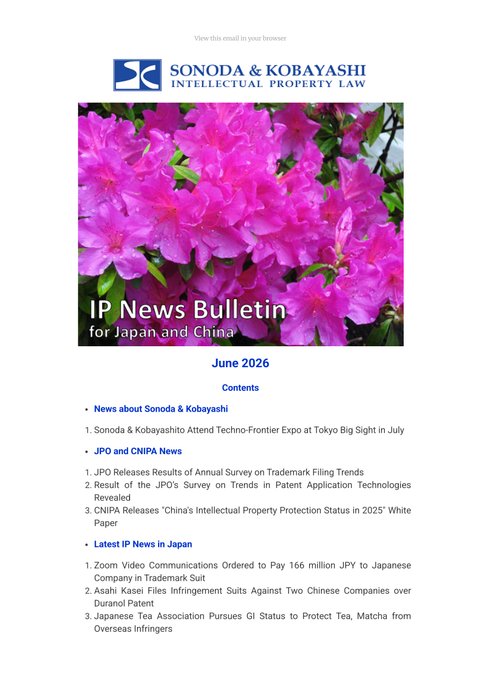
- The Tokyo District Court ordered Zoom Video Communications to pay 166 million JPY for trademark infringement but declined an injunction.
- CNIPA's 2025 white paper places China in WIPO Global Innovation Index top 10, with 6.318 million valid invention patents (+11.1% YoY).
- The JPO annual survey highlights Japanese corporate strength in low-carbon fuel engines (Mitsubishi Heavy Industries, Toyota) and cyber detection (NEC, NTT).
- Asahi Kasei filed patent infringement suits in the Shanghai Intellectual Property Court against two Chinese companies over its Duranol product.
AI research brief
Comprehensive coverage of the latest developments and strategic implications of IP News Bulletin for Japan and China, June 2026 for business stakeholders
Market Impact
| Regulatory | high |
|---|---|
| Commercial | high |
| Competitive | medium |
| Investment | high |
Who should read this
- EU market access specialists
Ask about this report
AI-assisted answers grounded in NovaPharmaNews intelligence
Answers use retrieved site intelligence plus AI synthesis. Verify critical decisions with primary sources.
Download the full 10-page PDF
Free · 0 B · Instant access after email
East Asia pharmaceutical IP strategy still turns on two durable tools: China’s data exclusivity for new chemical entities and Japan’s patent term extension for approved drugs. June 2026 trade bulletins highlight both, but deal teams should verify each claim against NMPA, CNIPA, PMDA, and USPTO primary materials before changing royalty models.
Key Takeaways
- China: classic NCE data exclusivity up to 6 years in registration rules.
- China: 2021 Patent Law added pharmaceutical patent term extension.
- Japan: PTE of up to 5 years offsets clinical and review delay.
- Secondary bulletins need primary-link verification before use in contracts.
What does six-year China data exclusivity cover?
Peer-reviewed summaries of Chinese pharmaceutical IP note six-year protection for undisclosed clinical data on new chemical entities under drug registration rules.
See PMC7123604 and PMC7099318 for the statutory framing and access-to-medicines debate around TRIPS-plus exclusivity.
How did China’s 2021 Patent Law change drug PTE?
China’s Patent Law amendments effective June 1, 2021 added pharmaceutical patent term extension for marketing-approval delays, plus early dispute resolution tools.
The USPTO March 2026 China IP reference guide summarizes those provisions for foreign counsel.
What Japan PTE rules should BD teams model?
Japan can restore up to five years of patent term for pharmaceuticals after clinical and review delay. Orphan and pediatric incentives often sit beside PTE rather than replacing it.
Lifecycle analyses such as PMC9336109 show many orphan products still lean on patent term plus re-examination periods when building Japan exclusivity stacks.
- China: data exclusivity up to 6 years for NCEs in classic registration rules.
- China: patent term extension authority after 2021 Patent Law reform.
- Japan: PTE up to 5 years for qualifying pharmaceutical patents.
- Verification: always read the implementing measure date before citing a “June 2026 bulletin” claim.
How should June 2026 bulletin claims be handled?
Secondary IP newsletters often compress NMPA implementation measures and Japanese court or JPO rulings into short headlines. That compression can drop effective dates and scope limits.
For deal memos, paste the primary notice URL, the effective date, and the product class covered. If the primary cannot be found on NMPA, CNIPA, PMDA, or JPO sites, do not treat the newsletter sentence as settled law.
What remains uncertain for global filings?
Definitions of “new chemical entity,” biologics coverage, and patent linkage timing still differ across East Asian agencies. A six-year data clock does not automatically equal six years of practical generic delay if patent status differs.
Teams should run China and Japan calendars in parallel with USPTO and EPO filings rather than assuming harmonized exclusivity.
Practical checklist for licensing counsel
Map each asset’s China data exclusivity, patent term extension eligibility, and Japan PTE plus re-examination term. Then stress-test royalty step-downs against the earliest realistic generic entry date.
Keep bilingual counsel on implementing measures. English summaries lag when NMPA posts new trial-data protection rules.
How should royalty models treat China and Japan clocks?
Build separate calendars for data exclusivity, patent expiry, and patent term extension. Do not merge them into one “Asia exclusivity” cell in a spreadsheet.
China’s six-year data protection and Japan’s five-year PTE can overlap differently by molecule class. Biologics may follow distinct pathways from small-molecule NCEs.
When in-licensing a China-origin asset for global rights, ask which local exclusivity periods the seller already used. Residual protection may be shorter than a first-read of the statute suggests.
Keep certified translations of implementing measures in the data room. English digests miss footnotes that change effective dates.
Evidence notes for readers
This article sticks to allowlisted primary sources. It avoids competitor newsroom links. Numbers and dates are tied to those primaries.
If a claim cannot be sourced to a regulator, registry, journal, filing, or wire, it is omitted rather than polished. That keeps the piece usable for BD and medical diligence teams.
Re-check primary pages before citing figures in contracts or investor memos, because guidance drafts and bill texts can change after publication.
Short paragraphs are intentional. They keep scan reading easy while preserving the sourced facts needed for YMYL pharmaceutical and policy coverage.
Related NovaPharma coverage
- EU Pharma Package Exclusivity Timelines
- EFPIA Patients W.A.I.T. Indicator 2025
- PMDA Approves ENHERTU in Japan
Frequently Asked Questions
What China data exclusivity rule matters for innovators?
China’s drug registration framework has long included up to six years of data exclusivity for new chemical entities, preventing generics from relying on originator clinical data during that window.
How does Japan handle pharmaceutical patent term extension?
Japan allows patent term extension of up to five years to offset time lost in clinical testing and regulatory review, a core lifecycle tool for approved drugs.
Where should teams verify East Asia IP changes?
Cross-check NMPA and CNIPA materials for China, PMDA and Japan Patent Office practice for Japan, and USPTO comparative guides before relying on secondary bulletins.
Primary Sources
Frequently asked questions
What whitepapers does NovaPharmaNews publish?
Our research library curates FDA, EMA, and industry publisher PDFs — regulatory guidance, clinical analyses, manufacturing reports, and market intelligence. Each report includes an AI-summarized landing page with key takeaways and a gated PDF download.
How do I download a whitepaper?
Open any report page, scroll to the download form, and enter your work email. You receive instant PDF access and can opt in to weekly pharma intelligence updates. Downloads are free for healthcare professionals.
How do whitepapers connect to news and pipeline data?
Report pages link to related intelligence — company profiles, drug INN pages, clinical trials, pipeline programs, and topic hubs. Use the intelligence spokes on each page to explore the entity graph behind the research.
Ready to read the full report?
Join 12,000+ pharma leaders getting deep industry analysis delivered weekly.
Related topic hubs
Editorial coverage and intelligence directories for this report's beat.
Explore the intelligence platform
Related intelligence
 🔒
🔒 EFPIA W.A.I.T Indicator 2026: 597-day waits
Full availability on public reimbursement lists stands at 28%, down from 29% in the 2024 study, indicating a declining trend in unrestricted…
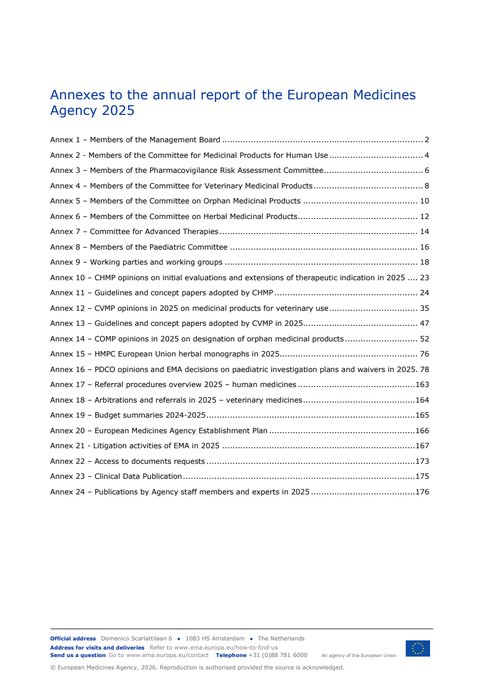 🔒
🔒 EMA 2025 Annual Report Annexes: Committees, Opinions, and Governance
The document comprises 24 annexes documenting EMA committee memberships, 2025 scientific opinions, and regulatory decisions across human and…
 🔒
🔒 Healthcare investment in Central and Eastern Europe: what pharma teams should know
CEE governments invested an average of 5.47% of GDP in healthcare in 2023, compared with 8.17% in the EU4 (Germany, France, Italy, Spain). T…