
GxP Environmental Monitoring Systems: A Guide for Small Biotechs
Essential guide for small biotechs on GxP environmental monitoring systems to ensure compliance and product quality.
- Publisher
- IntuitionLabs
- Length
- 18 pages
- File
- 0 B PDF
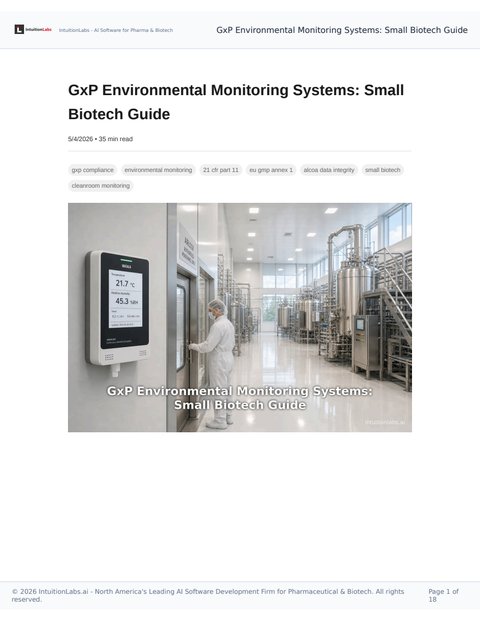
Quick answer
GxP Environmental Monitoring Systems: A Guide for Small Biotechs is a 18-page whitepaper from IntuitionLabs covering US pharma intelligence. Essential guide for small biotechs on GxP environmental monitoring systems to ensure compliance and product quality.
Why this matters
Essential guide for small biotechs on GxP environmental monitoring systems to ensure compliance and product quality.
Executive summary
- Essential guide for small biotechs on GxP environmental monitoring systems to ensure compliance and product quality.
Market Impact
| Regulatory | high |
|---|---|
| Commercial | high |
| Competitive | medium |
| Investment | high |
Who should read this
- Regulatory affairs teams
Ask about this report
AI-assisted answers grounded in NovaPharmaNews intelligence
Answers use retrieved site intelligence plus AI synthesis. Verify critical decisions with primary sources.
Download the full 18-page PDF
Free · 0 B · Instant access after email
GxP Environmental Monitoring Systems (EMS) are absolutely essential. They ensure both product quality and regulatory compliance in biotechnology and pharmaceutical facilities.
Key Takeaways
FDA and EU GMP? They both demand rigorous EMS programs. Annex 1 specifically calls for documented, risk-based monitoring. EMS data must adhere to ALCOA+ principles. Think validated systems and audit trails. Modern EMS? They use IoT and wireless networks for real-time monitoring and scalability. Small biotechs can benefit from cost-effective, cloud-based EMS solutions. This minimizes IT overhead. Vendor selection must prioritize compliance, scalability, and support. It's all about audit readiness.
What are the key regulatory requirements for GxP EMS?
FDA (21 CFR Parts 210/211, Part 11) and EU GMP (Annex 1, Annex 11) – they're not messing around. They mandate rigorous EMS programs. Annex 1 (2022) explicitly requires a documented, risk-based monitoring program. This is for particles and microbes. Part 11? It requires audit trails and electronic signatures.
Why are data integrity principles important for EMS?
EMS data must follow ALCOA+ principles. Attributable, Legible, Contemporaneous, Original/Accurate, Complete, Consistent, Enduring, and Available—it's a mouthful. Ensuring data integrity requires validated systems. strong audit trails are a must. Strong access controls are also key.
How can small biotechs use modern EMS technology?
Small biotech companies can use prevalidated cloud systems. Subscription models are attractive. Why? They minimize IT overhead. A risk-based approach (per Annex 1 and ICH Q9) helps scale monitoring to critical areas. Outsourced EMS services or modular plug-and-play systems can also suit smaller firms—a pragmatic approach.
Frequently Asked Questions
What is a GxP Environmental Monitoring System?
A GxP Environmental Monitoring System (EMS) continuously measures and records conditions. Think temperature, humidity, and particulates. It's all to ensure product quality and regulatory compliance in biotech and pharmaceutical facilities.
Why is environmental monitoring important for small biotechs?
Environmental monitoring is vital for maintaining product integrity. It ensures regulatory compliance, and minimizes audit risks. This is true even with limited budgets and headcount.
What should small biotechs look for when selecting an EMS vendor?
Small biotechs should prioritize ease of use. Cost-effectiveness is crucial. Cloud-based solutions are a plus. Focus on compliance, scalability, and support. All to ensure audit readiness, according to IntuitionLabs.
Related coverage
Frequently asked questions
What whitepapers does NovaPharmaNews publish?
Our research library curates FDA, EMA, and industry publisher PDFs — regulatory guidance, clinical analyses, manufacturing reports, and market intelligence. Each report includes an AI-summarized landing page with key takeaways and a gated PDF download.
How do I download a whitepaper?
Open any report page, scroll to the download form, and enter your work email. You receive instant PDF access and can opt in to weekly pharma intelligence updates. Downloads are free for healthcare professionals.
How do whitepapers connect to news and pipeline data?
Report pages link to related intelligence — company profiles, drug INN pages, clinical trials, pipeline programs, and topic hubs. Use the intelligence spokes on each page to explore the entity graph behind the research.
Ready to read the full report?
Join 12,000+ pharma leaders getting deep industry analysis delivered weekly.
Related topic hubs
Editorial coverage and intelligence directories for this report's beat.
Explore the intelligence platform
Related intelligence
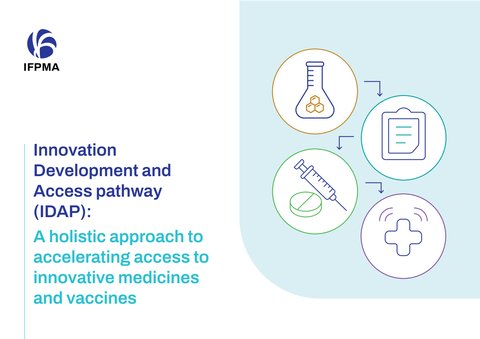 🔒
🔒 IFPMA IDAP whitepaper: end-to-end access pathway for innovative medicines and vaccines
IDAP is a holistic framework spanning four linked phases: Research and Development; regulatory processes and product registration; listing, …
 🔒
🔒 IFPMA whitepaper: How assessment reports enable regulatory reliance in pharma
Regulatory reliance helps NRAs avoid duplicative reviews and allocate resources more efficiently by leveraging prior scientific evaluations …
 🔒
🔒 Integrated delivery networks in Middle East healthcare: what PwC says about the next phase of care
Scale creates value only when healthcare assets are connected through shared systems, referral flows and coordinated management disciplines