
FDA CBER Patient Listening Meeting on Gene Therapy Safety: Patient and Care Partner Perspectives
Patient and care partner perspectives inform FDA’s thinking on approved gene therapy safety and long-term follow-up for rare diseases.
- Publisher
- U.S. Food and Drug Administration Center for Biologics and Evaluation Research
- Length
- 81 pages
- File
- 0 B PDF
Quick answer
FDA CBER Patient Listening Meeting on Gene Therapy Safety: Patient and Care Partner Perspectives is a 81-page whitepaper from U.S. Food and Drug Administration Center for Biologics and Evaluation Research covering US pharma intelligence. FDA CBER held a dedicated patient listening meeting focused on two core themes: safety considerations in gene therapy treatment decisions and partnering on long-term studies after gene therapy administration.
Research library Data sources More from U.S. Food and Drug Administration Center for Biologics and Evaluation Research
Why this matters
FDA CBER held a dedicated patient listening meeting focused on two core themes: safety considerations in gene therapy treatment decisions and partnering on long-term studies after gene therapy administration.
Executive summary
- FDA CBER held a dedicated patient listening meeting focused on two core themes: safety considerations in gene therapy treatment decisions and partnering on long-term studies after gene therapy administration.
- Patients and care partners shared perspectives through structured sessions, with FDA staff posing follow-up questions to clarify concerns and expectations regarding approved gene therapies for rare diseases.
- FDA signaled broader strategic efforts to support gene therapy development, including establishment of an FDA Rare Disease Hub, collaboration with NCATS and the Bespoke Gene Therapy Consortium, and global coordination with European regulators and the World Health Organization.
- A public docket (FDA-2024-N-3208) remained open through November 19, 2024, to capture additional feedback that will inform a meeting summary.
AI research brief
Patient and care partner perspectives inform FDA’s thinking on approved gene therapy safety and long-term follow-up for rare diseases.
Market Impact
| Regulatory | high |
|---|---|
| Commercial | high |
| Competitive | medium |
| Investment | high |
Who should read this
- Regulatory affairs teams
Ask about this report
AI-assisted answers grounded in NovaPharmaNews intelligence
Answers use retrieved site intelligence plus AI synthesis. Verify critical decisions with primary sources.
Download the full 81-page PDF
Free · 0 B · Instant access after email
The FDA CBER Patient Listening Meeting on September 20, 2024, put rare-disease patients and care partners at the center of gene therapy safety discussions. CBER used the virtual session to hear how people weigh short- and long-term risks, what information they need before treatment, and how they experience long-term follow-up after approved gene therapies.
Key Takeaways
- FDA CBER Patient Listening Meeting (Meeting 1) ran virtually on Sept 20, 2024, from 11:00 a.m. to 4:30 p.m. ET.
- Agenda themes: treatment-decision safety information and partnering on long-term post-gene-therapy studies.
- FDA reported 19 gene therapy approvals as of June 2024, after the first approval in 2017.
- A second listening meeting on Dec 4, 2024, focused on early enrollment into gene therapy trials.
What was the FDA CBER Patient Listening Meeting?
CBER convened Meeting 1 as a public Zoom listening session, not an advisory committee vote. The agency’s stated goal was to understand patient and care partner perspectives on approved gene therapy products for rare diseases. Official logistics and objectives are posted on the FDA Meeting 1 page.
Why did CBER focus on safety after approval?
Clinical trials that support approval define risks and benefits at launch, but long-term adverse events may appear only afterward. FDA’s listening-meeting hub explains that post-approval data come from long-term observation of trial participants, post-marketing studies, and reports from patients, manufacturers, and clinicians. See the 2024 CBER patient listening meetings hub.
What questions shaped the agenda?
FDA organized the day around two practical themes for patients and caregivers.
- What short- and long-term risks matter most when deciding on an approved gene therapy?
- What information formats help people understand those risks?
- What factors shape willingness to join registries or other long-term studies?
- How should long-term studies be designed, operated, and communicated?
Introductory polling captured demographics, knowledge levels, and preferred channels for risk information, according to FDA’s meeting framing materials.
How does this fit the broader gene therapy setting?
FDA noted gene therapy has become an option for some rare diseases with unmet need, with 19 approved products as of June 2024. Product-class context for cellular and gene therapies is maintained under FDA’s biologics resources, including the cellular and gene therapy products page.
What followed Meeting 1?
Meeting 2 on December 4, 2024, shifted to early enrollment into gene therapy clinical trials for rare diseases, including pre-symptomatic or early symptomatic stages. That session had a separate docket and comment window. Sponsors and patient groups should treat both meetings as qualitative input for protocol design, not as binding regulatory guidance.
What should sponsors and patient groups do with the input?
Medical affairs and patient advocacy teams can map listening-meeting themes to informed-consent language, registry invitation scripts, and long-term follow-up visit schedules. The September 20, 2024 session ran about five and a half hours, which is enough time for structured polling plus two deep-dive discussion blocks, but not enough to replace disease-specific advisory meetings.
When drafting protocols, treat Meeting 1 comments as hypotheses about what patients want communicated after year one, year five, and beyond. Confirm any safety messaging against the approved label and against CBER guidance for gene therapy long-term follow-up rather than against meeting minutes alone.
What remains unproven
Listening-meeting comments are not randomized evidence and do not change product labels by themselves. Polling results and public comments inform FDA’s understanding of patient priorities; they do not quantify risk magnitudes for individual gene therapy products. Sponsors still need formal post-marketing commitments and pharmacovigilance data for labeled safety claims.
Related NovaPharma coverage
- FDA Approves First CRISPR Gene Therapy for Sickle Cell Disease
- $2M Gene Therapy Cures Need a Financing Model
- uniQure AMT-130 Gene Therapy Advances Toward UK Approval for Huntington's Disease
Frequently Asked Questions
When was the FDA CBER Patient Listening Meeting on gene therapy safety held?
Meeting 1 was held virtually on September 20, 2024, from 11:00 a.m. to 4:30 p.m. ET. FDA framed it as a public patient and care partner listening meeting on safety considerations for approved gene therapy treatments for rare diseases.
What topics did the FDA CBER Patient Listening Meeting cover?
FDA sought patient and care partner views on short- and long-term risks of approved gene therapies, information needed for treatment decisions, experience with post-market long-term follow-up studies, and input to inform patient-centered long-term study protocols.
How many gene therapies had FDA approved by mid-2024?
On its 2024 CBER listening-meeting hub, FDA noted the first gene therapy approval in 2017 and 19 gene therapies approved as of June 2024, many for rare diseases, while stressing ongoing post-approval safety data collection.
Primary Sources
Frequently asked questions
What whitepapers does NovaPharmaNews publish?
Our research library curates FDA, EMA, and industry publisher PDFs — regulatory guidance, clinical analyses, manufacturing reports, and market intelligence. Each report includes an AI-summarized landing page with key takeaways and a gated PDF download.
How do I download a whitepaper?
Open any report page, scroll to the download form, and enter your work email. You receive instant PDF access and can opt in to weekly pharma intelligence updates. Downloads are free for healthcare professionals.
How do whitepapers connect to news and pipeline data?
Report pages link to related intelligence — company profiles, drug INN pages, clinical trials, pipeline programs, and topic hubs. Use the intelligence spokes on each page to explore the entity graph behind the research.
Ready to read the full report?
Join 12,000+ pharma leaders getting deep industry analysis delivered weekly.
Related topic hubs
Editorial coverage and intelligence directories for this report's beat.
Explore the intelligence platform
Related intelligence
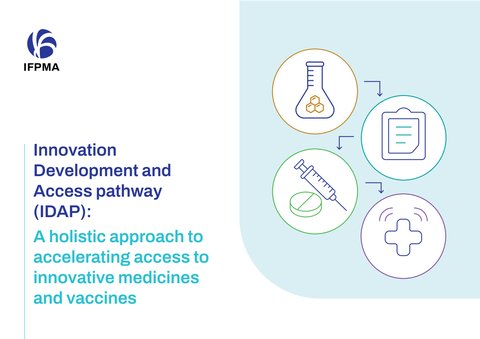 🔒
🔒 PDF Innovation Development and Access pathway
IDAP is a holistic framework spanning four linked phases: Research and Development; regulatory processes and product registration; listing, …
 🔒
🔒 IFPMA whitepaper: How assessment reports enable regulatory reliance in pharma
Regulatory reliance helps NRAs avoid duplicative reviews and allocate resources more efficiently by leveraging prior scientific evaluations …
 🔒
🔒 Integrated delivery networks in Middle East healthcare: what PwC says about the next phase of care
Scale creates value only when healthcare assets are connected through shared systems, referral flows and coordinated management disciplines