
National Drug Control Strategy (2026): A Comprehensive Approach to Combat Drug Addiction
The National Drug Control Strategy 2026 outlines a unified approach to combat drug addiction and the fentanyl crisis in America.
- Publisher
- whitehouse.gov
- Length
- 195 pages
- File
- 0 B PDF
Quick answer
National Drug Control Strategy (2026): A Comprehensive Approach to Combat Drug Addiction is a 195-page whitepaper from whitehouse.gov covering US pharma intelligence. The strategy addresses the fentanyl crisis as a national emergency.
Why this matters
The strategy addresses the fentanyl crisis as a national emergency.
Executive summary
- The strategy addresses the fentanyl crisis as a national emergency.
- It emphasizes a whole-of-government approach to combat drug addiction.
- Prevention and early treatment are prioritized to reduce drug use.
- The strategy includes measures to disrupt drug trafficking and support recovery.
- Community resilience and education are key components of the plan.
AI research brief
The National Drug Control Strategy 2026 outlines a unified approach to combat drug addiction and the fentanyl crisis in America.
Market Impact
| Regulatory | high |
|---|---|
| Commercial | high |
| Competitive | medium |
| Investment | high |
Who should read this
- Regulatory affairs teams
Ask about this report
AI-assisted answers grounded in NovaPharmaNews intelligence
Answers use retrieved site intelligence plus AI synthesis. Verify critical decisions with primary sources.
Download the full 195-page PDF
Free · 0 B · Instant access after email
National Drug Control Strategy (2026): A Comprehensive Approach to Combat Drug Addiction pairs supply-side enforcement with prevention, treatment, and recovery. For pharma and investors, the actionable layer is how CDC and NIDA overdose epidemiology, DEA threat assessments, and FDA access decisions reshape naloxone, medications for opioid use disorder (MOUD), and non-opioid pain pipelines.
Key Takeaways
- ONDCP’s 2026 Strategy is a biennial whole-of-government roadmap spanning illicit supply disruption and public-health demand reduction.
- CDC overdose facts pages and NIDA overdose death-rate trends remain the core public baselines for sizing U.S. addiction-related markets.
- DEA national drug threat materials continue to prioritize illicit fentanyl and precursor supply chains that drive clinical demand for rescue and treatment products.
- FDA’s OTC naloxone pathway shows how regulatory access decisions can amplify Strategy goals without changing clinical efficacy standards.
What does the 2026 Strategy ask federal agencies to do?
The Office of National Drug Control Policy prepares the National Drug Control Strategy on a biennial cycle. The 2026 edition frames a dual approach: attack illicit drug supply (including fentanyl and precursors) and reduce demand through prevention, early treatment, and recovery supports.
ONDCP’s public release materials describe coordination across roughly 19 federal agencies and stewardship of a consolidated counter-drug budget on the order of $44 billion. Those figures are planning context for BD teams—not product-level revenue forecasts.
How do CDC and NIDA data anchor the threat picture?
The CDC overdose prevention facts and statistics hub aggregates surveillance used by states and federal planners to track overdose burden. Parallel NIDA overdose death-rate trend pages summarize national mortality patterns that investors use to size addressable populations for rescue, MOUD, and prevention programs.
Neither source substitutes for a branded Strategy PDF citation when a claim is Strategy-specific. They do establish why fentanyl and polysubstance overdose remain central to 2026 policy design.
DEA supply-side priorities and pharma implications
DEA threat assessments and enforcement priorities focus on illicit fentanyl, precursor chemicals, and trafficking networks. For legitimate manufacturers, that environment raises both demand for overdose-reversal products and scrutiny of diversion controls across controlled-substance supply chains.
- Supply: precursor and finished illicit fentanyl remain primary enforcement targets.
- Demand: clinical systems still need scalable naloxone and MOUD access.
- Compliance: distributors and 503A/503B pharmacies face heightened diversion expectations.
FDA access tools that interact with Strategy goals
In March 2023, FDA approved the first over-the-counter naloxone nasal spray, removing the prescription barrier for a key overdose-reversal medicine. That access decision is a concrete pharmaceutical policy lever that complements Strategy language on rescue and recovery.
Separately, FDA novel non-opioid analgesics (for example, recent first-in-class acute-pain approvals) illustrate how innovation agendas can reduce reliance on opioid prescribing—an adjacent commercial lane for companies reading the 2026 Strategy.
Prevention, treatment, and recovery: what BD should monitor
Strategy pillars typically stress youth prevention, earlier treatment entry, medications for opioid use disorder, and recovery supports including community and faith-based programs. Product teams should map portfolios to measurable federal grant programs (for example, HIDTA and Drug-Free Communities funding streams referenced in ONDCP materials) rather than assuming a single national formulary change.
Payer coverage—especially Medicaid’s role in addiction services—often determines whether Strategy aspirations become dispensed prescriptions. Track state coverage and prior-authorization rules alongside federal guidance.
What remains unproven for commercial models
Public Strategy text does not guarantee specific unit volumes for any branded naloxone, MOUD, or non-opioid product in 2026–2027. Claims that the Strategy “creates a $X market overnight” lack support in CDC, NIDA, DEA, or FDA primary pages and should be deleted. Use epidemiology and labeled indications, not political rhetoric, for valuation work.
Operational checklist for manufacturers in 2026
Map naloxone SKUs and MOUD products to state standing-order rules, confirm DEA suspicious-order monitoring still matches current distribution lanes, and align medical-affairs materials with CDC and NIDA public statistics rather than campaign slogans. For hospital accounts, pair overdose-rescue protocols with non-opioid acute-pain options so formulary committees see a coherent risk-reduction story under the Strategy’s public-health pillar.
Related NovaPharma coverage
- FDA Approves First OTC Naloxone Nasal Spray for Opioid Overdose
- FDA approves OTC Rextovy, broadening naloxone access
- FDA approves Vertex’s Journavx non-opioid pain drug
Frequently Asked Questions
What is the National Drug Control Strategy 2026?
It is the biennial strategic roadmap from the White House Office of National Drug Control Policy (ONDCP) that coordinates federal drug-control efforts across supply reduction and public-health demand reduction.
Which public data sources frame the overdose crisis for pharma teams?
CDC overdose prevention facts and statistics pages and NIDA overdose death-rate trend pages provide the primary epidemiologic baselines used to size naloxone, MOUD, and non-opioid pain portfolios.
How does FDA naloxone policy connect to the 2026 strategy?
FDA’s approval of the first over-the-counter naloxone nasal spray expanded layperson access to overdose reversal, aligning pharmaceutical supply with public-health rescue goals that the Strategy continues to emphasize.
Primary Sources
Frequently asked questions
What whitepapers does NovaPharmaNews publish?
Our research library curates FDA, EMA, and industry publisher PDFs — regulatory guidance, clinical analyses, manufacturing reports, and market intelligence. Each report includes an AI-summarized landing page with key takeaways and a gated PDF download.
How do I download a whitepaper?
Open any report page, scroll to the download form, and enter your work email. You receive instant PDF access and can opt in to weekly pharma intelligence updates. Downloads are free for healthcare professionals.
How do whitepapers connect to news and pipeline data?
Report pages link to related intelligence — company profiles, drug INN pages, clinical trials, pipeline programs, and topic hubs. Use the intelligence spokes on each page to explore the entity graph behind the research.
Ready to read the full report?
Join 12,000+ pharma leaders getting deep industry analysis delivered weekly.
Related topic hubs
Editorial coverage and intelligence directories for this report's beat.
Explore the intelligence platform
Related intelligence
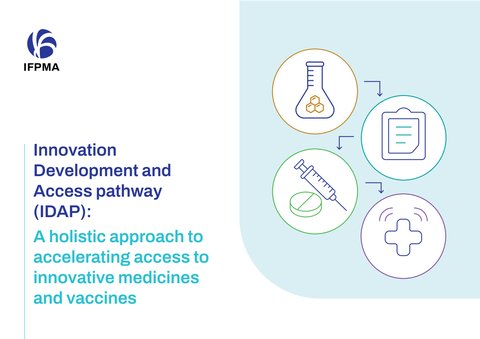 🔒
🔒 PDF Innovation Development and Access pathway
IDAP is a holistic framework spanning four linked phases: Research and Development; regulatory processes and product registration; listing, …
 🔒
🔒 IFPMA whitepaper: How assessment reports enable regulatory reliance in pharma
Regulatory reliance helps NRAs avoid duplicative reviews and allocate resources more efficiently by leveraging prior scientific evaluations …
 🔒
🔒 Integrated delivery networks in Middle East healthcare: what PwC says about the next phase of care
Scale creates value only when healthcare assets are connected through shared systems, referral flows and coordinated management disciplines