
IFPMA whitepaper: How assessment reports enable regulatory reliance in pharma
Assessment reports can reduce duplicate review and speed reliance-based decisions when terminology, structure, and confidentiality rules are clearer.
- Publisher
- www.ifpma.org
- Length
- 6 pages
- File
- 0 B PDF
Quick answer
IFPMA whitepaper: How assessment reports enable regulatory reliance in pharma is a 6-page whitepaper from www.ifpma.org covering US pharma intelligence. Regulatory reliance helps NRAs avoid duplicative reviews and allocate resources more efficiently by leveraging prior scientific evaluations from reference authorities.
Why this matters
Regulatory reliance helps NRAs avoid duplicative reviews and allocate resources more efficiently by leveraging prior scientific evaluations from reference authorities.
Executive summary
- Regulatory reliance helps NRAs avoid duplicative reviews and allocate resources more efficiently by leveraging prior scientific evaluations from reference authorities.
- Assessment reports summarizing the reference NRA's safety, efficacy, and quality evaluations are essential to reliance-based decision-making and should be the primary source of information for relying authorities.
- Clearer terminology—using NPAR (non-public assessment report) and PAR (public assessment report)—improves accuracy and supports appropriate handling of confidential and proprietary information.
- Standardized report structure and content across jurisdictions enhance readability, enable comparative evaluation, and streamline reliance-based review processes.
- Public assessment reports should be the primary source where available; non-public reports may support decision-making under formal confidentiality agreements and secure information-sharing mechanisms.
AI research brief
Assessment reports can reduce duplicate review and speed reliance-based decisions when terminology, structure, and confidentiality rules are clearer.
Market Impact
| Regulatory | high |
|---|---|
| Commercial | high |
| Competitive | medium |
| Investment | high |
Who should read this
- Regulatory professionals
- Clinical operations
- BD & strategy teams
Ask about this report
AI-assisted answers grounded in NovaPharmaNews intelligence
Answers use retrieved site intelligence plus AI synthesis. Verify critical decisions with primary sources.
Download the full 6-page PDF
Free · 0 B · Instant access after email
Assessment reports from reference national regulatory authorities sit at the center of regulatory reliance. WHO Good Reliance Practices and EMA Article 58-style pathways show how relying NRAs can reuse prior scientific work without surrendering final accountability.
Key Takeaways
- WHO Good Reliance Practices (TRS 1033 Annex 10) define reliance as giving significant weight to another trusted authority's assessments while retaining national decision accountability.
- WHO guidance states relying NRAs should use assessment reports as the primary information source for reliance-based reviews.
- EMA European Public Assessment Reports (EPARs) are a widely used public assessment-report model for human medicines.
- Industry white papers argue for clearer PAR/NPAR terminology, but claims about any single company's filing timeline are not assumed here without a primary filing.
What problem does regulatory reliance solve?
Many national regulatory authorities lack the staff capacity to repeat every quality, nonclinical, and clinical assessment already completed by a stringent reference agency. WHO Good Reliance Practices promote using prior assessments to free capacity for vigilance, inspections, and local-context decisions.
Reliance is not automatic recognition. The relying NRA still issues its own decision and remains accountable for it.
Why are assessment reports the linchpin?
An assessment report captures the reference NRA's benefit-risk reasoning across quality, safety, and efficacy. WHO's GRelP text emphasizes that relying authorities should treat these reports as the primary source when applying reliance, especially when written in a usable common language.
Where only redacted public assessment reports exist, manufacturers may need to facilitate sharing of unredacted reports under confidentiality arrangements—an enabler discussed across WHO materials and industry practice notes.
Which public models already exist?
EMA's European Public Assessment Report (EPAR) system is a mature public assessment-report model. WHO prequalification public assessment reports (WHOPARs) adapt a similar structure for prequalified products. Teams comparing formats can start from EMA product EPARs and WHO PQ documentation rather than secondary blogs.
- WHO GRelP: high-level principles and definitions
- EMA EPARs: product-level public assessment narratives
- WHO PQ WHOPARs: prequalification assessment summaries
How does EMA support non-EU reliance pathways?
EMA's scientific opinions for medicines intended for use outside the EU (historically associated with Article 58 / EU-Medicines for all style pathways) create an assessment package that non-EU regulators can use. EMA's 2025 annual-report communications also noted positive opinions for medicines intended for use outside the EU, underscoring the continuing relevance of cross-border assessment reuse.
What remains contested or implementation-heavy?
Legal barriers to sharing unredacted reports, inconsistent report structure, language translation, and sameness-of-product verification still slow reliance in practice. WHO materials acknowledge these barriers; they are operational constraints, not proof that reliance fails as a concept.
What should regulatory affairs teams do with this?
Map which reference EPARs or WHOPARs support each planned national filing, confirm product sameness, and document the local benefit-risk addendum the relying NRA still needs. Avoid citing non-allowlisted trade-association PDFs as the sole evidence when WHO and EMA primaries already establish the mechanism.
How WHO Good Reliance Practices describe assessment-report use
WHO's Good Reliance Practices text is explicit: relying national regulatory authorities should use assessment reports as the primary source of information for assessments whenever those reports are available in a usable form. The guidance also recognizes that confidentiality, language, and incomplete public redactions remain practical barriers.
In practice, that means a reliance dossier should include the reference authority's assessment narrative, confirmation that the product is the same as the one assessed, and a short local benefit-risk addendum covering epidemiology, medical practice, and supply-chain controls that only the relying NRA can judge.
EMA EPARs and WHO prequalification public assessment reports are the two most commonly cited public templates. Teams should not treat a trade-association white paper as a substitute for those primary documents when the question is whether a specific product assessment pack is complete enough for unilateral reliance.
Where unredacted reports are required, manufacturers and NRAs typically need confidentiality arrangements before sharing. WHO materials frame that sharing as an efficiency tool, not as a transfer of sovereignty: the relying authority still signs its own decision.
Related NovaPharma coverage
- EMA recommended 104 human medicines in 2025
- FDA guidance on sharing potential NDA patent information
- FDA MRD guidance in multiple myeloma
Frequently Asked Questions
What is regulatory reliance according to WHO?
WHO defines reliance as a process where a national regulatory authority gives significant weight to assessments performed by another trusted authority or institution while remaining independent and accountable for its own decision.
Why do assessment reports matter for reliance?
Assessment reports summarize the reference authority's evaluation of quality, safety, and efficacy and the benefit-risk rationale. WHO guidance treats them as the primary information source for reliance-based reviews.
Is reliance the same as automatic recognition?
No. Under WHO Good Reliance Practices, the relying authority still makes its own decision and remains responsible for that decision even when it uses another authority's work.
Primary Sources
Frequently asked questions
What whitepapers does NovaPharmaNews publish?
Our research library curates FDA, EMA, and industry publisher PDFs — regulatory guidance, clinical analyses, manufacturing reports, and market intelligence. Each report includes an AI-summarized landing page with key takeaways and a gated PDF download.
How do I download a whitepaper?
Open any report page, scroll to the download form, and enter your work email. You receive instant PDF access and can opt in to weekly pharma intelligence updates. Downloads are free for healthcare professionals.
How do whitepapers connect to news and pipeline data?
Report pages link to related intelligence — company profiles, drug INN pages, clinical trials, pipeline programs, and topic hubs. Use the intelligence spokes on each page to explore the entity graph behind the research.
Ready to read the full report?
Join 12,000+ pharma leaders getting deep industry analysis delivered weekly.
Related topic hubs
Editorial coverage and intelligence directories for this report's beat.
Explore the intelligence platform
Related intelligence
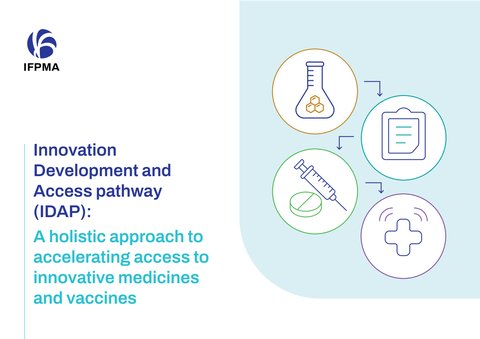 🔒
🔒 PDF Innovation Development and Access pathway
IDAP is a holistic framework spanning four linked phases: Research and Development; regulatory processes and product registration; listing, …
 🔒
🔒 Integrated delivery networks in Middle East healthcare: what PwC says about the next phase of care
Scale creates value only when healthcare assets are connected through shared systems, referral flows and coordinated management disciplines
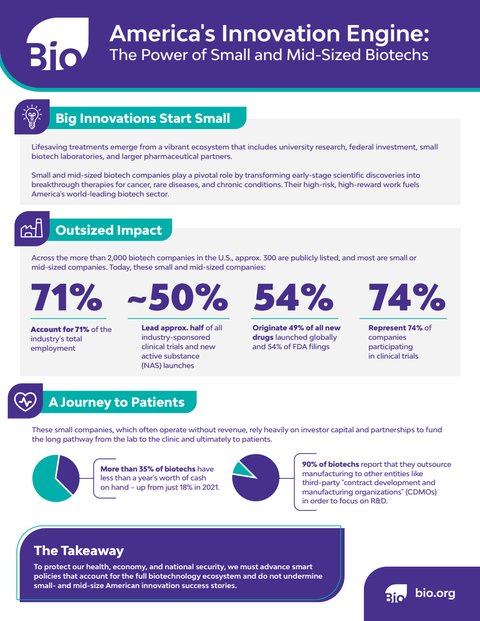 🔒
🔒 America's Innovation Engine: Small and Mid-Sized Biotechs Drive U.S. Clinical Trials, FDA Filings
Small and mid-sized biotechs represent approximately 99% of U.S. biotech business establishments and account for 71% of total industry emplo…