Pharmalittle: Roche accuses U.S. of 'blackmail,' Supreme Court rules on skinny labels

Decision brief
Answer first · skim in under a minute
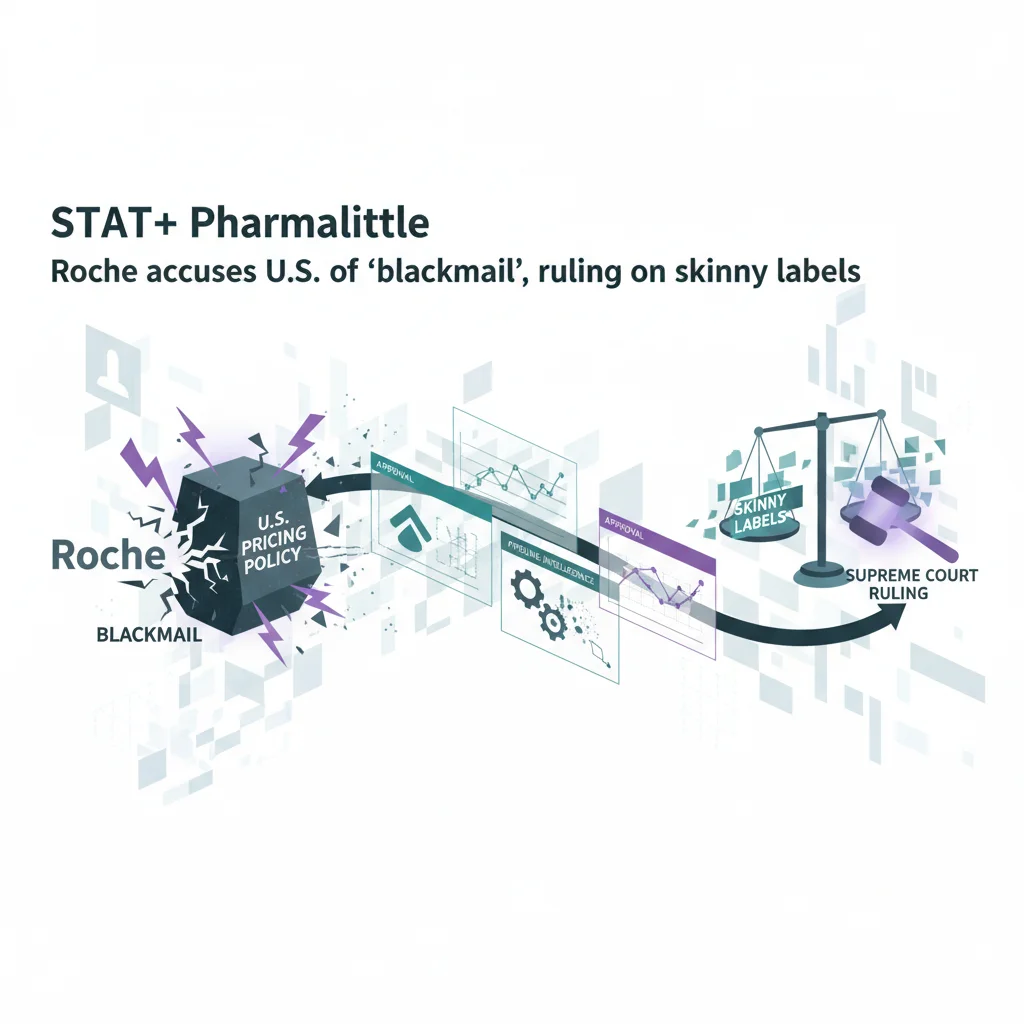
Roche's chairman calls U.S. drug pricing policy 'blackmail,' while the Supreme Court issues a ruling on skinny labels. This article breaks down what changed, who is affected, and what to watch next.
STAT Pharmalittle reading about Roche this week pairs two shocks: Swiss executives framing U.S. tariff-and-pricing pressure as coercion, and a Supreme Court skinny-label fight over Hikma’s generic icosapent ethyl that could reset induced-infringement pleading standards for Hatch-Waxman carve-outs.
Contents9 sections
Key Takeaways
- Roche publicly committed to a $50 billion U.S. investment over five years and more than 12,000 jobs amid tariff pressure, per Reuters.
- The Supreme Court heard Hikma v. Amarin on April 29, 2026, testing when skinny-label marketing crosses into active inducement under 35 U.S.C. §271(b).
- FDA’s ANDA patent/exclusivity framework remains the operational map for section viii carve-outs that enable skinny labels.
- BD and IP teams should refresh both Most-Favored-Nation / tariff scenarios and method-of-use enforcement playbooks together, not as separate workstreams.
What changed in Roche’s U.S. posture?
Roche has been among the large European manufacturers accelerating U.S. manufacturing commitments as Washington threatened steep pharmaceutical tariffs. In April 2025, Reuters reported Roche would invest $50 billion in the United States over five years and create more than 12,000 jobs.
That capital plan is the hard, countable counterpart to later political rhetoric from Roche leadership about tariff-linked pricing negotiations. For market-access modelers, the investment pledge is a primary fact; characterizations such as “blackmail” should be treated as executive commentary unless quoted from a transcriptable primary interview. See Reuters on Roche’s $50 billion U.S. plan.
What is the skinny-label case the Court heard?
On April 29, 2026, the Supreme Court heard Hikma Pharmaceuticals USA Inc. v. Amarin Pharma, Inc., a dispute over whether Hikma’s skinny-labeled generic of Vascepa (icosapent ethyl), plus website and press statements, actively induced infringement of patented cardiovascular uses.
Reuters coverage of the argument noted both Hikma and the U.S. government warned that a ruling for Amarin could chill generic launches that rely on carved-out labels. Hikma’s brief claimed skinny labels saved Medicare an estimated $1.5 billion over five years. See Reuters’ argument-day report.
How does FDA policy define skinny labels?
Skinny labels exist because Hatch-Waxman section viii lets ANDA applicants omit patented method-of-use information while seeking approval for unpatented indications. FDA’s patent and exclusivity resources explain how Orange Book listings and exclusivities interact with ANDA timing.
Operationally, the carve-out is a labeling and patent-listing problem before it is a litigation theory. Teams should start from the agency framework at FDA patent and exclusivity information, then map any induced-infringement allegations onto what the label actually omits.
How should BD teams connect the two stories?
Pricing coercion narratives and skinny-label patent risk hit different P&L lines but the same planning calendar. Tariff-avoidance CapEx changes COGS and transfer-price assumptions. A Court ruling that raises or lowers inducement pleading standards changes launch sequencing for section viii products and settlement negotiating power in ANDA suits.
For Roche specifically, U.S. build-out commitments are already public via wire coverage. For icosapent ethyl, NovaPharma’s related Hikma coverage tracks how generic competition expands once inducement theories fail at the pleading stage.
What remains unproven in the week’s roundup claims?
Executive sound bites comparing U.S. policy to “blackmail” are political characterizations. Unless corroborated in a primary transcript or filing, they should not be treated as quantified deal terms (for example, exact tariff percentages threatened in private talks).
Separately, secondary reports of vaccine-litigation settlements or other unrelated wire items should not be bundled into a Roche/skinny-label analysis without their own primary filings. This article confines itself to Roche’s disclosed U.S. investment scale and the Hikma-Amarin skinny-label docket.
Related NovaPharma coverage
- Supreme Court sides with generic on icosapent ethyl
- Roche Phase 3 trontinemab Alzheimer’s data
- Vabysmo EU approval context
Frequently Asked Questions
What did Roche announce to address U.S. tariff pressure?
In April 2025, Roche said it would invest $50 billion in the United States over five years and create more than 12,000 jobs, part of a broader industry push to expand U.S. manufacturing amid tariff threats.
What is the skinny-label Supreme Court fight about?
In Hikma v. Amarin, the Court reviewed whether a generic maker’s skinny label plus public statements can amount to active inducement of patented uses of Vascepa (icosapent ethyl). Oral argument was held April 29, 2026.
Why do market-access and IP teams care?
Tariff-linked pricing deals reshape U.S. net pricing assumptions, while skinny-label inducement standards change how branded companies police method-of-use patents against generics carving out patented indications.
Primary Sources
Roche pipeline snapshot
One-screen view of active programs, phases, and recent catalysts from public sources.
Sources & references 1 primary sources
Sources verified at publication. See our editorial policy and data sources.
This article follows our editorial standards. Report a correction via editorial contact.