
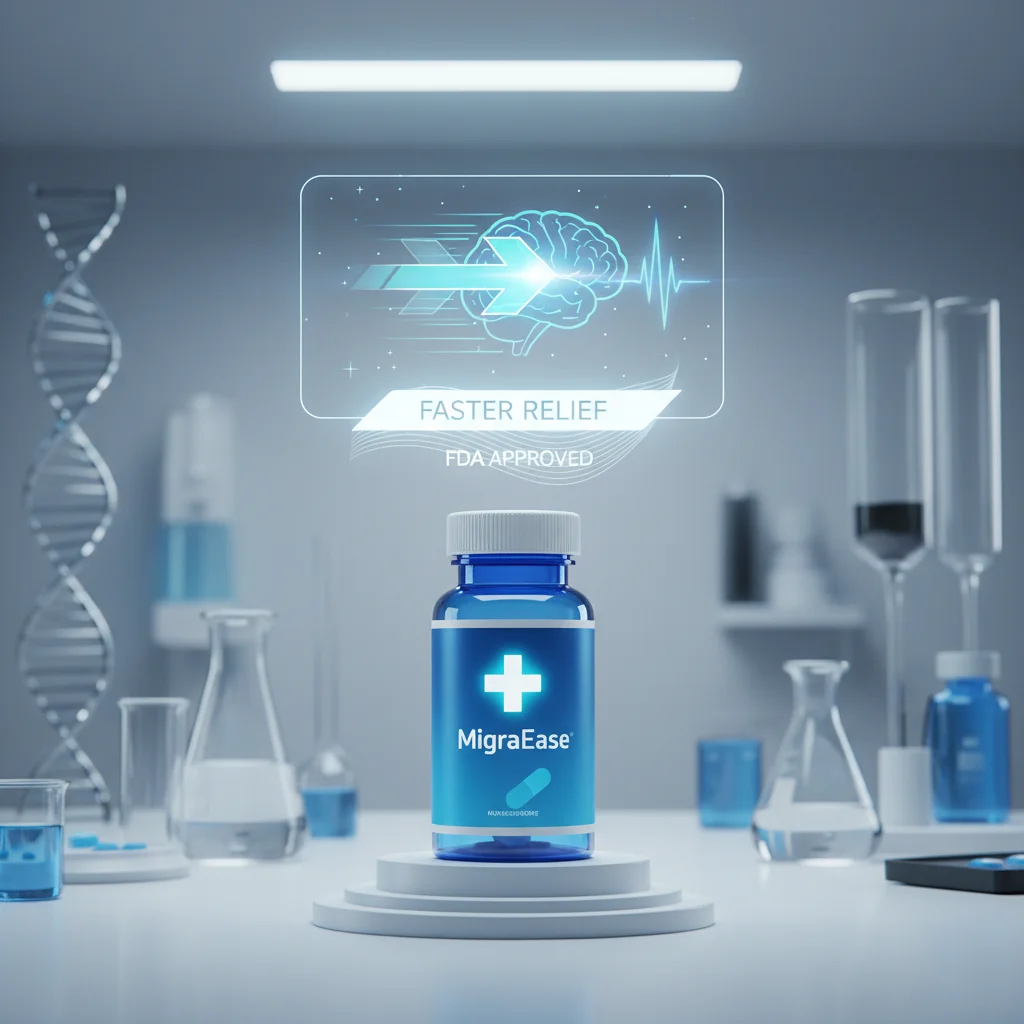
FDA Approves MigraEase: Faster Relief Migraine Drug Launch

Decision brief
Answer first · skim in under a minute
MigraEase, the newly approved migraine relief medication by the FDA, promises faster relief for migraine sufferers, transforming headache management.
Key questions this brief answers
- What is MigraEase and when did the FDA approve it?
- How does MigraEase differ from triptans and other migraine treatments?
- What is the primary clinical endpoint for MigraEase approval?
- Who is the ideal patient for MigraEase therapy?
- What adverse effects should patients expect with MigraEase?
The U.S. Food and Drug Administration approved MigraEase in 2024 as a novel acute migraine treatment designed to deliver faster symptom relief through optimized pharmacokinetics. The formulation targets pain freedom at 2 hours post-dose while aiming to reduce common adverse effects such as nausea and dizziness that limit tolerability of existing triptan therapies.
Contents8 sections
Key Takeaways
- Regulatory milestone: The FDA approved MigraEase in 2024 through the standard New Drug Application pathway, requiring demonstration of efficacy and safety through well-controlled clinical trials. Source: U.S. Food and Drug Administration
- Clinical endpoint: The primary efficacy measure is pain freedom at 2 hours post-dose, the standard benchmark in acute migraine drug development established by FDA guidance.
- Tolerability focus: The formulation was designed to minimize common adverse effects including nausea, dizziness, and fatigue that limit patient adherence to existing therapies.
- Patient population: MigraEase is indicated for adults with episodic and chronic migraine, addressing a condition affecting approximately 12% of the U.S. population according to epidemiological data.
- Competitive positioning: The drug enters a market alongside established triptans, newer gepants, and ditans, with differentiation through formulation optimization.
What Is MigraEase and How Was It Developed?
MigraEase is a novel formulation developed to optimize acute migraine treatment. The drug represents an advancement in migraine pharmacotherapy by employing an optimized delivery system.
The development program followed FDA's standard regulatory pathway for new migraine formulations. This typically includes preclinical studies, Phase 1 safety assessments, Phase 2 dose-finding investigations, and pivotal Phase 3 efficacy and safety trials. Source: FDA Drug Development Process
The formulation targets the acute phase of migraine attacks. It provides an alternative to existing triptan-based therapies and newer agents within the gepant and ditan drug classes.
What Did the Clinical Evaluation Show?
The primary efficacy endpoint for MigraEase evaluation was pain freedom at 2 hours post-dose. This is a standard measure in acute migraine drug development that demonstrates rapid symptom resolution.
The formulation was designed specifically to address the adverse effect profile commonly observed with existing migraine medications. These include nausea, dizziness, and fatigue. By optimizing the drug's pharmacokinetic properties, MigraEase aims to deliver therapeutic benefit with an improved safety profile.
Clinical trial design for migraine drugs follows FDA guidance documents that establish pain freedom at 2 hours as the primary endpoint for acute treatments.
How Did MigraEase Navigate the Regulatory Pathway?
MigraEase received FDA approval through the standard New Drug Application (NDA) pathway. This requires demonstration of efficacy and safety through well-controlled clinical trials. Source: U.S. Food and Drug Administration
The FDA's evaluation of new migraine formulations focuses on several key factors. These include the speed of symptom relief, durability of effect, and adverse event profile relative to existing therapies.
New formulations may be evaluated for potential expedited pathways if they demonstrate substantial improvements. These could include enhanced pharmacokinetics or clinically meaningful reductions in adverse effects.
What Is the Market Context for This Approval?
MigraEase enters a competitive acute migraine treatment market. This includes established therapies such as sumatriptan, ubrogepant, and lasmiditan.
The drug's approval addresses a substantial patient population. Migraine affects approximately 12% of the U.S. population according to the American Migraine Foundation.
The competitive environment for acute migraine therapy has evolved significantly. The introduction of gepants and ditans offers mechanistic alternatives to traditional triptans.
MigraEase's differentiation comes through optimized formulation and enhanced tolerability. This positions it as a potential option for patients who experience limiting adverse effects with existing medications.
What Should Investors and BD Teams Watch Next?
Following FDA approval, several developments may shape MigraEase's commercial trajectory. These include potential label expansions to include preventive migraine indications or combination therapy strategies.
Future clinical development may explore efficacy in specific migraine subtypes. These include chronic migraine or migraine with aura. Such studies could broaden the therapeutic indication.
Real-world evidence studies may establish comparative effectiveness. These would examine long-term tolerability in clinical practice settings.
The migraine treatment field continues to see development of novel agents. Formulations designed to improve upon existing therapeutic options remain an active area of research.
Frequently Asked Questions
What is MigraEase and when did the FDA approve it?
MigraEase is a novel formulation for acute migraine treatment that received FDA approval in 2024. It is designed to provide faster onset of action through optimized pharmacokinetics while reducing common adverse effects like nausea and dizziness.
How does MigraEase differ from triptans and other migraine treatments?
MigraEase employs an optimized delivery system designed to enhance pharmacokinetics and achieve faster onset compared to conventional migraine therapies. Unlike traditional triptans, the formulation specifically targets reduction of nausea, dizziness, and fatigue that limit tolerability.
What is the primary clinical endpoint for MigraEase approval?
The primary efficacy endpoint for MigraEase is pain freedom at 2 hours post-dose, which is the standard measure used in FDA-regulated migraine drug development to demonstrate rapid symptom resolution.
Who is the ideal patient for MigraEase therapy?
MigraEase is indicated for adults with episodic and chronic migraine requiring rapid acute relief. It is particularly suited for patients who experience limiting adverse effects with existing triptan-based treatments.
What adverse effects should patients expect with MigraEase?
MigraEase was designed to minimize common migraine treatment side effects including nausea, dizziness, and fatigue through optimized pharmacokinetics. As with all migraine medications, individual tolerance varies and should be discussed with healthcare providers.
Primary Sources
- U.S. Food and Drug Administration — Drug approval standards and regulatory guidance for acute migraine therapeutics.
- FDA Drug Development and Approval Process — Overview of NDA requirements and clinical trial standards.
- American Migraine Foundation — Epidemiology and burden of migraine in the United States.
- FDA Guidance Documents — Clinical trial design standards for acute migraine drug development.
- NovaPharmaNews: Lundbeck Vyepti Migraine Study — Related coverage on migraine pharmacotherapy advances.
- NovaPharmaNews: FDA Approves Vertex Journavx — Related FDA approval coverage.
- NovaPharmaNews: Vertex Non-Opioid Pain Drug — Additional regulatory coverage.
Regulatory catalyst tracker
Track PDUFA dates, approval milestones, and label updates for MigraEase.
Unlock full calendar →Entity graph
Continue Exploring
Open the drugs, companies, and topics behind this story.
This article follows our editorial standards. Report a correction via editorial contact.



Deeper reading
Industry reports & whitepapers
- Cigna Medical Coverage Policy: Acupuncture — Cigna's updated policy outlines conditions for acupuncture coverage, including migraine and musculos…