Big Pharma's Race for Biotech Assets Amid $170 Billion Patent Cliff

Decision brief
Answer first · skim in under a minute
As a significant patent cliff looms, Big Pharma is aggressively pursuing biotech assets. This article analyzes the market dynamics and implications for stakeholders.
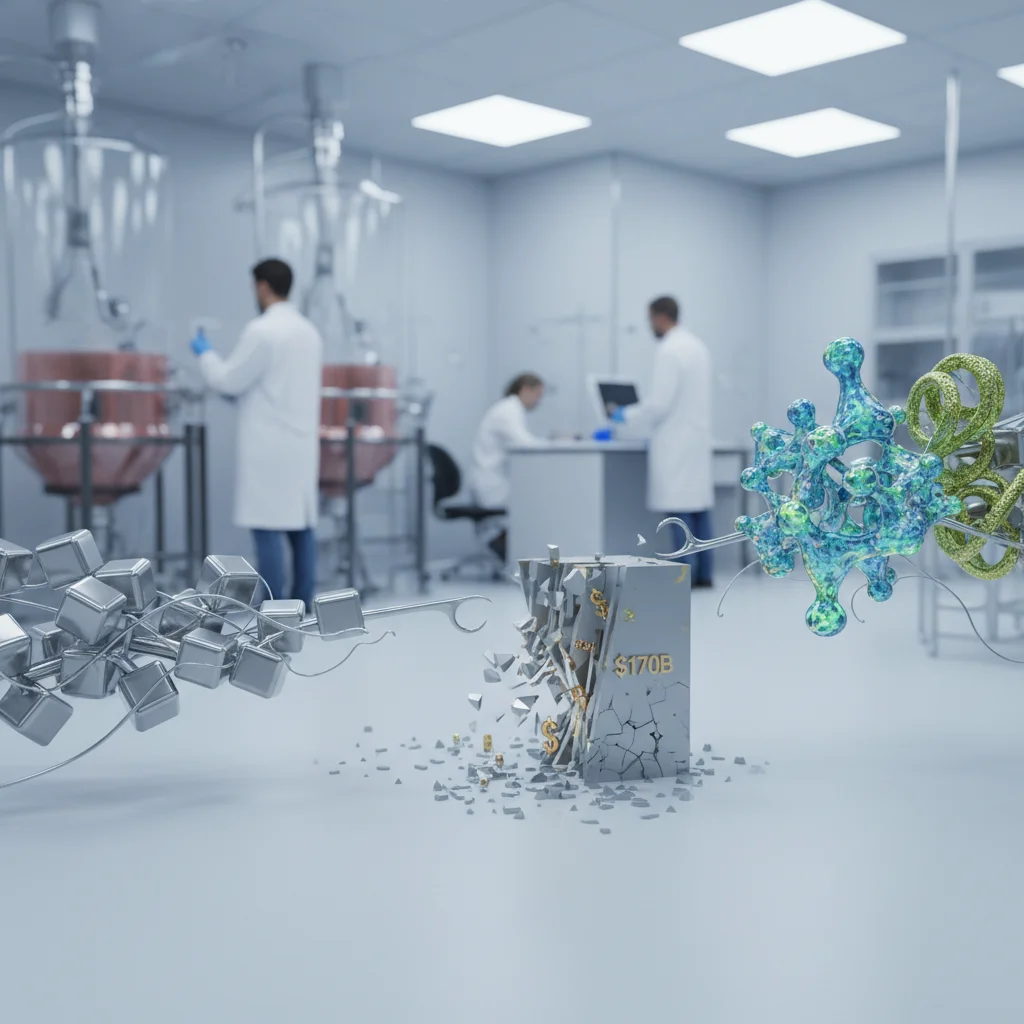
Big Pharma's Race for Biotech Assets Amid $170 Billion Patent Cliff is a useful search phrase, but the $170 billion total is not anchored to a single FDA or SEC primary here. What is documented is 2026 loss-of-exclusivity pressure plus cash M&A for clinical biotech assets.
Contents8 sections
Key Takeaways
- Do not treat an unsourced $170 billion industry-wide cliff figure as a diligence fact without a cited primary.
- Merck's Q1 2026 Form 10-Q discusses U.S. exclusivity timelines including Bridion through July 27, 2026 and Januvia/Janumet exclusivity loss in May 2026.
- Merck's Terns acquisition (~$6.7 billion equity value) and AbbVie's Apogee deal (~$10.9 billion) show how strategics buy clinical assets to refill pipelines.
- Investors should track product-level Orange Book and company 10-Q LOE language, not viral aggregate cliff slogans.
What patent-cliff facts can be sourced for 2026?
Merck's Form 10-Q for the quarter ended March 31, 2026 discusses product exclusivity litigation and timelines rather than a single industry $170 billion statistic.
In that filing, Merck states that Federal Circuit and settlement outcomes secure Bridion exclusivity in the U.S. through July 27, 2026, and that Januvia and Janumet lose U.S. market exclusivity in May 2026 under salt/polymorph settlement terms, with Janumet XR in July 2026.
Those dated product events are usable LOE markers. Broad cliff slogans without a cited method should be labeled as unsourced.
How is big pharma racing for biotech assets?
On March 25, 2026, Merck agreed to acquire Terns for $53.00 per share, about $6.7 billion equity value, to expand hematology with TERN-701. See Merck's deal announcement.
On June 22, 2026, AbbVie agreed to acquire Apogee for $135.11 per share, about $10.9 billion equity value, for immunology and respiratory pipeline depth, per PR Newswire.
Together those packages show buyers paying clinical-stage premiums while LOE clocks run on older brands.
Why delete CNBC-style Humira/Keytruda mashups?
Prior draft language mixed Humira, Keytruda, and Eliquis into one $170 billion urgency narrative without primary URLs. Humira's U.S. biosimilar wave and Keytruda's later LOE are different calendars and should not be collapsed into one undated cliff.
Use product-specific exclusivity language from company filings and FDA Orange Book reviews. If a revenue-at-risk total cannot be recalculated from disclosed product sales and LOE dates, omit it.
For deal-tape context, see NovaPharma's 2026 M&A boom analysis.
What should BD and investor teams do next?
Build a product LOE calendar from 10-K/10-Q footnotes and a parallel biotech-target list with clinical readouts. Price auctions against Terns and Apogee premiums, not against an unsourced $170 billion macro slide.
Watch close conditions: Terns completed after the May 4, 2026 tender deadline, while Apogee still pointed to a third-quarter 2026 close at announcement.
Also monitor manufacturing and approval readiness via NovaPharma's manufacturing approvals evidence brief and the March IPO drought note.
Related NovaPharma coverage
- Pharma M&A boom in 2026: market analysis
- Big Pharma M&A spree and March IPO drought
- Manufacturing pipeline approvals evidence brief
Frequently Asked Questions
Is the $170 billion patent-cliff figure primary-sourced?
No single SEC or FDA primary in this review establishes a universal $170 billion cliff total, so that headline number is not used as a fact. Documented 2026 LOE and M&A disclosures are used instead.
Which Merck exclusivity dates are documented for 2026?
Merck's first-quarter 2026 Form 10-Q discusses U.S. exclusivity dynamics including Bridion protection through July 27, 2026 and Januvia/Janumet U.S. exclusivity loss in May 2026 under settlement terms.
How are strategics refilling pipelines in 2026?
Cash acquisitions of clinical biotechs are the clearest refill path in primary releases, including Merck-Terns at about $6.7 billion equity value and AbbVie-Apogee at about $10.9 billion equity value.
Primary Sources
Sources & references 1 primary sources
Sources verified at publication. See our editorial policy and data sources.
This article follows our editorial standards. Report a correction via editorial contact.