
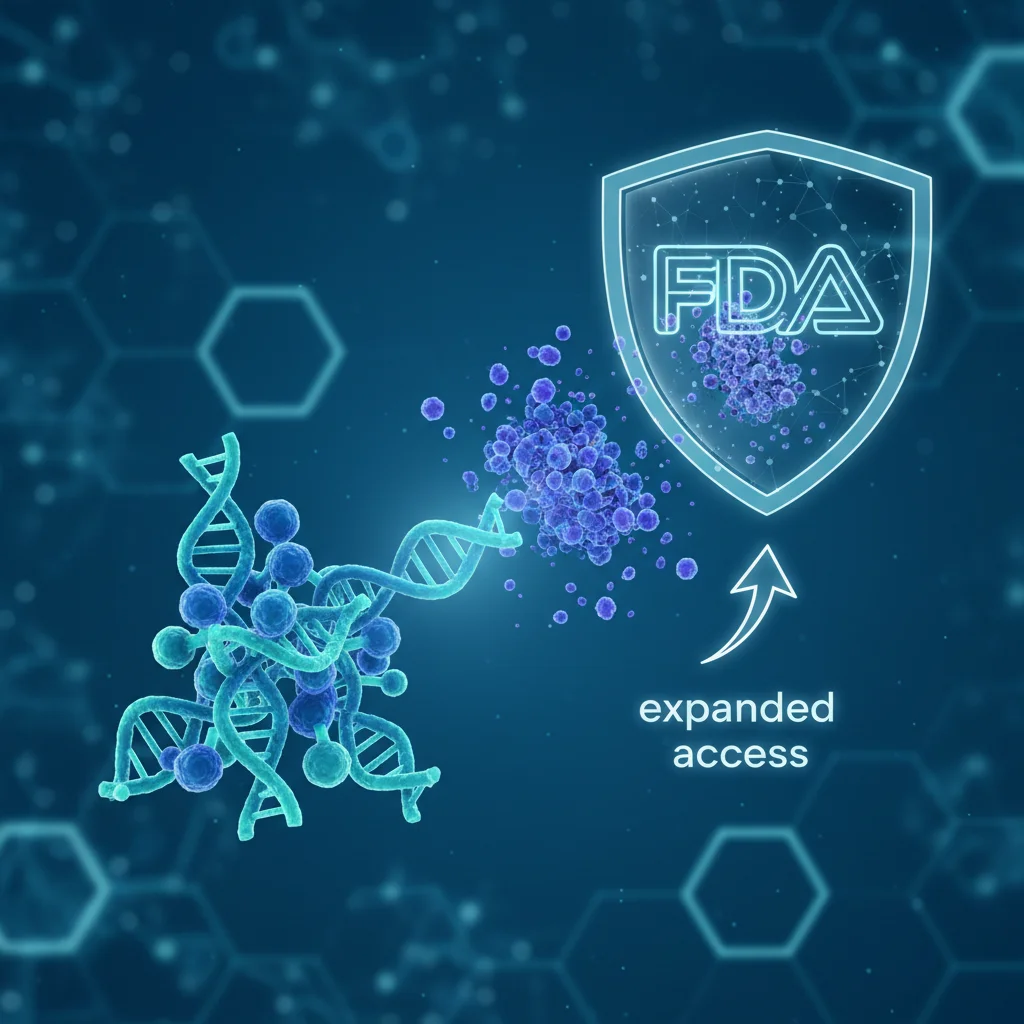
FDA Approves Expanded Access for Daraxonrasib in Pancreatic Cancer
The FDA has approved expanded access for Daraxonrasib in pancreatic cancer, presenting new opportunities for patients and investors alike. This article explores the implications of this approval for the pharmaceutical landscape.
Contents10 sections
FDA Approves Expanded Access for Daraxonrasib in Pancreatic Cancer
The FDA has approved expanded access for Daraxonrasib in pancreatic cancer, presenting new opportunities for patients and investors alike. This article explores the implications of this approval for the pharmaceutical landscape. This decision not only offers hope for a challenging patient population but also signals potential shifts in oncology investment and competitive strategies.
What are the Key Takeaways?
The FDA's approval of Daraxonrasib clearly opens new treatment avenues for pancreatic cancer patients. For investors, this decision may very well influence investment strategies in oncology, especially in areas with high unmet need. Companies should now be assessing their competitive positioning in light of this approval. Future milestones include monitoring ongoing clinical trials and anticipating potential market entry timelines.
What Happened with Daraxonrasib?
The FDA has granted expanded access to Daraxonrasib for patients battling pancreatic cancer—a significant step forward in providing new treatment options. This approval is viewed as a major milestone in oncology. It's a particularly bright spot for a disease notoriously resistant to treatment. This regulatory nod underscores the agency's willingness to expedite promising therapies for severe conditions.
What Does This Mean for Pharma Teams?
The approval of Daraxonrasib has the potential to reshape the competitive landscape in pancreatic cancer treatment. Pharma teams need to quickly evaluate the commercial implications, including realistic market potential and lucrative investment opportunities. Understanding the evolving regulatory environment and keeping a close watch on upcoming clinical milestones will be crucial for strategic planning. Here's what they should consider:
- Market Analysis: A deep dive into the current treatment paradigm and unmet needs.
- Competitive Landscape: Identifying key players and their strategies.
- Regulatory Strategy: Navigating the evolving regulatory pathways for oncology drugs.
- Clinical Trial Monitoring: Tracking the progress of ongoing trials and their potential impact.
- Investment Opportunities: Evaluating potential partnerships or acquisitions.
What's the Market Context?
Pancreatic cancer remains one of the deadliest cancers. Existing treatments often provide limited benefit. The five-year survival rate is grim—hovering in the single digits for advanced stages. This bleak outlook underscores the urgent need for innovative therapies. Daraxonrasib, with its novel mechanism of action, offers a glimmer of hope where few exist.
How Might This Impact Investment?
The FDA's decision could trigger a surge of investment into companies developing targeted therapies for pancreatic cancer. Venture capitalists and institutional investors may see this as a validation of the approach. They may be more willing to fund early-stage research and clinical trials. This increased investment could accelerate the development of other promising treatments. It could also spur M&A activity as larger pharma companies seek to acquire innovative assets in this space.
Who are the Key Players to Watch?
Beyond the company that developed Daraxonrasib, several other players are worth watching. These include companies with competing therapies in development, as well as those with established franchises in oncology. Academic research institutions and patient advocacy groups will also play a crucial role in shaping the future of pancreatic cancer treatment.
What's Next for Daraxonrasib?
Ongoing clinical trials will be critical for further establishing the efficacy and safety profile of Daraxonrasib. Real-world data will also be essential for understanding how the drug performs in diverse patient populations. Market access and reimbursement decisions will ultimately determine the commercial success of Daraxonrasib. Will payers embrace this new therapy, given the high unmet need and the potential cost? That's the big question.
What's the Competitive Response?
Expect competitors to ramp up their own R&D efforts in pancreatic cancer. Some may seek to develop similar therapies, while others may focus on combination approaches. The competitive landscape is likely to become more crowded and complex in the coming years. Companies will need to differentiate their products and strategies to succeed. Partnerships that combine different modalities, such as immunotherapy and targeted therapy, may become increasingly common.
Related coverage
Continue Exploring
Jump into the entities behind this story.
Follow Daraxonrasib developments
FDA oncology alerts and Daraxonrasib pipeline updates, every Monday.
Sources & references 1 primary sources
Sources verified at publication. See our editorial policy and data sources.
This article follows our editorial standards. Report a correction via editorial contact.
Continue Your Research

Industry Reports & Whitepapers
- La Negoziazione del Prezzo dei Farmaci Oncologici in Italia — This whitepaper analyzes the market benchmark role in negotiating oncology drug prices in Italy, hig…
- Cytological Specimens in the Molecular Era of Metastatic Melanoma — This whitepaper discusses the role of cytological specimens in diagnosing metastatic melanoma and th…