
Eli Lilly's Strategic Vaccine Acquisitions: A New Era in Infectious Disease
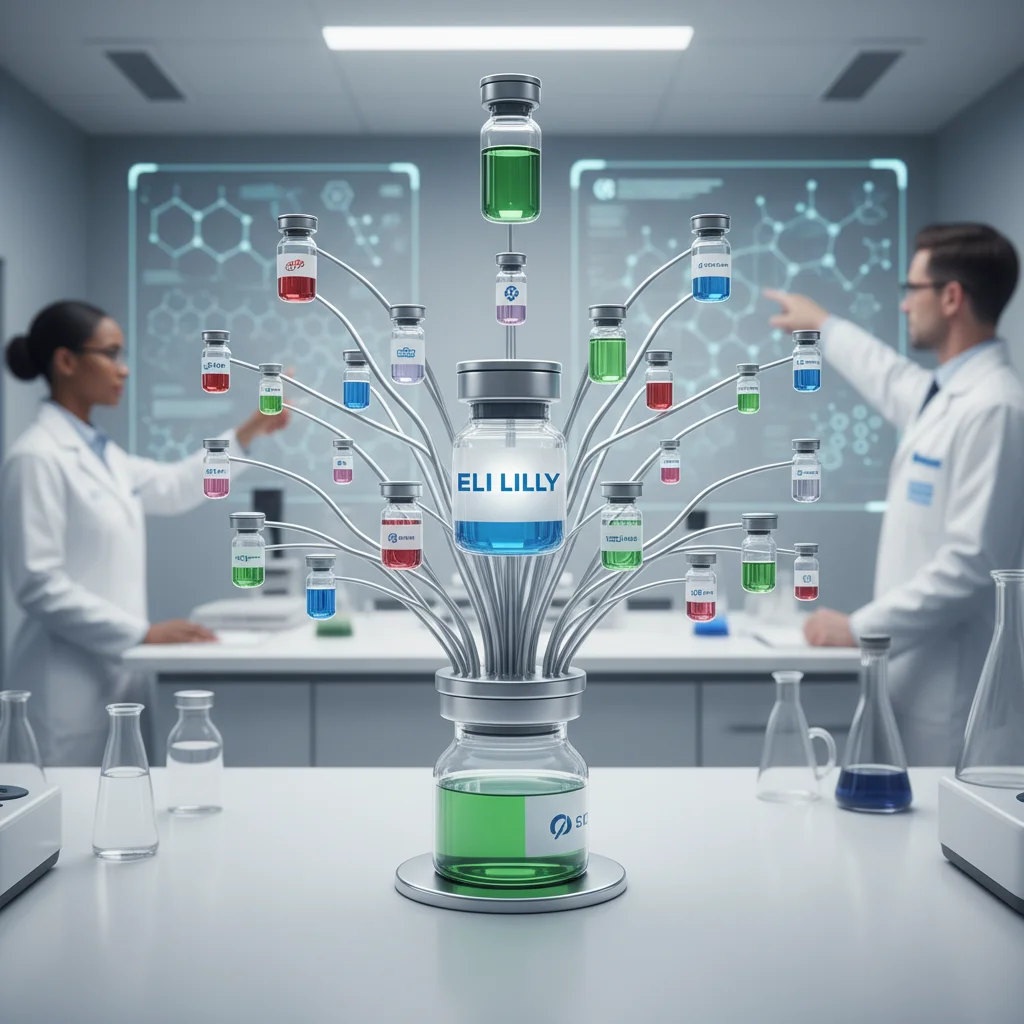
Eli Lilly has strategically acquired three vaccine developers for up to $4 billion, significantly expanding its infectious disease pipeline. This move diversifies Lilly's portfolio and positions it for future growth in the vaccine market.
Contents7 sections
Eli Lilly's Strategic Vaccine Acquisitions: A New Era in Infectious Disease
Eli Lilly has strategically acquired three vaccine developers for up to $4 billion, significantly expanding its infectious disease pipeline. This move diversifies Lilly's portfolio and positions it for future growth in the vaccine market. The deals signal a decisive pivot by one of pharma's most valuable companies into preventative medicine — a space it has largely ceded to rivals for decades.
Key Takeaways
- Eli Lilly agreed to acquire three vaccine developers — Curevo Inc., LimmaTech Biologics AG, and Vaccine Co. — in deals worth up to $3.8 billion to $4 billion combined, the company announced on May 26, 2026.
- The acquisitions mark Lilly's most aggressive entry into infectious disease vaccines, diversifying revenue beyond its dominant GLP-1 franchise anchored by tirzepatide.
- The deals align with Lilly's stated goal of preventing severe health problems and signal a long-term commitment to building a preventative medicine business alongside its therapeutic portfolio.
- Regulatory affairs and BD teams should watch how Lilly integrates three distinct vaccine platforms and navigates FDA and EMA approval pathways for candidates at varying stages of development.
Eli Lilly Acquires Three Vaccine Developers for Up to $4 Billion
On May 26, 2026, Eli Lilly and Company announced agreements to acquire three small vaccine developers: Curevo Inc., LimmaTech Biologics AG, and Vaccine Co. The combined deal value reaches up to approximately $3.8 billion to $4 billion, according to reporting by STAT News and Reuters. The transactions are expected to close in the coming months, subject to customary regulatory approvals.
Lilly framed the acquisitions as central to its broader ambition of preventing severe health problems — a strategic objective that extends well beyond the company's current commercial strength in metabolic disease and oncology. Curevo brings expertise in novel vaccine adjuvants and formulation technologies. LimmaTech Biologics AG, a Swiss-based biologics manufacturer, contributes conjugate vaccine capabilities and a GMP-certified production facility. Vaccine Co. adds early-stage candidates targeting respiratory pathogens. Together, the three companies give Lilly an instant infrastructure for vaccine research, development, and manufacturing that would have taken years to build organically.
The timing is notable. Lilly's GLP-1 franchise — led by Mounjaro and Zepbound — has propelled the company past a $800 billion market capitalization, but investors and executives alike recognize the risk of concentration. These acquisitions represent a deliberate effort to build a second growth engine.
Strategic Rationale Behind Lilly's Vaccine Push
The global vaccine market is projected to exceed $100 billion in annual sales by 2030, driven by aging populations, emerging infectious threats, and expanding immunization programs in low- and middle-income countries. For Lilly, the calculus is straightforward: infectious disease prevention represents a large, durable addressable market with high barriers to entry and strong public-sector demand.
Lilly's therapeutic portfolio has historically skewed toward chronic disease management — diabetes, obesity, Alzheimer's, and oncology. Vaccines offer a fundamentally different commercial model: volume-driven, often procured through government contracts, and less vulnerable to the pricing pressures that weigh on specialty pharmaceuticals. The acquisitions also position Lilly to respond to pandemic preparedness initiatives, where governments are actively seeking partnerships with manufacturers capable of rapid scale-up.
From a competitive standpoint, the move puts Lilly in more direct competition with Pfizer, GSK, Sanofi, and Merck — companies that have long dominated the vaccine space. But it also differentiates Lilly from other GLP-1-focused peers like Novo Nordisk, which has not made comparable bets on infectious disease prevention.
Implications for Pharmaceutical Business Development and Regulatory Affairs
For BD teams across the industry, Lilly's triple acquisition sets a new benchmark for vaccine M&A valuation and signals that large-cap pharma is willing to pay meaningful premiums for platform capabilities rather than single-asset deals. Expect heightened competition for mid-stage vaccine developers, particularly those with proprietary adjuvant technologies, mRNA or protein subunit platforms, and established manufacturing capacity.
Regulatory affairs teams face a more complex challenge. Integrating three separate pipelines means managing multiple IND filings, varying clinical trial phases, and distinct regulatory dossiers across jurisdictions. The FDA's Center for Biologics Evaluation and Research (CBER) oversees vaccine approvals in the United States, while the EMA's Committee for Medicinal Products for Human Use (CHMP) manages the European pathway. Each agency has specific requirements for immunogenicity endpoints, safety databases, and chemistry-manufacturing-controls documentation that differ from traditional therapeutic approvals.
Lilly will need to demonstrate that its newly acquired candidates meet the FDA's standards for vaccine efficacy and safety, including adequate representation of diverse populations in Phase 3 trials. The agency's guidance on vaccine development and approval outlines the evidentiary framework sponsors must follow. In Europe, the EMA's vaccine scientific guidelines provide parallel requirements, and Lilly will need to coordinate submissions across both regions to avoid delays.
Expedited pathways — including Fast Track and Breakthrough Therapy designations at the FDA, and the EMA's PRIME scheme — may be available for candidates addressing unmet needs in areas like respiratory syncytial virus, antimicrobial-resistant bacterial infections, or novel pandemic threats. Identifying which programs qualify for accelerated review should be an immediate priority for Lilly's regulatory team.
Expanding the Infectious Disease Pipeline: A Look at Potential Targets
While Lilly has not disclosed the full slate of candidates housed within the three acquired companies, the broader infectious disease vaccine pipeline is rich with unmet needs. Respiratory viruses — including RSV, influenza, and next-generation COVID-19 variants — remain high-priority targets. Bacterial vaccines targeting Clostridioides difficile, Staphylococcus aureus, and multidrug-resistant gram-negative pathogens represent another area of intense R&D activity, driven by the global antimicrobial resistance crisis the WHO has called one of the top public health threats.
Lilly's acquisitions also open the door to combination vaccines and novel delivery formats — intranasal, microneedle patch, or thermostable formulations — that could differentiate its offerings in both developed and emerging markets. The WHO's Immunization Agenda 2030 emphasizes the need for vaccines that are easier to deploy in resource-limited settings, a design criterion that could shape Lilly's development
Related coverage
Continue Exploring
Jump into the entities behind this story.
Track vaccine news weekly
FDA vaccine news and regulatory updates, every Monday.
Sources & references 1 primary sources
Sources verified at publication. See our editorial policy and data sources.
This article follows our editorial standards. Report a correction via editorial contact.
Continue Your Research



Industry Reports & Whitepapers
- IFPMA IDAP whitepaper: end-to-end access pathway for innovative medicines and vaccines — IDAP frames access as an end-to-end pathway from R&D to delivery, highlighting bottlenecks and colla…