The Pharma Choke Point: A Strategic Risk for U.S. Pharmaceutical Supply Chains

Decision brief
Answer first · skim in under a minute
The Council on Foreign Relations' 'The Pharma Choke Point' report details how U.S. dependence on Chinese pharmaceutical inputs is structural and growing, posing a risk of deliberate supply disruption. This article explains the key findings, implications for pharma teams, and what to watch next.
The Pharma Choke Point report from the Council on Foreign Relations argues that U.S. reliance on Chinese pharmaceutical inputs is structural—not a temporary generics quirk—and that the risk now includes deliberate peacetime cutoff, not only plant fires or pandemics.
Contents10 sections
Key Takeaways
- CFR’s June 2026 Pharma Choke Point study frames Chinese pharma dependence as a rare-earths-scale strategic risk.
- FDA’s 2019 supply-chain testimony: only 28% of U.S.-supplying API sites were domestic; 13% were in China.
- Highest acute risk sits on medicines and inputs China exports directly, including transplant and antibiotic categories cited by CFR.
- FDA’s public Drug Shortages database remains the operational signal board for single-source disruptions—but not for coordinated export controls.
What does The Pharma Choke Point report claim?
In June 2026, CFR published The Pharma Choke Point: How to Reduce U.S. Dependence on Chinese Pharmaceutical and Biotechnology Supply Chains. Authors Thomas J. Bollyky, Rush Doshi, Prashant Yadav, Olivia Kosloff, and Elena Every argue dependence began in generics and key starting materials (KSMs) and now extends into biologics manufacturing, first-in-human trials, and synthetic DNA.
The core warning is peacetime coercion: China could withhold essential inputs for economic or political pressure, as it has done with rare-earth minerals. That is a different failure mode than the quality holds and demand spikes that dominate today’s shortage list.
Why do FDA data still matter for this strategic risk?
Strategy papers set the threat model; FDA data show how thin the manufacturing map already is. In October 2019 congressional testimony on safeguarding pharmaceutical supply chains, FDA stated that only 28% of facilities making APIs for the U.S. market were in the United States, while 72% were overseas and 13% were in China, with registered Chinese API sites more than doubling from 2010 to 2019.
Those figures do not prove CFR’s coercion thesis, but they quantify geographic concentration that makes a choke point plausible. See FDA’s 2019 supply-chain testimony.
How should BD teams use FDA shortage tools today?
For day-to-day exposure, FDA’s Drug Shortages hub and searchable Drug Shortage Database list current shortages, resolved cases, and discontinuations as manufacturers notify the agency.
Those tools are built for manufacturing and demand shocks. They will not automatically flag a coordinated export license change on KSMs. BD and competitive-intelligence teams should treat FDA listings as a leading indicator of single-source fragility, then layer trade and DMF geography on top.
Where is concentration highest in practice?
- Upstream KSMs and reagents often concentrate in China even when finished APIs are labeled India or EU.
- Direct China exposure is highest for some essential finished medicines CFR flags, including transplant immunosuppressants and broad-spectrum antibiotics.
- Biologics capacity, early clinical manufacturing, and synthetic DNA are the growth edges of dependence, not only 1980s generics chemistry.
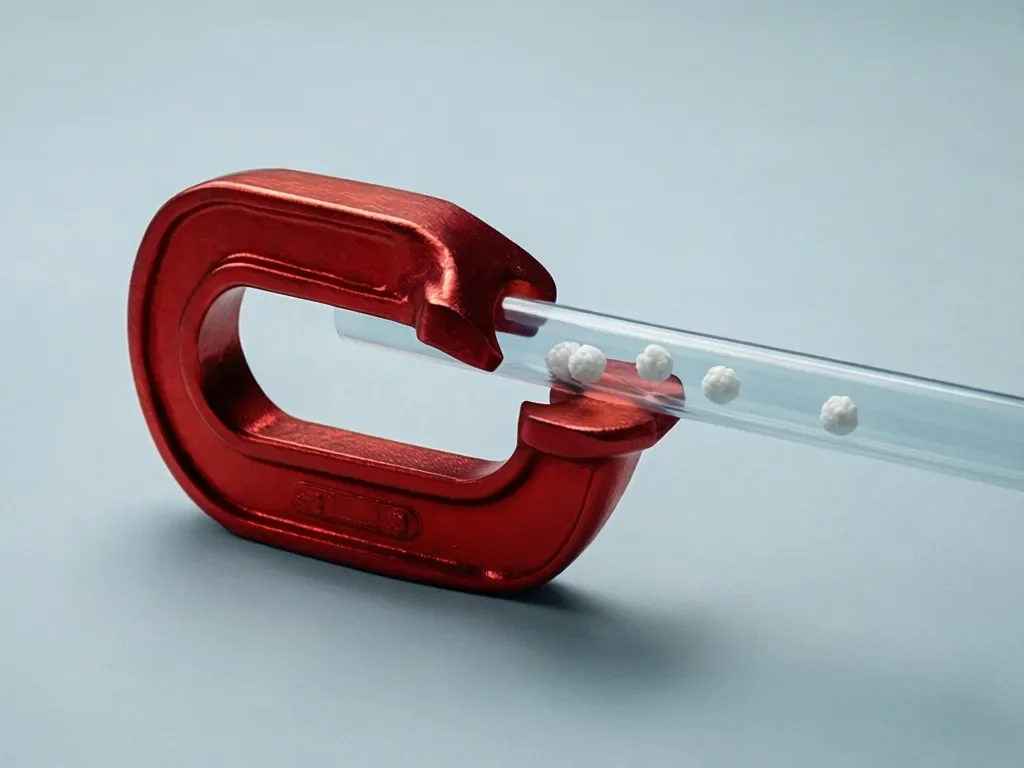
In military and logistics language, a choke point is a narrow passage whose loss cascades. Applied to pharma, the “passage” is often a handful of KSM plants, not the final tablet press. ScienceDirect’s overview of the choke point concept is a useful metaphor for scenario workshops.
What policy and commercial moves should teams watch in 2026?
Watch three lanes in parallel. First, U.S. industrial-policy tools aimed at essential medicines stockpiles and domestic API capacity. Second, corporate dual-sourcing and buffer-inventory announcements for China-exposed SKUs. Third, any Chinese export-control or licensing moves that touch pharmaceutical chemicals—not only rare earths.
Investors should stress-test portfolios where India formulation plants still depend on Chinese KSMs. Onshoring only the final synthesis step can leave the true choke point untouched.
What remains unproven?
CFR’s report is a policy analysis, not an FDA enforcement finding. It does not publish a public, medicine-by-medicine probability that China will cut exports in 2026. Independent trade statistics still disagree on exact China API share because DMF geography, Indian reprocessing, and solvent/reagent tiers are incompletely disclosed.
Do not treat archetype labels as audited financial risk scores. Use them to prioritize diligence questions: Which SKUs have sole-country KSMs? Which contracts allow substitution? Which hospital critical-care lists map to China-direct finished goods?
Related NovaPharma coverage
- Middle East Pharma Markets: Strategic Growth at API China 2026
- Poly Medicure appoints Indranil Mukherjee as CEO, APAC & India
- FDA drug shortages and pharmaceutical supply-chain risk
Frequently Asked Questions
What is The Pharma Choke Point report?
It is a June 2026 Council on Foreign Relations report arguing that U.S. dependence on Chinese pharmaceutical and biotechnology inputs is structural and could be weaponized outside wartime or pandemic conditions.
How much U.S. API manufacturing is overseas?
In 2019 FDA congressional testimony, FDA reported that only 28% of API manufacturing facilities supplying the U.S. market were domestic, while 72% were overseas and 13% were in China.
Where can teams track U.S. drug shortage signals?
FDA publishes current and resolved shortage listings on its Drug Shortages pages and searchable database, updated as manufacturers report supply disruptions.
Primary Sources
Sources & references 1 primary sources
Sources verified at publication. See our editorial policy and data sources.
This article follows our editorial standards. Report a correction via editorial contact.