Drugs: infliximab
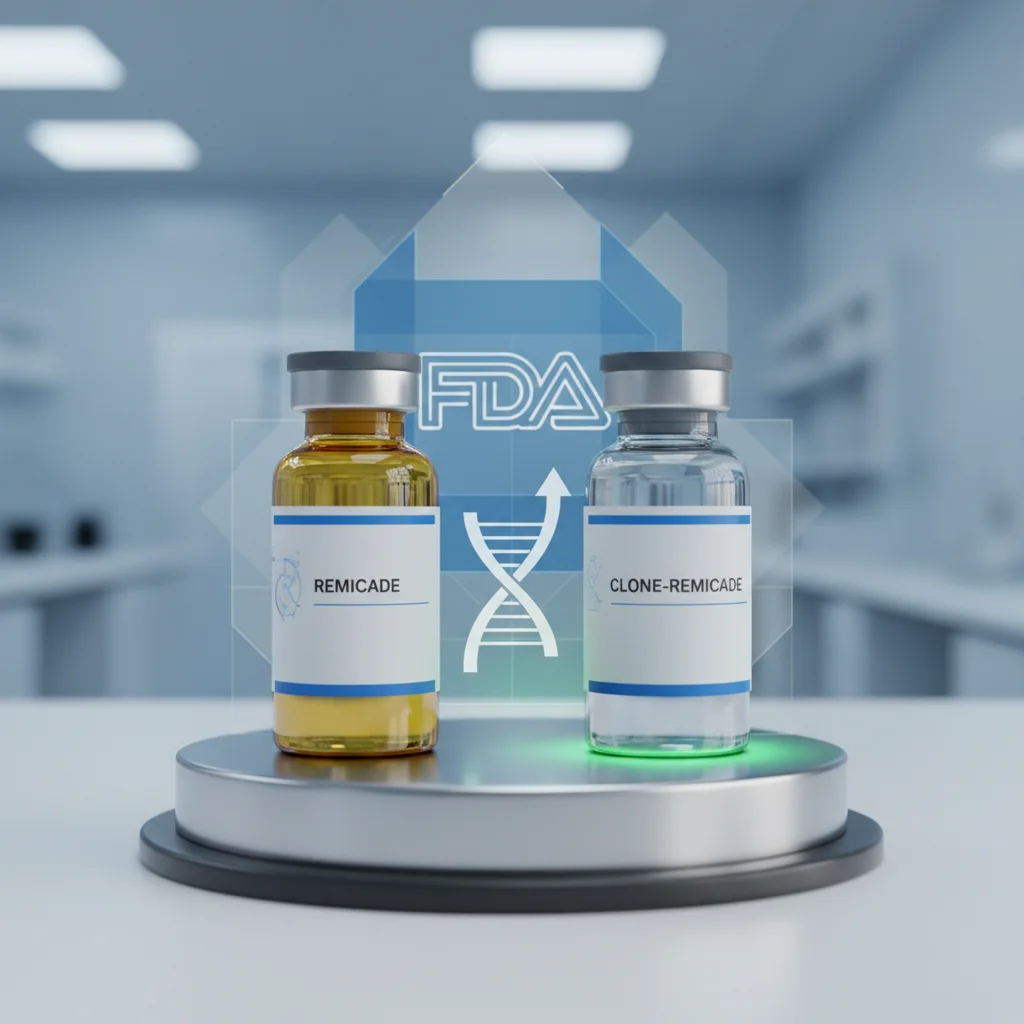
FDA Approves BioClone's Clone-Remicade: Cheaper Alternative to Remicade
BioClone's Clone-Remicade has received FDA approval, offering a more affordable option for patients requiring treatment for autoimmune diseases, similar to Remicade.
Intelligence Snapshot
Executive Summary
Main news: The U.S. Food and Drug Administration (FDA) has approved BioClone's Clone-Remicade as a biosimilar to Remicade ( infliximab ), offering a more cost-effective treatment option.
Key Insights
-
Clinical impact: As a biosimilar, Clone-Remicade has demonstrated no clinically…
Clinical impact: As a biosimilar, Clone-Remicade has demonstrated no clinically meaningful differences in safety, purity, and potency compared to Remicade.
-
Market implications: This autoimmune diseases drug approval is expected to increase…
Market implications: This autoimmune diseases drug approval is expected to increase treatment accessibility and reduce healthcare costs, benefiting patients with conditions like rheumatoid arthritis , Crohn's disease, and psoriasis.
-
Next steps: Clone-Remicade is poised to enter the U.S.
market, adding to the competitive landscape of infliximab biosimilars.
Market Impact
| Regulatory | medium |
|---|---|
| Commercial | medium |
| Competitive | low |
| Investment | low |
Loading intelligence…
Quick Answer
Key Questions
- What is Clone-Remicade and how does it compare to Remicade?
- How does the FDA biosimilar approval process work?
- What are the safety considerations for biosimilars like Clone-Remicade?
Executive Scorecard
Heuristic scores · directional, not investment adviceRegulatory catalyst tracker
Track PDUFA dates, approval milestones, and label updates for infliximab.
Unlock full calendar →Investor brief
Download a one-page summary of regulatory impact and competitive context.
Explore drug hub →Contents11 sections
Medically Reviewed
by Dr. James Morrison, Chief Medical Officer (MD, FACP, FACC)
Reviewed on: April 20, 2026
Key Takeaways
- Main news: The U.S. Food and Drug Administration (FDA) has approved BioClone's Clone-Remicade as a biosimilar to Remicade (infliximab), offering a more cost-effective treatment option.
- Clinical impact: As a biosimilar, Clone-Remicade has demonstrated no clinically meaningful differences in safety, purity, and potency compared to Remicade.
- Market implications: This autoimmune diseases drug approval is expected to increase treatment accessibility and reduce healthcare costs, benefiting patients with conditions like rheumatoid arthritis, Crohn's disease, and psoriasis.
- Next steps: Clone-Remicade is poised to enter the U.S. market, adding to the competitive landscape of infliximab biosimilars.
IntelligenceRegulatory Impact
FDA are the agencies to watch. Regulatory relevance reads medium for autoimmune diseases, with infliximab most exposed to upcoming decisions. Teams should track submission types, designations, and guidance shifts that could move approval timelines.
Drug Overview
Clone-Remicade contains the active ingredient infliximab, a monoclonal antibody. It functions by binding to tumor necrosis factor alpha (TNF-α), thereby inhibiting its interaction with TNF receptors and reducing inflammation. Clone-Remicade is indicated for the treatment of autoimmune diseases, including rheumatoid arthritis, Crohn's disease, and psoriasis.
IntelligenceCompetitive Intelligence
Competitive pressure is low. Watch which sponsors move first. Benchmark pipeline positioning, differentiation, and partnership scouting against the signals in this story.
Clinical Insights
As a biosimilar, Clone-Remicade's development did not require extensive new clinical trials. Instead, BioClone demonstrated through analytical, nonclinical, and clinical studies that there are no clinically meaningful differences in safety, purity, and potency compared to Remicade. Safety monitoring aligns with the reference product’s safety profile, with class-typical adverse events including infusion reactions, increased risk of infections, and potential immunogenicity leading to anti-drug antibodies.
IntelligenceMarket Signals
Commercial pull is medium and investment relevance low. Expect implications for autoimmune diseases pricing, access, and launch sequencing.
Regulatory Context
The U.S. Food and Drug Administration (FDA) approval of Clone-Remicade followed the established biosimilar approval pathway. This pathway requires demonstration of biosimilarity based on comprehensive analytical characterization, animal studies, and clinical trials. The FDA ensures that biosimilars meet rigorous standards to guarantee they are as safe and effective as the reference product.
IntelligenceStrategic Takeaways
Main news: The U.S. Food and Drug Administration (FDA) has approved BioClone's Clone-Remicade as a biosimilar to Remicade ( infliximab ), offering a more cost-effective treatment option. Clinical impact: As a biosimilar, Clone-Remicade has demonstrated no clinically meaningful differences in safety, purity, and potency compared to Remicade. Market implications: This autoimmune diseases drug approval is expected to increase treatment accessibility and reduce healthcare costs, benefiting patients with conditions like rheumatoid arthritis , Crohn's disease, and psoriasis.
Market Impact
Clone-Remicade's approval is expected to have a considerable market impact by providing a more cost-effective alternative to Remicade. The target population includes a large number of patients with chronic autoimmune diseases, such as rheumatoid arthritis, Crohn's disease, and psoriasis. By offering a lower-cost option, Clone-Remicade can increase treatment accessibility and potentially reduce overall healthcare costs. This approval adds to the competitive biosimilar market for infliximab in the US, potentially driving down treatment costs.
IntelligenceEvidence Quality
Claims are grounded in the cited primary and secondary sources, with editorial review applied before publication.
Future Outlook
With the FDA approval secured, BioClone will focus on launching Clone-Remicade in the US market. [Source: U.S. Food and Drug Administration] The company may also explore potential label expansions to include other indications currently approved for Remicade. Continued monitoring of the drug's performance and safety in real-world settings will be essential.
Frequently Asked Questions
What is Clone-Remicade and how does it compare to Remicade?
Clone-Remicade is a biosimilar to Remicade (infliximab). As a biosimilar, it is highly similar to Remicade and has no clinically meaningful differences in safety, purity, and potency. It offers a more cost-effective treatment option for autoimmune diseases.
How does the FDA biosimilar approval process work?
The FDA requires biosimilars to undergo extensive analytical characterization, animal studies, and clinical trials to demonstrate that they are highly similar to the reference product. The FDA ensures that biosimilars meet rigorous standards for safety and efficacy.
What are the safety considerations for biosimilars like Clone-Remicade?
Biosimilars are closely monitored for safety and immunogenicity. The safety profile of Clone-Remicade is expected to be similar to that of Remicade, with class-typical adverse events including infusion reactions, increased risk of infections, and potential immunogenicity leading to anti-drug antibodies.
References
References
- U.S. Food and Drug Administration. FDA approval. Accessed 2026-04-20.
Related profiles
Related coverage
Continue Exploring
Jump into the entities behind this story.
Ask AI About autoimmune diseases
Grounded in NovaPharmaNews intelligence. Pick a prompt to start.
Follow infliximab developments
FDA autoimmune diseases alerts and infliximab pipeline updates, every Monday.
- Evidence strength
- 71/100
- Last verified
- Jun 17, 2026
- AI-assisted review
- Yes
- Editorial review
- Dr. Sarah Chen
Moderate source quality · grounded in cited primary and secondary sources.
This article follows our editorial standards. Report a correction via editorial contact.