
ASGCT: Manufacturing Innovations Take Center Stage
Manufacturing innovations dominated the ASGCT Annual Meeting, with industry leaders highlighting process optimization, automation, and regulatory compliance as critical drivers of scalable, cost-effective cell and gene therapy production.
Contents13 sections
Key Takeaways
- Manufacturing innovations dominated ASGCT discussions, with focus on scalability, automation, and cost reduction for cell and gene therapies.
- Process optimization strategies highlighted integration of closed-system technologies and real-time analytics to improve reproducibility and reduce manufacturing timelines.
- Regulatory alignment remains critical, with speakers emphasizing the need for robust quality control frameworks and compliance with evolving FDA and EMA guidance on CGT manufacturing.
- Supply chain resilience emerged as a key priority, with industry leaders discussing strategies to address raw material sourcing and logistics challenges in cell and gene therapy production.
Manufacturing innovations took center stage at the American Society of Gene & Cell Therapy (ASGCT) Annual Meeting, as industry leaders, researchers, and regulatory experts convened to address critical challenges in scaling cell and gene therapy (CGT) production. The meeting underscored the industry's commitment to developing robust, cost-effective, and compliant manufacturing processes essential for bringing advanced therapies to patients globally.
Event Context and Significance
The ASGCT Annual Meeting serves as the premier forum for discussing advances in cell and gene therapy manufacturing, where stakeholders share insights on process development, regulatory strategy, and commercial-scale production. Manufacturing excellence has become a competitive differentiator in the CGT space, as companies race to reduce production costs, improve consistency, and meet growing patient demand. The emphasis on biomanufacturing innovations reflects the industry's recognition that manufacturing capabilities directly impact patient access and commercial viability of cell and gene therapies.
Manufacturing Process Improvements and Cell and Gene Therapy Manufacturing Innovations
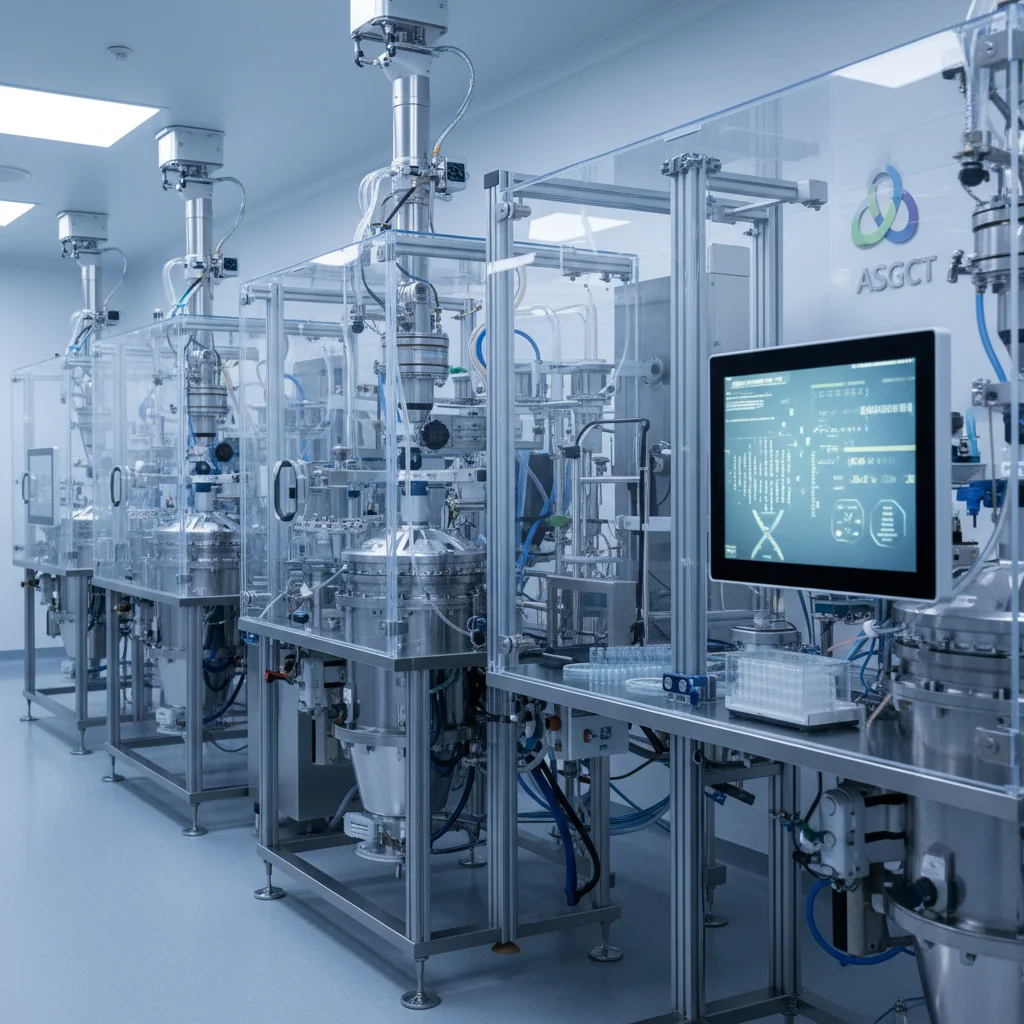
Process optimization emerged as a central theme, with presentations highlighting strategies to streamline manufacturing workflows and reduce production timelines. Industry participants discussed the adoption of closed-system bioreactors, automated cell processing platforms, and integrated monitoring systems designed to enhance reproducibility while minimizing contamination risk.
Speakers emphasized the importance of platform approaches that can be adapted across multiple CGT modalities. These standardized frameworks enable manufacturers to leverage existing infrastructure and expertise while reducing development time for new therapies. Real-time analytics and process analytical technology (PAT) integration were highlighted as critical enablers for achieving consistent product quality and reducing batch failures.
The meeting also featured discussions on single-use bioreactor systems and modular manufacturing facilities, which offer flexibility for smaller-scale production and reduced capital investment compared to traditional stainless-steel infrastructure. These innovations are particularly relevant for rare disease indications where patient populations are limited and manufacturing volumes may be lower.
New Technologies and Platforms for CGT Manufacturing Advancements
Attendees explored emerging technologies designed to address manufacturing bottlenecks in cell and gene therapy production. Presentations covered advances in cell isolation, expansion, and transduction methodologies that leverage automation to improve efficiency and reduce manual handling.
Platform-based approaches to manufacturing were highlighted as a means to accelerate time-to-clinic and reduce development costs. These platforms integrate standardized unit operations—such as cell harvesting, washing, and formulation—into modular systems that can be rapidly configured for different therapeutic applications. Such approaches enable manufacturers to achieve economies of scale while maintaining flexibility for personalized and off-the-shelf therapies.
Discussions also addressed the role of artificial intelligence and machine learning in optimizing manufacturing parameters, predicting process outcomes, and identifying quality risks before they impact product viability. These digital tools are increasingly being integrated into manufacturing execution systems (MES) to enhance decision-making and operational efficiency.
Quality Control and Analytics in Biomanufacturing
Quality assurance and analytics were emphasized as foundational elements of robust CGT manufacturing. Presentations highlighted the importance of comprehensive characterization strategies that assess product identity, potency, purity, and safety throughout the manufacturing process.
Speakers underscored the need for harmonized analytical methods and standardized reference materials to ensure consistency across manufacturing sites and enable meaningful comparison of product quality metrics. The integration of high-throughput analytical platforms—including flow cytometry, next-generation sequencing, and metabolic profiling—was discussed as essential for real-time quality monitoring and rapid decision-making.
The meeting also addressed the challenges of validating analytical methods for novel CGT products, where historical precedent may be limited. Regulatory experts emphasized the importance of early engagement with health authorities to align on analytical strategies and acceptance criteria, reducing the risk of late-stage surprises during regulatory review.
Regulatory Considerations and Compliance Framework
Regulatory guidance and compliance requirements for CGT manufacturing were central to multiple sessions. Speakers discussed recent updates from the FDA and EMA on manufacturing expectations, including guidance on process validation, change management, and post-approval manufacturing changes.
The evolving regulatory landscape for CGT manufacturing reflects the industry's maturation and the need for consistent, science-based standards. Regulatory experts emphasized that early alignment with health authorities on manufacturing strategy—including process design, control strategy, and lifecycle management—is critical for successful regulatory approval and post-market compliance.
Presentations also addressed the unique challenges of manufacturing personalized therapies, where individual patient samples serve as starting material and manufacturing processes must be adapted for each patient. Regulatory frameworks for such patient-specific manufacturing are still evolving, and speakers highlighted the importance of robust quality systems and risk management strategies to ensure patient safety and product efficacy.
Supply Chain and Logistics for Cell and Gene Therapy Manufacturing
Supply chain resilience and logistics optimization emerged as critical priorities for CGT manufacturers. Speakers discussed strategies for securing reliable sources of raw materials, including growth factors, cytokines, and specialized reagents that are essential for cell and gene therapy production.
The meeting highlighted challenges in managing cold-chain logistics for cell and gene therapy products, particularly for therapies requiring cryopreservation or time-sensitive transport. Industry leaders discussed innovations in temperature-controlled packaging, real-time tracking systems, and distributed manufacturing models designed to reduce transit time and maintain product viability.
Discussions also addressed the importance of supply chain transparency and traceability, enabling manufacturers to rapidly identify and respond to material quality issues or supply disruptions. Blockchain and other digital technologies were mentioned as potential tools for enhancing supply chain visibility and ensuring compliance with regulatory requirements.
Cost Reduction and Economic Sustainability
Economic sustainability of CGT manufacturing was a recurring theme, with speakers discussing strategies to reduce production costs while maintaining quality and compliance. Process intensification—including higher cell densities, shorter manufacturing timelines, and improved yields—was highlighted as a key lever for achieving cost reductions.
The adoption of single-use technologies, modular manufacturing facilities, and shared manufacturing infrastructure was discussed as a means to reduce capital investment and operational complexity. These approaches are particularly relevant for smaller biotech companies and academic institutions seeking to commercialize CGT products without building dedicated manufacturing facilities.
Speakers also emphasized the importance of manufacturing economics in pricing strategy and patient access. As CGT manufacturing becomes more efficient and cost-effective, opportunities emerge for expanding patient populations and improving the commercial viability of therapies for rare diseases.
Future Directions in Cell and Gene Therapy Manufacturing
Looking ahead, the ASGCT meeting highlighted several emerging trends expected to shape the future of CGT manufacturing. Increased automation, digital integration, and data-driven decision-making are anticipated to drive further improvements in efficiency, consistency, and compliance.
The development of next-generation manufacturing platforms—including organ-on-a-chip systems, microfluidic devices, and advanced bioreactors—was discussed as a means to enable more physiologically relevant manufacturing processes and improved product quality. These technologies may also facilitate the development of combination therapies and multi-component CGT products.
Speakers also highlighted the importance of workforce development and training in advanced manufacturing technologies. As CGT manufacturing becomes increasingly sophisticated, the industry must invest in education and professional development to ensure a skilled workforce capable of operating and optimizing next-generation manufacturing systems.
Frequently Asked Questions
Q: What are the primary manufacturing challenges facing the cell and gene therapy industry?
A: Key challenges include scaling production to meet patient demand, reducing manufacturing costs, ensuring consistent product quality, managing complex supply chains for specialized raw materials, and maintaining compliance with evolving regulatory requirements. Manufacturing timelines remain lengthy for many CGT products, and the industry continues to work on process optimization and automation to address these bottlenecks.
Q: How are companies using automation to improve CGT manufacturing?
A: Automation is being integrated at multiple stages of CGT manufacturing, including cell isolation, expansion, transduction, and formulation. Closed-system bioreactors, automated cell processing platforms, and robotic handling systems reduce manual intervention, improve reproducibility, and minimize contamination risk. Real-time monitoring and process analytical technology (PAT) enable rapid detection of deviations and support data-driven decision-making.
Q: What role do platform approaches play in CGT manufacturing?
A: Platform-based manufacturing enables companies to standardize unit operations and infrastructure across multiple therapeutic applications. This approach reduces development time, leverages existing expertise and equipment, and facilitates economies of scale. Platforms can be adapted for different CGT modalities—including CAR-T cell therapies, gene therapies, and tissue engineering products—while maintaining core manufacturing processes.
Q: How are regulatory agencies addressing CGT manufacturing compliance?
A: Regulatory agencies including the FDA and EMA have issued guidance on manufacturing expectations for CGT products, covering process validation, change management, analytical methods, and post-approval manufacturing changes. Early engagement with regulators during process development is critical for aligning on manufacturing strategy and ensuring successful regulatory approval. Regulatory frameworks continue to evolve as the industry matures and new manufacturing technologies emerge.
Q: What innovations are expected to shape future CGT manufacturing?
A: Anticipated innovations include increased adoption of artificial intelligence and machine learning for process optimization, development of next-generation bioreactors and microfluidic systems, expansion of distributed and modular manufacturing models, and integration of advanced analytics for real-time quality monitoring. These technologies are expected to further reduce manufacturing costs, improve consistency, and accelerate time-to-clinic for new CGT therapies.
References
- American Society of Gene & Cell Therapy (ASGCT) Official Website
- FDA: Cellular & Gene Therapy Products
- European Medicines Agency (EMA): Advanced Therapies
- FDA Guidance: Chemistry, Manufacturing, and Controls Information for Human Somatic Cell Therapy INDs
- International Society for Pharmaceutical Engineering (ISPE) – Resources on biopharmaceutical manufacturing best practices
- Nature Biotechnology: Manufacturing Challenges in Cell and Gene Therapy
Related Reading on NovaPharmaNews
- Scaling Cell Therapy Manufacturing: Industry Trends and Regulatory Pathways
- Gene Therapy Manufacturing: Process Development and Quality Control
- Automation in Biopharmaceutical Manufacturing: Opportunities and Challenges
- ASGCT Annual Meeting: Key Takeaways and Industry Insights
Related coverage
Track manufacturing news weekly
FDA manufacturing news and regulatory updates, every Monday.
This article follows our editorial standards. Report a correction via editorial contact.
Continue Your Research


Industry Reports & Whitepapers
- Optimizing Pharmaceutical Manufacturing: The Critical Role of Dew Point Monitoring — Discover how real-time dew point monitoring safeguards pharmaceutical production, prevents moisture-…
- EFPIA analysis: biopharmaceutical strategies in 10 countries and what Europe can learn — Europe faces growing biopharma competition as countries align R&D, regulation, and manufacturing to …