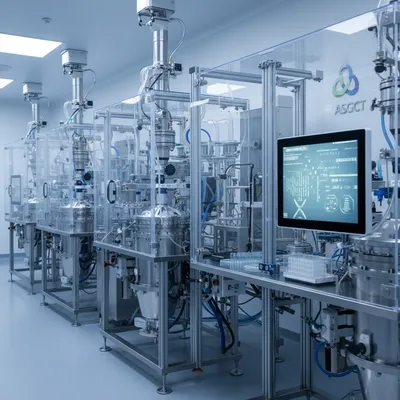
ASGCT: Cell & Gene Therapy Manufacturing Innovations Emerge
The ASGCT Annual Meeting showcased advancements in cell and gene therapy (CGT) manufacturing, emphasizing efficiency, cost reduction, and regulatory navigation.

Key Takeaways
- The ASGCT Annual Meeting showcased significant advancements in cell and gene therapy (CGT) manufacturing.
- New technologies and processes are emerging to improve efficiency and reduce costs in CGT manufacturing.
- Scalability, cost-effectiveness, regulatory hurdles, and process optimization were recurring themes.
The ASGCT Annual Meeting served as a platform to discuss and highlight the latest innovations in cell and gene therapy (CGT) manufacturing. Experts and researchers convened to share insights on improving efficiency, reducing costs, and navigating regulatory challenges in this rapidly evolving field.
The meeting underscored the critical role of manufacturing advancements in realizing the full potential of cell and gene therapies. Discussions focused on overcoming existing bottlenecks and paving the way for wider accessibility of these life-changing treatments.
Day 1 Highlights
Day 1 featured presentations and poster sessions centered on scalability and cost-effectiveness in CGT manufacturing. Attendees explored novel technologies and strategies aimed at streamlining production processes and lowering overall costs.
Day 2 Highlights
Day 2 shifted focus to regulatory hurdles and quality control. Presentations addressed the complexities of navigating the regulatory landscape and ensuring consistent product quality. Discussions also covered the importance of robust analytical methods and standardized protocols.
Day 3 Highlights
The final day highlighted automation and process optimization. Experts presented on the latest advancements in automated manufacturing systems and their potential to enhance efficiency and reduce human error. The integration of advanced data analytics and machine learning was also a key topic.
Future Directions
The manufacturing innovations presented at the ASGCT Annual Meeting hold significant promise for the future of cell and gene therapy. Continued research and development in areas such as automation, process optimization, and analytical methods are crucial to further advance the field. Addressing these challenges will be essential to unlock the full potential of cell and gene therapies and make them accessible to a wider range of patients.
Frequently Asked Questions
-
What were the main topics discussed at the ASGCT Annual Meeting regarding cell and gene therapy manufacturing?
The main topics included scalability, cost-effectiveness, regulatory hurdles, quality control, automation, and process optimization.
-
What are some of the key challenges in cell and gene therapy manufacturing?
Key challenges include high production costs, regulatory complexities, ensuring consistent product quality, and scaling up production to meet demand.
-
How can automation improve cell and gene therapy manufacturing?
Automation can enhance efficiency, reduce human error, and improve process control, leading to lower costs and more consistent product quality.
-
What role do regulatory agencies play in cell and gene therapy manufacturing?
Regulatory agencies set standards for product safety and efficacy, and they oversee the manufacturing process to ensure compliance with these standards.
References
- ASGCT Annual Meeting Program.