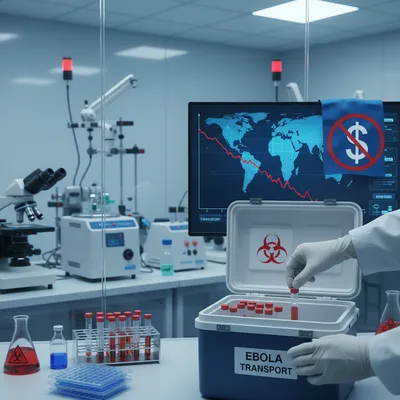
Ebola Outbreak: Experts Consider Unapproved Vaccine Testing
As the Ebola outbreak continues, experts are evaluating the potential of unapproved vaccines. This article discusses the implications for the pharmaceutical industry.
Executive Summary
- As the Ebola outbreak continues, experts are evaluating the potential of unapproved vaccines. This article discusses the implications for the pharmaceutical industry.
Market Impact
| Regulatory | medium |
|---|---|
| Commercial | medium |
| Competitive | low |
| Investment | low |
Ask about this article
AI-assisted answers grounded in NovaPharmaNews intelligence
Answers use retrieved site intelligence plus AI synthesis. Verify critical decisions with primary sources.

Ebola Outbreak: Experts Consider Unapproved Vaccine Testing
As the Ebola outbreak continues, experts are evaluating the potential of unapproved vaccines. This article discusses the implications for the pharmaceutical industry. The absence of an approved vaccine spotlights the urgent need for rapid and effective solutions. The situation presents both challenges and opportunities for pharmaceutical companies.
What are the Key Takeaways?
Four key points stand out. First, an approved vaccine for Ebola remains elusive. Second, experts are actively considering unapproved vaccines as a viable option. Third, this situation has profound investment implications for pharma companies involved in vaccine development. And fourth, the outbreak underscores the critical need for rapid response and innovation in similar public health crises.
What Happened During the Outbreak?
The recent Ebola outbreak has triggered alarm bells globally. The primary concern? The lack of an approved vaccine. Experts are now seriously considering testing Merck's unapproved vaccine, Ervebo, as a potential measure to contain the virus. Ervebo secured FDA approval in late 2019, but that was for a different strain. The current outbreak demands swift action. The stakes are incredibly high.
What Does This Mean for Pharmaceutical Teams?
The potential deployment of unapproved vaccines emphasizes the need for agility in pharmaceutical development. Companies must quickly assess the commercial viability of rapid vaccine deployment. They also have to understand the competitive landscape. All while navigating complex regulatory hurdles and pressing public health demands. Can they do it? That's the question.
For example, consider the logistical challenges. Manufacturing capacity must be scaled up rapidly. Distribution networks need to be established in affected areas — often with limited infrastructure. Then there's the question of cost. Who will pay for the vaccine? Governments? International organizations? Pharma companies themselves? These are not trivial questions.
Still, this crisis presents an opportunity for companies to showcase their capabilities. To demonstrate their commitment to global health. And to potentially secure lucrative contracts. It's a high-risk, high-reward situation. The companies that can innovate and respond quickly will be the winners. Expect intense competition.
On the regulatory front: Watch for expedited review pathways. Regulators may be willing to fast-track approval processes in light of the emergency. But that doesn't mean corners can be cut. Safety and efficacy remain paramount. Companies must balance speed with rigor. It's a delicate balancing act.
Ebola outbreaks — while tragic — often spur innovation. They force companies to think outside the box. To develop new technologies. To forge new partnerships. And to ultimately improve global health security. The current outbreak is no exception.