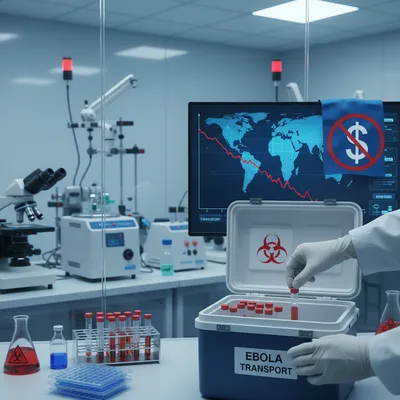
WHO Defends Ebola Response Amid Critique from Rubio
The WHO faces scrutiny from Marco Rubio regarding its Ebola response. This article examines the implications for pharmaceutical stakeholders.
Executive Summary
- The WHO faces scrutiny from Marco Rubio regarding its Ebola response. This article examines the implications for pharmaceutical stakeholders.
Market Impact
| Regulatory | medium |
|---|---|
| Commercial | medium |
| Competitive | low |
| Investment | low |
Ask about this article
AI-assisted answers grounded in NovaPharmaNews intelligence
Answers use retrieved site intelligence plus AI synthesis. Verify critical decisions with primary sources.
WHO Defends Ebola Response Amid Critique from Rubio
The WHO faces scrutiny from Marco Rubio regarding its Ebola response. The senator's critique raises vital questions about global health governance and resource allocation. That's why it matters for pharma today. This article examines the implications for pharmaceutical stakeholders, particularly those involved in vaccine development and outbreak response.
What Are the Key Takeaways?
Rubio's criticism throws a spotlight on the WHO's handling of Ebola outbreaks. The critique highlights challenges in global health governance. What does this mean for pharmaceutical companies? Several implications could shift the landscape. Expect potential shifts in funding and regulatory focus. And watch for impacts on vaccine development strategies.
What Happened with the WHO's Ebola Response?
The WHO defended its actions following criticism from Senator Marco Rubio. The agency emphasized its commitment to global health. Managing such crises is incredibly complex, it said. Rubio's critique questioned the effectiveness and transparency of the WHO's resource deployment during recent Ebola outbreaks. The senator suggested that bureaucratic inefficiencies hindered rapid response efforts. He further called for greater accountability. The WHO, however, maintains that it acted swiftly to contain the spread of the virus. It coordinated international aid. It also provided technical support to affected regions.
What Are the Implications for Pharmaceutical Teams?
The critique may influence funding and regulatory priorities. It's a high-stakes game. That will impact pharmaceutical companies' strategies. Vaccine development and outbreak response initiatives are in the crosshairs. Companies may face increased pressure to demonstrate the efficacy and accessibility of their products. Expect heightened scrutiny of clinical trial data. Supply chain logistics will be under the microscope, too. This could lead to more stringent regulatory pathways. And potentially, shifts in the allocation of research grants. Pharma companies need to adapt. They must proactively address concerns about equitable access to medicines in developing countries. Here's what's next: Watch for policy changes and funding realignments. They could reshape the future of global health security.