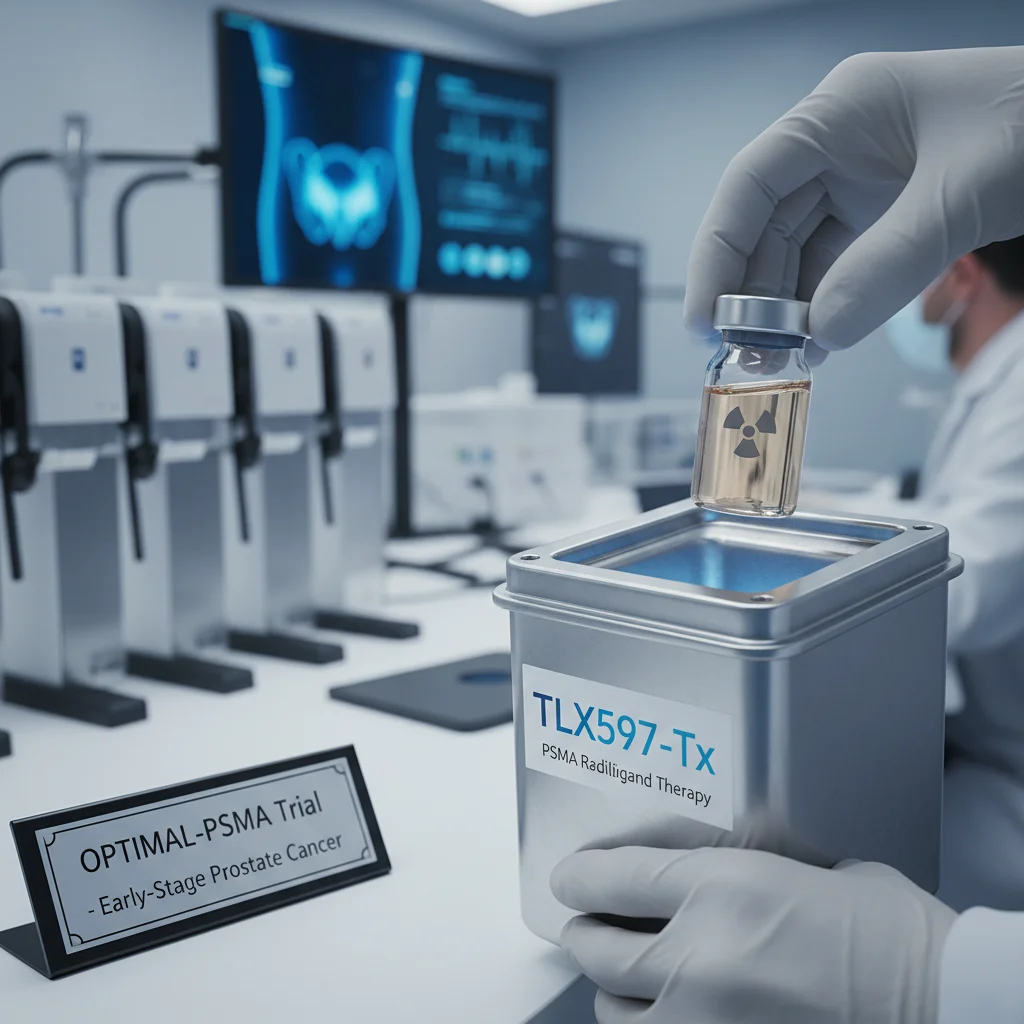
TLX597-Tx PSMA Radioligand Therapy Shows Promise in OPTIMAL-PSMA Trial for Early-Stage Prostate Cancer
TLX597-Tx radioligand therapy demonstrates low organ toxicity in OPTIMAL-PSMA trial, potentially enabling dose intensification for prostate cancer treatment.
Intelligence Snapshot
Executive Summary
TLX597-Tx radioligand therapy shows low salivary gland and kidney uptake in initial OPTIMAL-PSMA trial dosimetry data
Key Insights
-
Reduced organ toxicity profile may allow for dose intensification and improved treatment…
Reduced organ toxicity profile may allow for dose intensification and improved treatment outcomes in earlier-stage prostate cancer
-
Next-generation PSMA-targeting therapy designed to enhance quality of life compared to…
Next-generation PSMA-targeting therapy designed to enhance quality of life compared to existing radioligand treatments
Market Impact
| Regulatory | medium |
|---|---|
| Commercial | medium |
| Competitive | low |
| Investment | low |
Executive Scorecard
Heuristic scores · directional, not investment adviceContents7 sections
Key Takeaways
- TLX597-Tx radioligand therapy shows low salivary gland and kidney uptake in initial OPTIMAL-PSMA trial dosimetry data
- Reduced organ toxicity profile may allow for dose intensification and improved treatment outcomes in earlier-stage prostate cancer
- Next-generation PSMA-targeting therapy designed to enhance quality of life compared to existing radioligand treatments
TLX597-Tx Shows Promising Safety Profile in Prostate Cancer Trial
A next-generation PSMA-targeting radioligand therapy called TLX597-Tx has demonstrated encouraging initial results in the OPTIMAL-PSMA clinical trial, with data presented at the International Prostate Cancer Symposium (IPCS) 2026.
The experimental treatment is designed as a small molecule radioligand therapy (RLT) specifically targeting prostate-specific membrane antigen (PSMA), with the goal of improving both efficacy and quality of life for patients with earlier-stage prostate cancer.
IntelligenceRegulatory Impact
NMPA, PMDA, and TGA are the agencies to watch. Regulatory relevance reads medium for pharmaceutical intelligence. Teams should track submission types, designations, and guidance shifts that could move approval timelines.
Reduced Organ Toxicity Opens Door for Dose Intensification
The most significant finding from the initial dosimetry analysis was TLX597-Tx’s low uptake in critical organs including the salivary glands and kidneys. This safety profile represents a potential advantage over existing radioligand therapies, which often cause dose-limiting toxicities in these organs.
The reduced organ toxicity could enable physicians to administer higher therapeutic doses, potentially improving treatment outcomes while maintaining patient safety and quality of life.
IntelligenceCompetitive Intelligence
Competitive pressure is low. Watch which sponsors move first. Benchmark pipeline positioning, differentiation, and partnership scouting against the signals in this story.
Targeting Earlier-Stage Disease
Unlike many current radioligand therapies that are reserved for advanced, treatment-resistant prostate cancer, TLX597-Tx is being developed for use in earlier disease stages. This approach could potentially improve long-term outcomes by intervening before cancer becomes more aggressive or spreads extensively.
PSMA-targeting therapies have gained significant attention in oncology due to PSMA’s high expression on prostate cancer cells, making it an attractive target for precision medicine approaches.
IntelligenceMarket Signals
Commercial pull is medium and investment relevance low. Expect implications for pharmaceutical intelligence pricing, access, and launch sequencing.
Market Impact and Future Development
The prostate cancer treatment landscape has been rapidly evolving with the introduction of radioligand therapies. If TLX597-Tx continues to demonstrate favorable results in clinical trials, it could represent a significant advancement in the field, particularly for patients with earlier-stage disease who currently have limited targeted therapy options.
Further trial data and regulatory milestones will be critical in determining the therapy’s path to potential approval and commercial availability.
Frequently Asked Questions
What makes TLX597-Tx different from existing prostate cancer treatments?
TLX597-Tx is designed as a next-generation radioligand therapy with lower toxicity to salivary glands and kidneys, potentially allowing for higher doses and use in earlier-stage prostate cancer compared to current treatments.
When will TLX597-Tx be available to patients?
TLX597-Tx is currently in clinical trials. The timeline for potential approval and availability will depend on the completion of ongoing studies and regulatory review processes, which typically take several years.
How does PSMA-targeting therapy work for prostate cancer?
PSMA-targeting therapies deliver radiation directly to prostate cancer cells by binding to prostate-specific membrane antigen, which is highly expressed on cancer cells, allowing for precise treatment while minimizing damage to healthy tissue.
Related coverage
Ask AI About This Topic
Grounded in NovaPharmaNews intelligence. Pick a prompt to start.
Stay Updated on Pharma News
Get the latest drug approvals, clinical trials, and regulatory updates delivered to your inbox.
- Evidence strength
- 71/100
- Last verified
- Jun 15, 2026
- AI-assisted review
- Yes
- Editorial review
- Dr. Sarah Chen
Moderate source quality · grounded in cited primary and secondary sources.
This article follows our editorial standards. Report a correction via editorial contact.