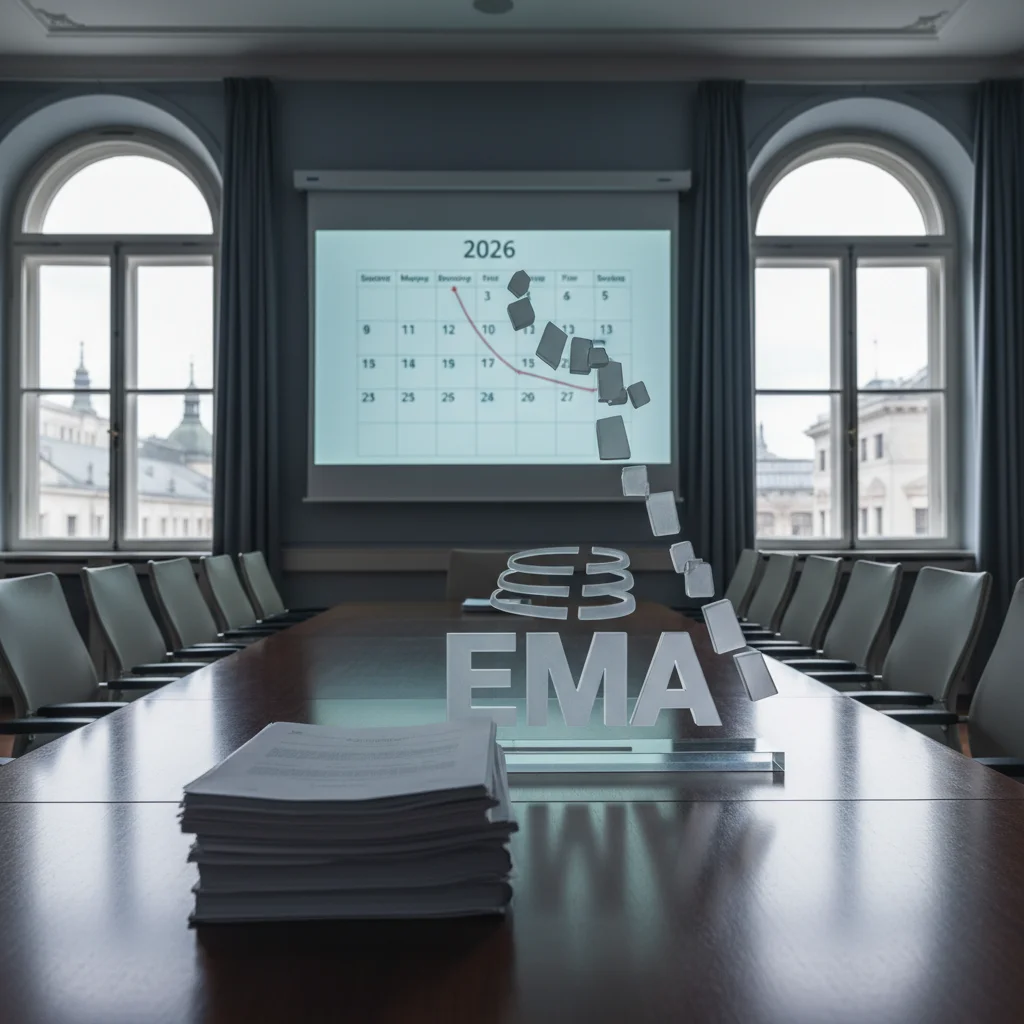
EMA Drug Patent Cliff 2026: Major European Pharmaceutical Exclusivities Set to Expire
Multiple high-cost EMA-approved drugs lose exclusivity in 2026, enabling generic competition and expanded patient access across Europe's healthcare systems.
Intelligence Snapshot
Executive Summary
Multiple blockbuster EMA-approved drugs will lose regulatory exclusivity in 2026, creating Europe’s largest patent cliff in recent years
Key Insights
-
Generic and biosimilar competition will drive down drug prices, potentially saving…
Generic and biosimilar competition will drive down drug prices, potentially saving European healthcare systems billions in pharmaceutical spending
-
Originator pharmaceutical companies face significant revenue declines while patients gain…
Originator pharmaceutical companies face significant revenue declines while patients gain improved access to previously expensive treatments
Market Impact
| Regulatory | medium |
|---|---|
| Commercial | medium |
| Competitive | low |
| Investment | low |
Executive Scorecard
Heuristic scores · directional, not investment adviceContents9 sections
Key Takeaways
- Multiple blockbuster EMA-approved drugs will lose regulatory exclusivity in 2026, creating Europe’s largest patent cliff in recent years
- Generic and biosimilar competition will drive down drug prices, potentially saving European healthcare systems billions in pharmaceutical spending
- Originator pharmaceutical companies face significant revenue declines while patients gain improved access to previously expensive treatments
European Healthcare Systems Prepare for Major Patent Cliff as EMA Drug Exclusivities Expire in 2026
European healthcare systems are bracing for a transformative year as 2026 approaches, with multiple high-cost, EMA-approved pharmaceuticals scheduled to lose regulatory exclusivity. This patent cliff represents one of the most significant shifts in European pharmaceutical markets in recent years, promising substantial cost savings for healthcare budgets while creating new challenges for originator drug manufacturers.
IntelligenceRegulatory Impact
EMA and MHRA are the agencies to watch. Regulatory relevance reads medium for multiple therapeutic areas. Teams should track submission types, designations, and guidance shifts that could move approval timelines.
Market Impact and Healthcare Savings
The expiration of these drug exclusivities comes at a critical time for European healthcare systems, which continue facing budget constraints and increasing demand for expensive treatments. When patents expire, generic and biosimilar manufacturers can enter the market, typically driving prices down by 80-90% for small molecule drugs and 20-40% for biologics.
Industry analysts estimate that the 2026 patent cliff could generate billions in healthcare savings across EU member states. These savings will be particularly impactful for national health services and insurance systems that have struggled to provide access to high-cost treatments while managing budget limitations.
IntelligenceCompetitive Intelligence
Competitive pressure is low. Watch which sponsors move first. Benchmark pipeline positioning, differentiation, and partnership scouting against the signals in this story.
Implications for Pharmaceutical Companies
Originator pharmaceutical companies face a challenging transition as their blockbuster products lose exclusivity protection. Revenue cliffs are inevitable when generic competition enters, forcing companies to rely more heavily on newer products in their pipelines or seek new therapeutic areas for growth.
This market shift is already influencing strategic decisions across the pharmaceutical industry, with companies accelerating research and development programs, pursuing new indications for existing drugs, or exploring merger and acquisition opportunities to offset anticipated revenue losses.
IntelligenceMarket Signals
Commercial pull is medium and investment relevance low. Expect implications for multiple therapeutic areas pricing, access, and launch sequencing.
Patient Access and Treatment Landscape
For patients across Europe, the 2026 patent cliff represents a significant opportunity for improved treatment access. Previously expensive therapies will become more affordable through generic and biosimilar alternatives, potentially expanding treatment options for patients who previously faced financial barriers.
Healthcare providers will need to navigate the transition carefully, ensuring patients understand their options while maintaining therapeutic efficacy. Regulatory agencies across Europe are preparing guidance documents to support smooth transitions from originator products to generic alternatives.
IntelligenceStrategic Takeaways
Multiple blockbuster EMA-approved drugs will lose regulatory exclusivity in 2026, creating Europe’s largest patent cliff in recent years Generic and biosimilar competition will drive down drug prices, potentially saving European healthcare systems billions in pharmaceutical spending Originator pharmaceutical companies face significant revenue declines while patients gain improved access to previously expensive treatments
Regulatory Preparation and Market Readiness
The European Medicines Agency (EMA) and national regulatory authorities are coordinating efforts to ensure generic and biosimilar manufacturers are prepared for market entry. This includes streamlining approval processes and providing clear guidance on regulatory requirements for companies seeking to launch competing products.
Generic pharmaceutical companies are positioning themselves strategically, with many having already filed applications or begun manufacturing preparations to ensure rapid market entry once exclusivity periods expire.
IntelligenceEvidence Quality
Claims are grounded in the cited primary and secondary sources, with editorial review applied before publication.
Looking Ahead: Market Transformation
The 2026 patent cliff represents more than just individual drug exclusivity expirations—it signals a broader transformation in European pharmaceutical markets. Healthcare systems will gain breathing room in their budgets, potentially allowing for investment in newer, innovative treatments that are currently cost-prohibitive.
Pharmaceutical companies, meanwhile, must adapt their business models to focus increasingly on innovation and pipeline development rather than relying on extended exclusivity periods for revenue generation. This shift could ultimately benefit patients through increased research investment and faster development of breakthrough therapies.
As 2026 approaches, stakeholders across European healthcare systems are preparing for this significant transition, balancing the opportunities for cost savings and improved access against the need to maintain innovation incentives in pharmaceutical development.
Frequently Asked Questions
What does drug exclusivity expiration mean for patients?
When drug exclusivity expires, generic or biosimilar versions become available at significantly lower prices, typically 20-90% cheaper than the original branded medication. This means patients will have access to the same treatments at more affordable costs, though they may need to switch to generic versions.
When exactly will these drugs lose exclusivity in 2026?
Drug exclusivity expiration dates vary throughout 2026, with some losing protection early in the year and others later. The exact timing depends on when the original patents were filed and approved. Healthcare providers and patients should consult with pharmacists and regulatory agencies for specific medication timelines.
How will this impact healthcare budgets across Europe?
The 2026 patent cliff is expected to generate billions in savings for European healthcare systems. These savings can be reinvested in other medical services, newer innovative treatments, or used to expand patient access to additional therapies that were previously unaffordable.
Related coverage
Ask AI About Multiple therapeutic areas
Grounded in NovaPharmaNews intelligence. Pick a prompt to start.
Track Multiple therapeutic areas news weekly
EMA multiple therapeutic areas news and regulatory updates, every Monday.
- Evidence strength
- 71/100
- Last verified
- Jun 18, 2026
- AI-assisted review
- Yes
- Editorial review
- Dr. Sarah Chen
Moderate source quality · grounded in cited primary and secondary sources.
This article follows our editorial standards. Report a correction via editorial contact.