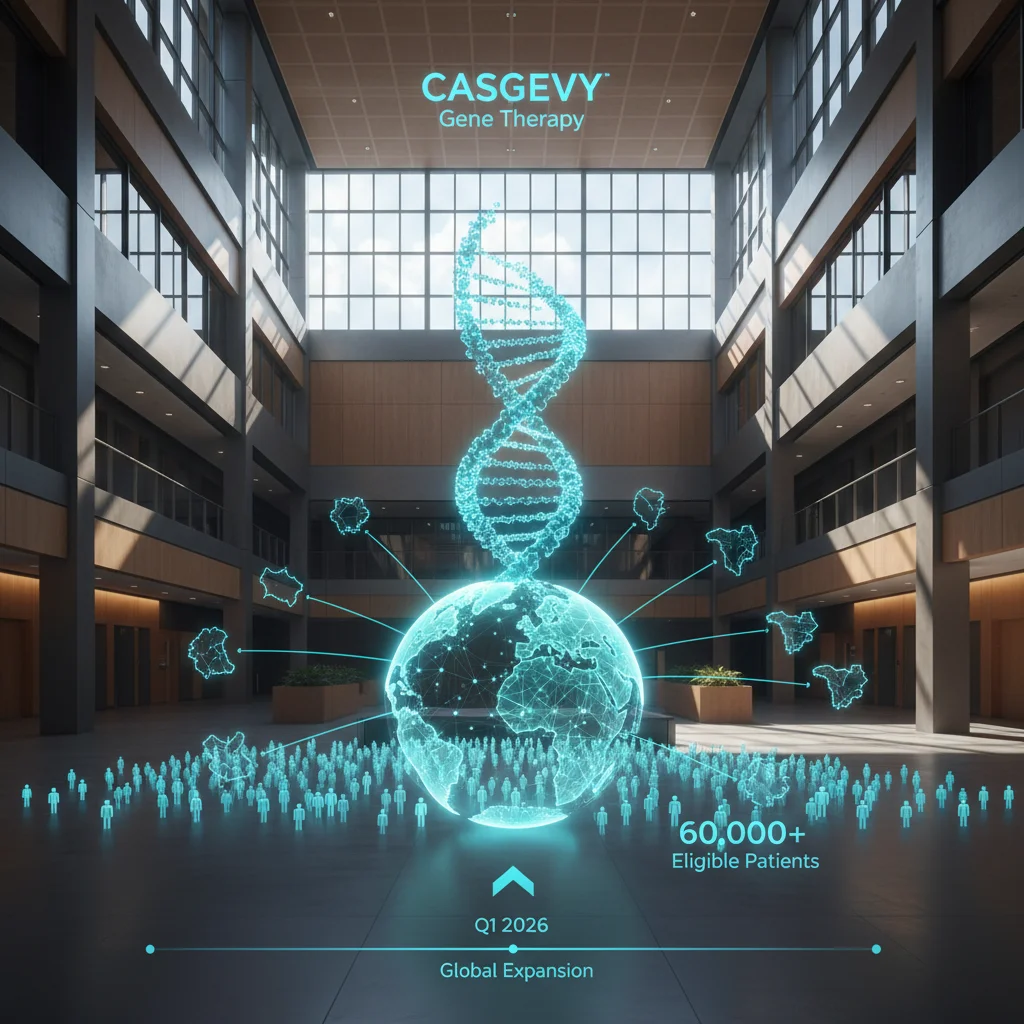
Drugs: CASGEVY
Vertex CASGEVY Gene Therapy Reaches 60,000+ Eligible Patients Across 10 Countries as Q1 2026 Results Show Global Expansion
Vertex's CASGEVY, the first approved CRISPR gene therapy, now serves 60,000+ eligible sickle cell disease and beta thalassemia patients across 10 countries.
Intelligence Snapshot
Executive Summary
CASGEVY is now approved in 10 countries including US, UK, EU, and Middle East markets for patients 12+ with severe sickle cell disease and beta thalassemia
Key Insights
-
Over 60,000 eligible patients can access this first-of-its-kind CRISPR gene therapy, with…
Over 60,000 eligible patients can access this first-of-its-kind CRISPR gene therapy, with 37,000+ in North America and Europe alone
-
Vertex’s Q1 2026 financial results highlight the commercial success of this…
Vertex’s Q1 2026 financial results highlight the commercial success of this breakthrough gene editing treatment across major global markets
Market Impact
| Regulatory | medium |
|---|---|
| Commercial | medium |
| Competitive | low |
| Investment | low |
Loading intelligence…
Executive Scorecard
Heuristic scores · directional, not investment adviceRegulatory catalyst tracker
Track PDUFA dates, approval milestones, and label updates for CASGEVY.
Unlock full calendar →Investor brief
Download a one-page summary of regulatory impact and competitive context.
Explore drug hub →Contents10 sections
Key Takeaways
- CASGEVY is now approved in 10 countries including US, UK, EU, and Middle East markets for patients 12+ with severe sickle cell disease and beta thalassemia
- Over 60,000 eligible patients can access this first-of-its-kind CRISPR gene therapy, with 37,000+ in North America and Europe alone
- Vertex’s Q1 2026 financial results highlight the commercial success of this breakthrough gene editing treatment across major global markets
Vertex Pharmaceuticals has achieved a major milestone in gene therapy commercialization, with its groundbreaking CRISPR treatment CASGEVY now approved across 10 countries and serving over 60,000 eligible patients with severe blood disorders, according to the company’s first quarter 2026 financial results.
Global Market Penetration Accelerates
CASGEVY has secured regulatory approval in the United States, United Kingdom, European Union, Canada, Switzerland, and five Middle Eastern countries including Saudi Arabia, Bahrain, Qatar, UAE, and Kuwait. This represents one of the most successful global rollouts for a gene therapy in pharmaceutical history.
The treatment addresses severe sickle cell disease (SCD) and transfusion-dependent beta thalassemia (TDT) in patients aged 12 and older, offering what many experts consider a functional cure for these devastating genetic blood disorders.
IntelligenceRegulatory Impact
EMA and MHRA are the agencies to watch. Regulatory relevance reads medium for hematology/blood disorders, with CASGEVY most exposed to upcoming decisions. Teams should track submission types, designations, and guidance shifts that could move approval timelines.
Market Impact and Patient Access
With approximately 37,000 eligible patients in North America and Europe alone, plus additional thousands across Middle Eastern markets, CASGEVY has established itself as a blockbuster gene therapy. The broad geographic approval demonstrates strong clinical evidence and regulatory confidence in Vertex’s CRISPR-based approach.
The therapy works by editing patients’ own stem cells to produce functional hemoglobin, potentially eliminating the need for lifelong blood transfusions and painful vaso-occlusive crises that characterize these conditions.
IntelligenceCompetitive Intelligence
Competitive pressure is low. Watch which sponsors move first. Benchmark pipeline positioning, differentiation, and partnership scouting against the signals in this story.
Competitive Landscape and Market Position
CASGEVY faces competition from established treatments including Bluebird Bio’s Zynteglo for beta thalassemia and newer therapies like Novartis’s Adakveo for sickle cell disease. However, as the first approved CRISPR gene therapy, it holds a unique position in offering potential one-time treatment versus chronic management approaches.
IntelligenceMarket Signals
Commercial pull is medium and investment relevance low. Expect implications for hematology/blood disorders pricing, access, and launch sequencing.
Future Growth Opportunities
Vertex’s expansion strategy includes potential approvals in additional countries and age groups. The company is exploring treatment for patients under 12 years old and investigating applications for other hemoglobinopathies, which could significantly expand the addressable patient population.
IntelligenceStrategic Takeaways
CASGEVY is now approved in 10 countries including US, UK, EU, and Middle East markets for patients 12+ with severe sickle cell disease and beta thalassemia Over 60,000 eligible patients can access this first-of-its-kind CRISPR gene therapy, with 37,000+ in North America and Europe alone Vertex’s Q1 2026 financial results highlight the commercial success of this breakthrough gene editing treatment across major global markets
Manufacturing and Delivery Challenges
Despite commercial success, CASGEVY faces ongoing challenges including complex manufacturing requirements, limited specialized treatment centers, and high costs that create reimbursement hurdles. The therapy requires sophisticated cell processing facilities and highly trained medical teams.
IntelligenceEvidence Quality
Claims are grounded in the cited primary and secondary sources, with editorial review applied before publication.
Investment and Market Outlook
The Q1 2026 results position Vertex as a leader in the gene editing revolution, with CASGEVY serving as proof-of-concept for CRISPR’s commercial viability. Analysts view the broad international adoption as validation of the platform’s potential for treating other genetic diseases.
The therapy’s success across diverse healthcare systems and regulatory environments demonstrates the universal medical need for effective treatments for these severe genetic conditions, supporting continued investment in gene editing technologies.
Frequently Asked Questions
What does CASGEVY approval in 10 countries mean for patients?
Over 60,000 patients with severe sickle cell disease and beta thalassemia now have access to this potentially curative CRISPR gene therapy, eliminating the need for lifelong blood transfusions and reducing painful complications.
How does CASGEVY compare to existing treatments for sickle cell disease?
Unlike chronic treatments that manage symptoms, CASGEVY offers a potential one-time cure by editing patients’ genes to produce functional hemoglobin, addressing the root cause of these genetic blood disorders.
What are the main challenges facing CASGEVY’s continued expansion?
Key challenges include high treatment costs, complex manufacturing requirements, limited specialized treatment centers, and ongoing reimbursement negotiations with healthcare systems worldwide.
Related profiles
Related coverage
Continue Exploring
Jump into the entities behind this story.
Ask AI About Hematology/Blood Disorders
Grounded in NovaPharmaNews intelligence. Pick a prompt to start.
Follow CASGEVY developments
EMA hematology/blood disorders alerts and CASGEVY pipeline updates, every Monday.
- Evidence strength
- 79/100
- Last verified
- Jun 19, 2026
- AI-assisted review
- Yes
- Editorial review
- Dr. Sarah Chen
High source quality · grounded in cited primary and secondary sources.
This article follows our editorial standards. Report a correction via editorial contact.