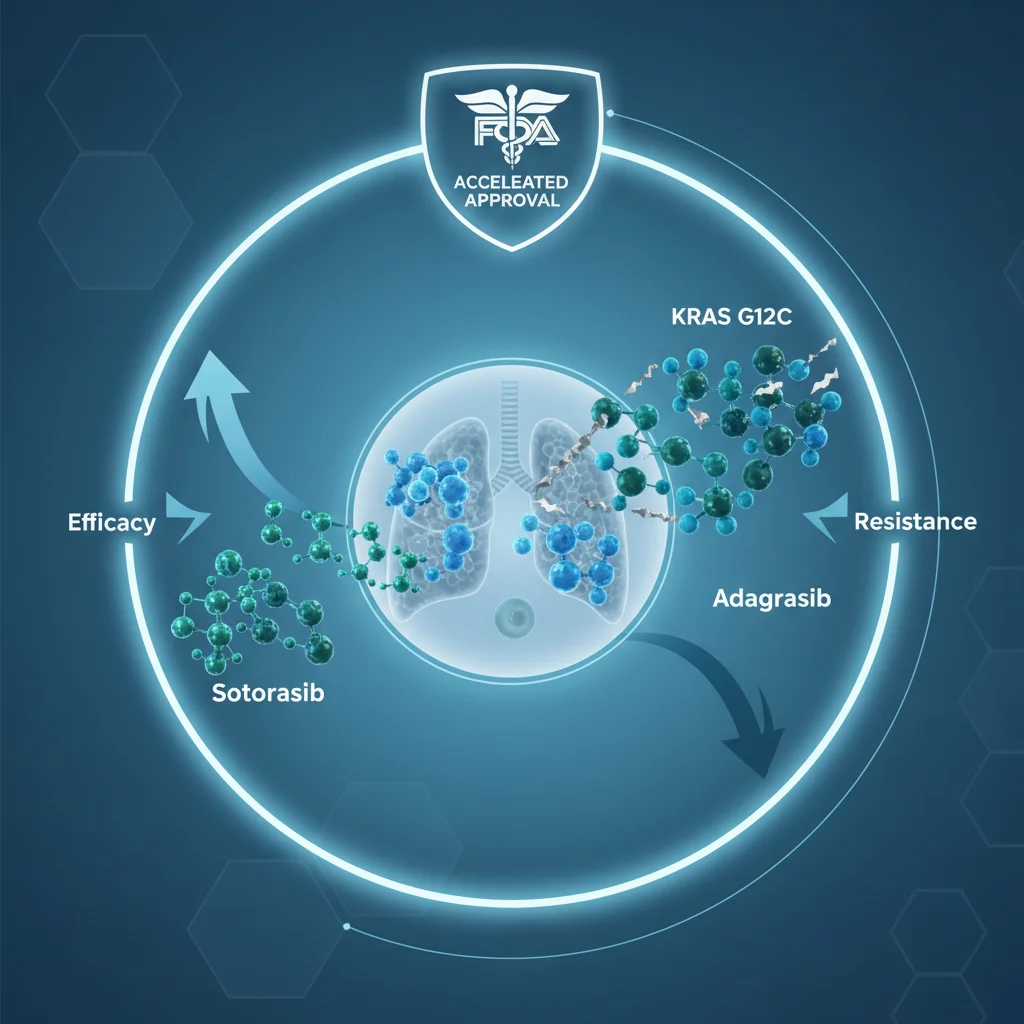
FDA Approval KRAS G12C NSCLC: Sotorasib & Adagrasib Insights
Explore the latest insights on FDA-approved Sotorasib and Adagrasib for treating KRAS G12C NSCLC, transforming lung cancer therapy.

Medically Reviewed
by Dr. James Morrison, Chief Medical Officer (MD, FACP, FACC)
Reviewed on: April 26, 2026
Key Takeaways
- Regulatory milestone: The FDA granted accelerated approval to sotorasib (Lumakras) on May 28, 2021, and adagrasib (Krazati) on December 12, 2022, for locally advanced or metastatic non-small cell lung cancer (NSCLC) with KRAS G12C mutations after prior systemic therapy.
- Clinical significance: Both drugs represent first-in-class small molecule inhibitors targeting the KRAS G12C mutation, addressing a previously unmet therapeutic need in a patient population with limited treatment options after disease progression on standard therapies.
- Market implications: The sequential approvals establish direct competition in the KRAS G12C-mutated NSCLC space, reshaping treatment paradigms and providing oncologists with targeted options for a molecularly defined patient subset.
- Next steps: Ongoing clinical development includes exploration of combination therapies, resistance mechanisms, and potential label expansions to earlier treatment lines, with FDA companion diagnostic requirements ensuring appropriate patient selection.
The U.S. Food and Drug Administration (FDA) has approved two targeted small molecule inhibitors—sotorasib and adagrasib—for the treatment of adult patients with locally advanced or metastatic NSCLC harboring the KRAS G12C mutation following at least one prior systemic therapy. Sotorasib received accelerated FDA approval on May 28, 2021, establishing the first targeted therapy option for this patient population, followed by adagrasib's approval on December 12, 2022. [Source: U.S. Food and Drug Administration] Why it matters: These approvals mark a pivotal shift in oncology treatment, offering precision medicine options for patients whose tumors harbor this historically difficult-to-target oncogenic driver.
Drug Overview
Sotorasib (Lumakras) and adagrasib (Krazati) are small molecule inhibitors belonging to the class of targeted anticancer therapies designed to selectively bind and inhibit the KRAS G12C mutation, a driver oncogene present in approximately 13% of NSCLC cases. The KRAS G12C variant represents a point mutation in the RAS protein that locks the oncogene in its active state, promoting uncontrolled cell proliferation and survival signaling.
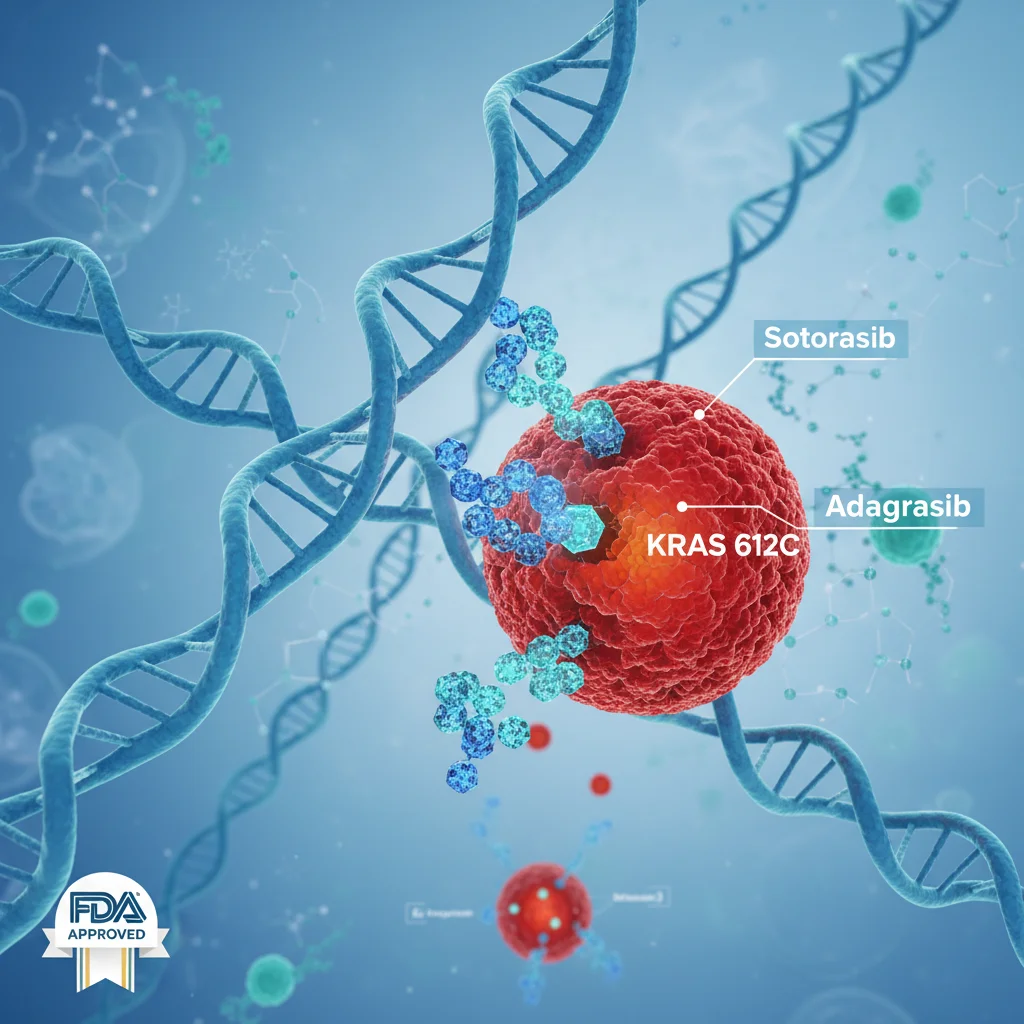
Both drugs work through direct, irreversible binding to the mutant KRAS G12C protein, preventing its interaction with downstream effector proteins and interrupting critical oncogenic signaling pathways. This mechanism of action represents a departure from conventional cytotoxic chemotherapy and addresses a molecular subtype of NSCLC that was previously considered undruggable until these inhibitors entered clinical development.
The approved indication for both agents is identical: treatment of adult patients with locally advanced or metastatic NSCLC whose tumors harbor the KRAS G12C mutation, as confirmed by an FDA-approved diagnostic test, and who have received at least one prior systemic therapy. This second-line positioning reflects the accelerated approval pathway and the regulatory requirement for confirmatory evidence in ongoing trials.
Clinical Insights
While specific clinical trial names, phase designations, and detailed efficacy endpoints are not provided in the regulatory documentation available, both sotorasib and adagrasib were evaluated in pivotal clinical trials that supported their accelerated FDA approval pathway. The accelerated approval designation indicates that each drug demonstrated meaningful clinical benefit in a patient population with limited therapeutic alternatives, based on surrogate endpoints or clinical benefit in early-phase studies.
Compared with conventional chemotherapy options available to patients with KRAS G12C-mutated NSCLC after prior systemic therapy, these targeted inhibitors offer a mechanism-based approach designed to specifically address the molecular driver of disease. The accelerated approval pathway allowed for expedited access to these therapies while requiring ongoing confirmatory trials to verify sustained clinical benefit and establish the optimal role of each agent within treatment algorithms.
Safety and tolerability data from clinical development informed the regulatory decision, with both drugs demonstrating manageable adverse event profiles in the patient populations studied. The specific grade ≥3 adverse events, dose modifications, and long-term safety signals continue to be characterized through post-marketing surveillance and ongoing clinical trials, which will inform future label updates and clinical practice guidelines.
Regulatory Context
Sotorasib received accelerated approval from the FDA on May 28, 2021, under the accelerated approval pathway, a regulatory mechanism designed to facilitate access to drugs that address serious or life-threatening conditions and provide meaningful advantages over existing therapies. This designation reflects the unmet medical need in KRAS G12C-mutated NSCLC and the molecular validation of the drug target.
Adagrasib followed with FDA accelerated approval on December 12, 2022, approximately 19 months after sotorasib's initial approval. Both approvals carry the requirement for FDA-approved companion diagnostic testing to identify patients with KRAS G12C mutations, ensuring appropriate patient selection and supporting the precision medicine framework underlying these targeted therapies.
The accelerated approval pathway requires sponsors to conduct post-marketing confirmatory trials to verify and describe the clinical benefit predicted by the surrogate endpoint or clinical benefit observed in early trials. This regulatory mechanism balances the urgent need for new treatment options in this patient population against the requirement for rigorous evidence of sustained efficacy and safety, with potential for full approval or label modifications based on confirmatory data.
Market Impact
The KRAS G12C mutation is present in approximately 13% of NSCLC cases, representing a molecularly defined patient population of significant clinical and commercial interest. Patients eligible for sotorasib and adagrasib treatment—those with locally advanced or metastatic disease and prior systemic therapy exposure—represent a subset of this population, though the exact market size depends on factors including disease stage distribution, prior treatment patterns, and access to molecular testing.
The sequential approvals of sotorasib and adagrasib establish a competitive landscape in the KRAS G12C-mutated NSCLC therapeutic space. Both agents target the same patient population with similar mechanisms of action, positioning them as direct competitors in treatment selection decisions by oncologists. Pricing considerations, payer coverage decisions, and real-world evidence regarding comparative efficacy and tolerability will influence market share dynamics and adoption patterns.
These approvals represent a departure from the historical treatment paradigm for NSCLC, where patients with KRAS-mutated tumors—particularly those with G12C mutations—had limited targeted options and were typically treated with cytotoxic chemotherapy. The availability of precision-medicine approaches reshapes treatment algorithms and may influence patient stratification and clinical decision-making in multidisciplinary tumor boards.
Reimbursement pathways under the accelerated approval framework may present challenges, as payers evaluate the clinical evidence base and cost-effectiveness relative to existing treatment options. The requirement for companion diagnostic testing adds complexity to market access and may influence the pace of adoption and patient identification in clinical practice.
Future Outlook
What to watch next: Ongoing clinical development in the KRAS G12C inhibitor space includes investigation of combination therapies—such as pairing KRAS G12C inhibitors with immune checkpoint inhibitors, targeted agents against other oncogenic pathways, or chemotherapy—to enhance efficacy and overcome emerging resistance mechanisms.
Label expansion trials are anticipated to evaluate sotorasib and adagrasib in earlier treatment lines, including first-line monotherapy or combination approaches for newly diagnosed NSCLC with KRAS G12C mutations. These studies could significantly expand the addressable patient population and shift treatment paradigms if positive results support approval for initial therapy.
Research into resistance mechanisms and acquired mutations following KRAS G12C inhibitor exposure is ongoing, with implications for treatment sequencing and the development of next-generation inhibitors or combination strategies. Understanding how tumors escape KRAS G12C inhibition will inform the design of future clinical trials and the optimal integration of these agents within comprehensive NSCLC management strategies.
The FDA's evolving role in precision oncology approvals includes refinement of companion diagnostic requirements, real-world evidence standards, and post-marketing surveillance frameworks. These regulatory developments will shape the approval pathway for future KRAS-targeted agents and other precision medicine oncology drugs, potentially influencing the speed of innovation and market access in this therapeutic area.
Frequently Asked Questions
What is the KRAS G12C mutation and why is it clinically significant?
KRAS G12C is a point mutation in the KRAS oncogene that locks the protein in its active state, driving uncontrolled cell proliferation and survival signaling in cancer cells. It is present in approximately 13% of NSCLC cases and represents a molecularly defined subset of lung cancer that was historically considered undruggable until sotorasib and adagrasib were developed. The clinical significance lies in the ability to target this specific molecular driver with precision medicine approaches, offering an alternative to cytotoxic chemotherapy for patients whose tumors harbor this mutation.
How do sotorasib and adagrasib differ in their mechanism of action?
Both sotorasib and adagrasib are small molecule inhibitors that directly bind to and inhibit the KRAS G12C protein through irreversible covalent interactions. While the fundamental mechanism—selective targeting of KRAS G12C—is shared, differences in binding kinetics, off-target effects, and pharmacokinetic properties may influence their clinical profiles and tolerability. Direct comparative clinical data would be needed to characterize meaningful differences in efficacy or safety between the two agents.
What does accelerated approval mean for patients and physicians?
Accelerated approval is an FDA regulatory pathway that allows expedited access to drugs addressing serious or life-threatening conditions when they demonstrate meaningful clinical benefit over existing therapies. For patients with KRAS G12C-mutated NSCLC, accelerated approval enables access to sotorasib and adagrasib sooner than would occur under standard review timelines. However, accelerated approval requires ongoing confirmatory trials to verify sustained clinical benefit, and the FDA retains the authority to withdraw approval if post-marketing data do not confirm efficacy or if safety concerns emerge.
How are patients selected for treatment with sotorasib or adagrasib?
Patient selection requires confirmation of KRAS G12C mutation status using an FDA-approved companion diagnostic test, ensuring that only patients whose tumors harbor this specific mutation receive these targeted therapies. Additionally, the approved indication specifies treatment of adult patients with locally advanced or metastatic NSCLC who have received at least one prior systemic therapy, positioning these drugs in the second-line or later treatment setting based on current regulatory approvals.
What are the anticipated next steps in KRAS G12C inhibitor development?
Future development priorities include clinical trials evaluating combination therapies with immune checkpoint inhibitors, other targeted agents, or chemotherapy to enhance efficacy and overcome resistance. Label expansion trials are expected to explore first-line treatment settings, potentially broadening the patient population eligible for these therapies. Additionally, research into resistance mechanisms and next-generation KRAS inhibitors will inform treatment sequencing and the development of strategies to address tumors that acquire resistance to current KRAS G12C inhibitors.
References
- U.S. Food and Drug Administration. FDA Accelerated Approval: Sotorasib (Lumakras) for KRAS G12C-Mutated Non-Small Cell Lung Cancer. Approval Date: May 28, 2021.
- U.S. Food and Drug Administration. FDA Approval: Adagrasib (Krazati) for KRAS G12C-Mutated Non-Small Cell Lung Cancer. Approval Date: December 12, 2022.
References
- U.S. Food and Drug Administration. FDA approval. Accessed 2026-04-26.

Senior Medical Editor
Dr. Sarah Chen is a board-certified internist and former FDA clinical reviewer with 15+ years of experience in pharmaceutical regulatory affairs. She received her MD from Johns Hopkins and her PhD in ...