FDA Approval Adagrasib: Accelerated OK for KRAS G12C NSCLC Treatment
Adagrasib receives FDA accelerated approval for KRAS G12C NSCLC, marking a significant advancement in targeted lung cancer treatment options.


Medically Reviewed
by Dr. James Morrison, Chief Medical Officer (MD, FACP, FACC)
Reviewed on: April 20, 2026
Key Takeaways
- Main news: The U.S. Food and Drug Administration (FDA) has granted accelerated approval to Mirati Therapeutics' adagrasib (Krazati) for adult patients with KRAS G12C-mutated locally advanced or metastatic non-small cell lung cancer (NSCLC) following prior systemic therapy.
- Clinical impact: Adagrasib is a selective, covalent oral inhibitor targeting the KRAS G12C mutation, irreversibly binding to the mutant cysteine residue.
- Market implications: The FDA adagrasib approval adds to the competitive landscape alongside sotorasib.
- Next steps: Post-marketing confirmatory trials are generally required to verify clinical benefit.
The FDA has granted accelerated approval to adagrasib (Krazati) for the treatment of adult patients with KRAS G12C-mutated locally advanced or metastatic NSCLC who have previously undergone systemic therapy. This approval marks a significant step forward in providing targeted treatment options for patients with this specific genetic alteration. Why it matters: This approval provides a new oral targeted therapy option for patients with KRAS G12C-mutated NSCLC, addressing a significant unmet need in precision medicine. What to watch next: Post-marketing confirmatory trials are expected to verify the clinical benefit.
Drug Overview
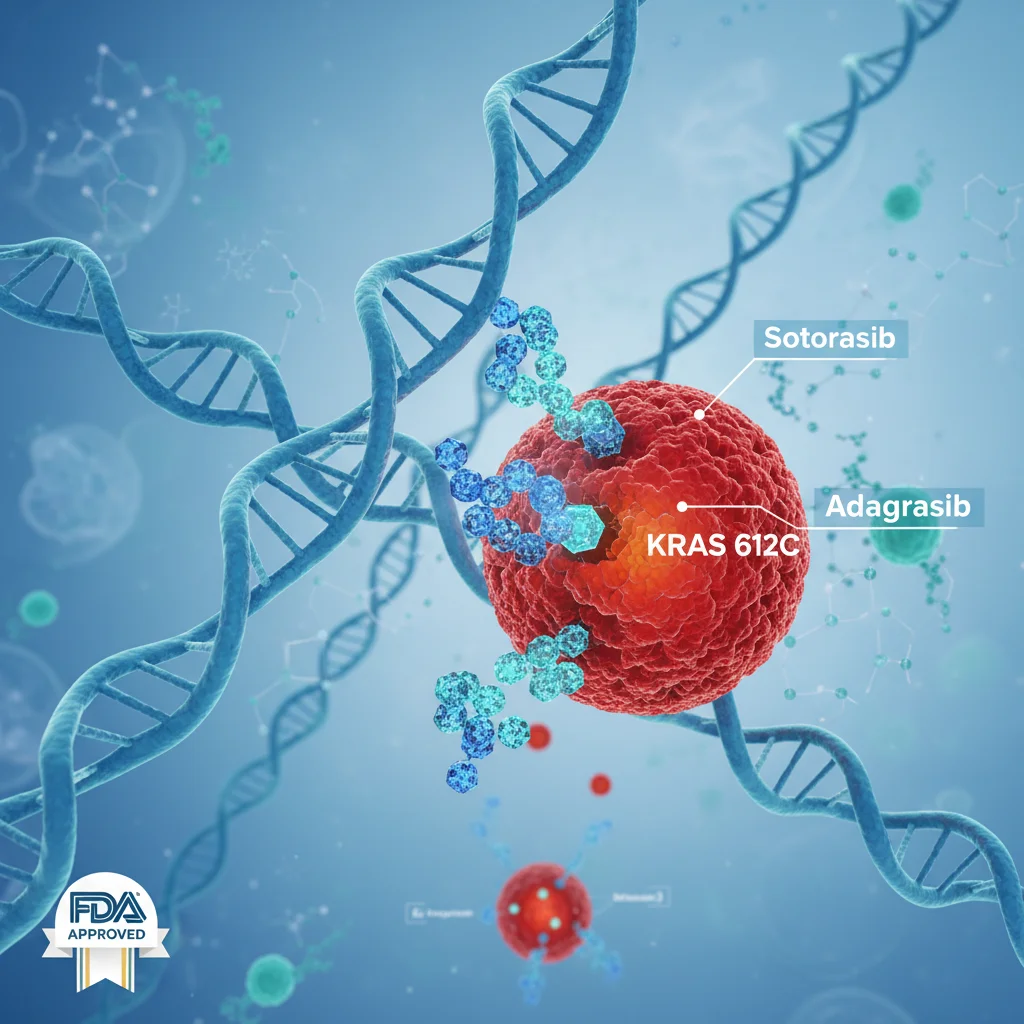
Adagrasib (Krazati) is a small molecule kinase inhibitor that selectively and irreversibly binds to the cysteine residue at position 12 of the KRAS protein harboring the G12C mutation. This mechanism locks KRAS G12C in an inactive GDP-bound state, inhibiting downstream signaling pathways involved in tumor growth. It is indicated for adults with locally advanced or metastatic NSCLC harboring the KRAS G12C mutation who have received prior systemic therapy.
Clinical Insights
The accelerated approval of adagrasib was based on data from the KRYSTAL-1 trial (NCT03785249). Accelerated approval was granted based on objective response rate (ORR) and duration of response (DoR) observed in clinical trials involving patients with previously treated KRAS G12C-mutated NSCLC. Common adverse events associated with adagrasib include gastrointestinal symptoms (nausea, diarrhea), fatigue, elevated liver enzymes, and potential interstitial lung disease/pneumonitis. Safety profiles are generally manageable with dose modifications and supportive care.
Regulatory Context
The FDA granted accelerated approval to adagrasib. This approval pathway is based on clinical data demonstrating substantial evidence of efficacy based on surrogate or intermediate clinical endpoints, such as ORR. Post-marketing confirmatory trials are generally required to verify clinical benefit. The FDA reviews such applications under priority review timelines to expedite availability for serious conditions with unmet medical needs.
Market Impact
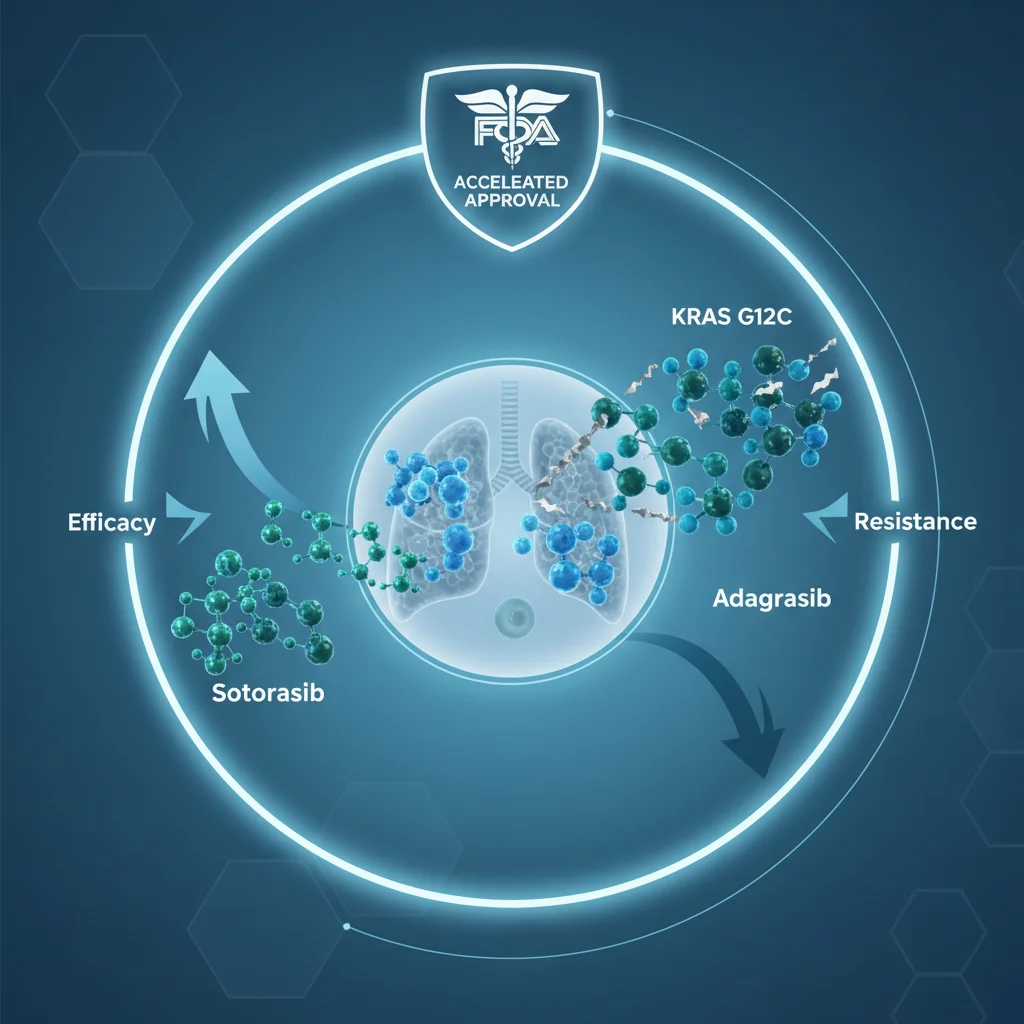
Adagrasib's approval adds to the competitive landscape alongside sotorasib (Lumakras), offering an alternative KRAS G12C inhibitor for previously treated NSCLC patients. KRAS G12C mutations occur in approximately 13% of NSCLC adenocarcinomas, representing a substantial patient subset. Compared with sotorasib, adagrasib provides an additional targeted therapy option beyond the first-in-class KRAS G12C inhibitor. This approval intensifies competition in the oncology market.
Future Outlook
Mirati Therapeutics is positioned to expand its oncology portfolio and strengthen its presence in targeted lung cancer therapies. The accelerated approval pathway enables earlier patient access while confirmatory trials continue to verify clinical benefit.
Frequently Asked Questions
What is adagrasib (Krazati)?
Adagrasib (Krazati) is a selective, covalent inhibitor targeting the KRAS G12C mutation, a common oncogenic driver in NSCLC.
How is adagrasib administered?
Adagrasib is administered orally, offering a convenient treatment option compared to intravenous therapies.
What are the common side effects of adagrasib?
Common adverse events associated with adagrasib include gastrointestinal symptoms (nausea, diarrhea), fatigue, elevated liver enzymes, and potential interstitial lung disease/pneumonitis.
What other treatment options are available for KRAS G12C-mutated NSCLC?
Sotorasib (Lumakras) remains the first-in-class FDA-approved KRAS G12C inhibitor, with adagrasib offering an alternative with potentially differentiated clinical benefits.
What is the significance of the KRAS G12C mutation in NSCLC?
KRAS G12C mutations occur in approximately 13% of NSCLC adenocarcinomas, representing a substantial patient subset.
References
References
- U.S. Food and Drug Administration. FDA approval. Accessed 2026-04-20.

Senior Medical Editor
Dr. Sarah Chen is a board-certified internist and former FDA clinical reviewer with 15+ years of experience in pharmaceutical regulatory affairs. She received her MD from Johns Hopkins and her PhD in ...