Beamion's Zongertinib Receives FDA Accelerated Approval for HER2-Mutant NSCLC as LUNG-1 Study Results Published in NEJM
Beamion's zongertinib gains FDA accelerated approval for HER2-mutant NSCLC treatment following breakthrough therapy designation and NEJM publication.

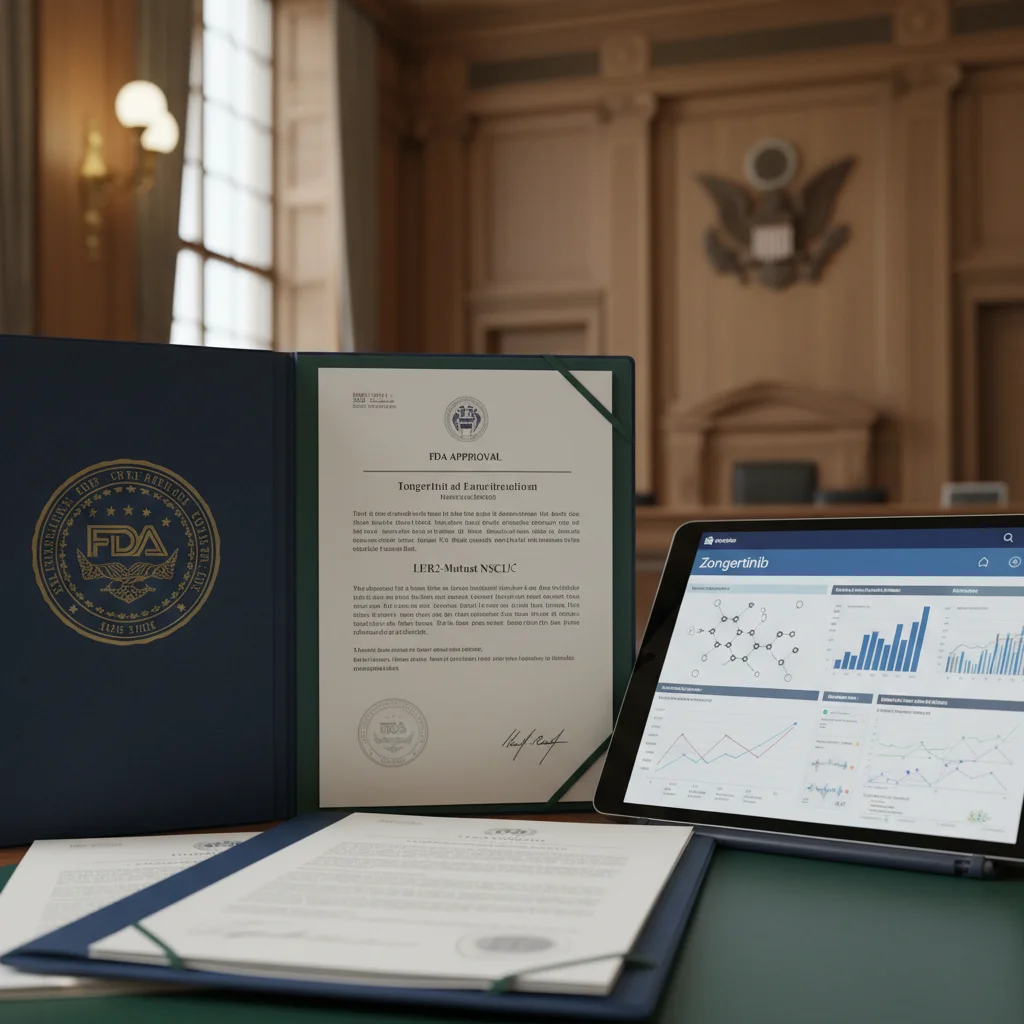
Key Takeaways
- Zongertinib receives FDA accelerated approval for treatment-naïve adults with unresectable or metastatic HER2-mutant non-squamous NSCLC
- LUNG-1 study results published in The New England Journal of Medicine validate the drug’s efficacy in this underserved patient population
- Breakthrough Therapy Designation and FDA Commissioner’s National Priority Voucher recognition highlight significant clinical advancement
FDA Grants Accelerated Approval for Novel HER2-Targeted Therapy
The U.S. Food and Drug Administration has granted accelerated approval to Beamion’s zongertinib for treating adult patients with unresectable or metastatic non-squamous non-small cell lung cancer (NSCLC) whose tumors harbor HER2 (ERBB2) tyrosine kinase domain activating mutations, as detected by an FDA-authorized test.
LUNG-1 Study Demonstrates Clinical Efficacy
The approval follows publication of the pivotal LUNG-1 study results in The New England Journal of Medicine, establishing zongertinib’s efficacy in treatment-naïve patients with HER2-mutant advanced NSCLC. This publication in one of medicine’s most prestigious journals validates the clinical data supporting the drug’s approval.
Zongertinib specifically targets HER2 tyrosine kinase domain activating mutations, addressing a critical unmet medical need in lung cancer treatment. HER2 mutations occur in approximately 2-4% of NSCLC cases, representing a previously underserved patient population with limited targeted therapy options.
Regulatory Recognition Highlights Clinical Significance
The accelerated approval follows several regulatory milestones that underscore zongertinib’s clinical importance:
- Breakthrough Therapy Designation: Granted based on preliminary clinical evidence demonstrating substantial improvement over existing treatments
- FDA Commissioner’s National Priority Voucher Program: Selected for this pilot program, recognizing therapies addressing significant unmet medical needs
- Accelerated Approval Pathway: Allows earlier patient access based on surrogate endpoints likely to predict clinical benefit
Market Impact and Treatment Landscape
Zongertinib enters a competitive HER2-targeting therapy market that includes established treatments such as Enhertu (trastuzumab deruxtecan), Herceptin (trastuzumab), Kadcyla (T-DM1), and Tykerb (lapatinib). However, its specific indication for HER2-mutant NSCLC positions it uniquely in the lung cancer treatment paradigm.
The drug’s approval addresses a significant gap in precision oncology, providing oncologists with a targeted first-line treatment option for patients whose tumors harbor specific HER2 mutations. This represents a shift toward more personalized cancer treatment approaches based on molecular tumor characteristics.
Clinical Development and Future Outlook
As an accelerated approval, zongertinib will require confirmatory trials to verify clinical benefit. Beamion must conduct post-marketing studies to demonstrate improved overall survival or other clinically meaningful endpoints.
The breakthrough therapy designation and NEJM publication suggest robust clinical data supporting zongertinib’s efficacy profile. Industry analysts view this as a positive indicator for the drug’s commercial potential, despite the relatively small patient population.
Implications for Precision Oncology
Zongertinib’s approval reinforces the growing importance of molecular diagnostics in cancer treatment. Patients must undergo FDA-authorized testing to identify HER2 tyrosine kinase domain activating mutations before treatment initiation, emphasizing the critical role of companion diagnostics in modern oncology.
This targeted approach represents the evolution of lung cancer treatment from broad chemotherapy regimens to precision therapies tailored to specific genetic alterations, potentially improving outcomes while reducing unnecessary toxicity in patients whose tumors lack the target mutation.
The drug’s recognition through multiple FDA programs and publication in NEJM positions Beamion as an emerging player in the competitive oncology therapeutics market, with potential for future label expansions to other HER2-mutant cancer types.
Frequently Asked Questions
What does zongertinib approval mean for HER2-mutant NSCLC patients?
Patients with HER2-mutant NSCLC now have access to a targeted first-line therapy specifically designed for their tumor type, potentially offering better outcomes than traditional chemotherapy with fewer side effects.
When will zongertinib be available to patients?
Zongertinib is now available following FDA accelerated approval, though patients must first undergo FDA-authorized testing to confirm their tumors have HER2 tyrosine kinase domain activating mutations.
How does zongertinib compare to existing HER2-targeted therapies?
Unlike existing HER2 therapies primarily used in breast cancer, zongertinib is specifically designed and approved for HER2-mutant NSCLC, representing the first targeted option for this specific patient population in lung cancer.
About the Author
Related Articles

Biotheryx BTX-9341 Phase 1A Results to Be Presented at ESMO Breast Cancer Congress 2026

Agenus Announces Q1 2026 Financial Report Date for Botensilimab and Balstilimab Cancer Programs

Oncolytics Biotech Reports Durable Responses with Pelareorep in RAS-Mutant Colorectal Cancer Trial