
Ractigen Therapeutics RAG-17 Shows 81% Reduction in ALS Biomarker in Phase I Trial
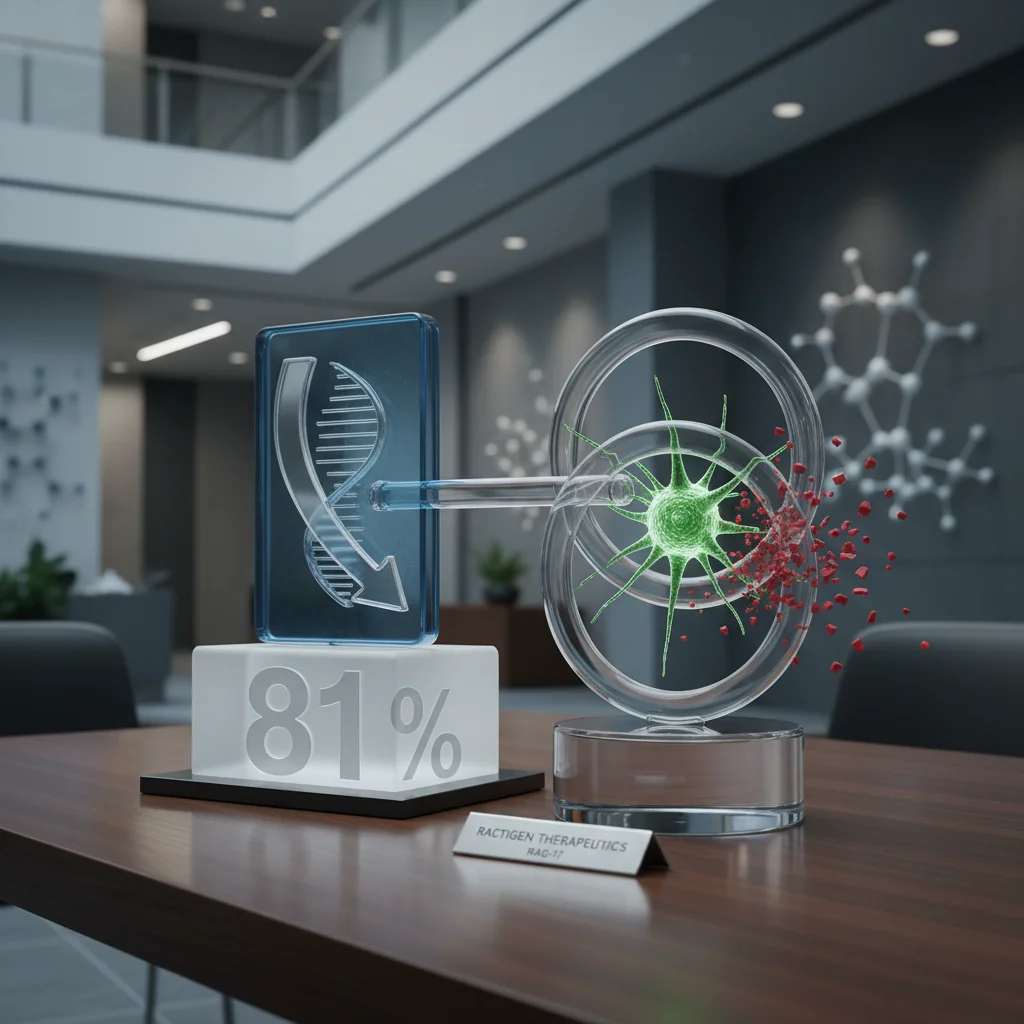
Ractigen's RAG-17 demonstrates 81% reduction in neurofilament light chain biomarker in SOD1-ALS patients with single intrathecal dose in Phase I trial.
Contents8 sections
Key Takeaways
- RAG-17 achieved an 81% reduction in neurofilament light chain, a key neurodegeneration biomarker, following a single intrathecal injection
- The SCAD-siRNA therapeutic showed favorable safety profile and preliminary trends of clinical stabilization in the 180mg cohort
- Phase II trial is now actively dosing participants, indicating rapid advancement of the SOD1-ALS treatment program
Ractigen Therapeutics announced positive Phase I clinical trial results for RAG-17, its investigational SCAD-siRNA therapeutic for SOD1-ALS, at the 2026 American Academy of Neurology (AAN) Annual Meeting. The single intrathecal dose treatment demonstrated an 81% reduction in neurofilament light chain levels, a critical biomarker of neurodegeneration.
Breakthrough Results in Rare ALS Form
SOD1-ALS represents approximately 2% of all ALS cases and is caused by mutations in the SOD1 gene. RAG-17 uses small interfering RNA (siRNA) technology to target and reduce production of the toxic SOD1 protein that drives disease progression.
The Phase I trial’s most significant finding was the substantial and durable reduction in neurofilament light chain (NfL), a protein released when nerve cells are damaged. An 81% decrease in this biomarker suggests RAG-17 may effectively slow neurodegeneration in patients with this devastating condition.
Clinical Stabilization Trends Emerge
Preliminary data from the 180mg cohort showed trends toward clinical stabilization as measured by the ALS Functional Rating Scale-Revised (ALSFRS-R), the standard assessment tool for ALS progression. While these results are early-stage, they provide encouraging signals that biomarker improvements may translate into meaningful clinical benefits for patients.
The favorable safety profile observed across all dose levels supports the therapeutic’s tolerability, a crucial factor given the vulnerable patient population and intrathecal delivery method.
Competitive Landscape and Market Impact
RAG-17 enters a competitive but limited treatment landscape for SOD1-ALS. Biogen’s tofersen (Qalsody) received FDA approval in 2023 for SOD1-ALS, while other companies including Ionis Pharmaceuticals and Cytokinetics are developing treatments for broader ALS populations.
The single-dose administration approach of RAG-17 could offer significant advantages over treatments requiring repeated dosing, potentially improving patient compliance and reducing healthcare burden.
Rapid Phase II Advancement
Ractigen’s announcement that Phase II dosing is already underway demonstrates confidence in the therapeutic’s potential and suggests possible regulatory support for the program. The rapid advancement from Phase I to Phase II is notable in rare disease development, where promising early results often accelerate clinical timelines.
The company’s SCAD-siRNA platform technology could have broader applications beyond SOD1-ALS if successful, potentially addressing other genetic forms of neurodegenerative diseases.
Investment and Development Outlook
While the SOD1-ALS patient population is small, limiting commercial potential, the high unmet medical need and promising early results position RAG-17 as a potentially significant therapeutic advance. The substantial biomarker reduction and preliminary clinical trends support continued development, though larger studies will be necessary to confirm clinical efficacy.
The regulatory pathway for RAG-17 likely includes potential for accelerated approval mechanisms given the rare disease designation and limited treatment options available to patients with SOD1-ALS.
Frequently Asked Questions
What does this mean for SOD1-ALS patients?
The 81% reduction in neurofilament light chain suggests RAG-17 may significantly slow nerve damage in SOD1-ALS patients. While promising, patients should discuss these early results with their physicians as the treatment is still in clinical trials.
When will RAG-17 be available to patients?
RAG-17 is currently in Phase II trials. If successful, the treatment could potentially reach patients in 2-3 years through accelerated regulatory pathways available for rare diseases, though this timeline depends on trial outcomes.
How does RAG-17 compare to existing SOD1-ALS treatments?
RAG-17’s single intrathecal dose approach differs from Biogen’s tofersen, which requires repeated dosing. The 81% biomarker reduction appears substantial, though direct comparisons require head-to-head studies to determine relative efficacy.
Related coverage
Follow RAG-17 developments
FDA neurology - amyotrophic lateral sclerosis (als) alerts and RAG-17 pipeline updates, every Monday.
This article follows our editorial standards. Report a correction via editorial contact.
Continue Your Research

Teva Acquires Emalex Biosciences for First-in-Class Tourette Syndrome Drug Ecopipam

BRC Therapeutics Receives FDA Clearance for BRC-002 Phase I Trial in Complex Regional Pain Syndrome
Capricor Therapeutics HOPE-3 Phase 3 Trial Results for Deramiocel in Duchenne Muscular Dystrophy to be Presented at AAN 2026