Drugs: RAG-17
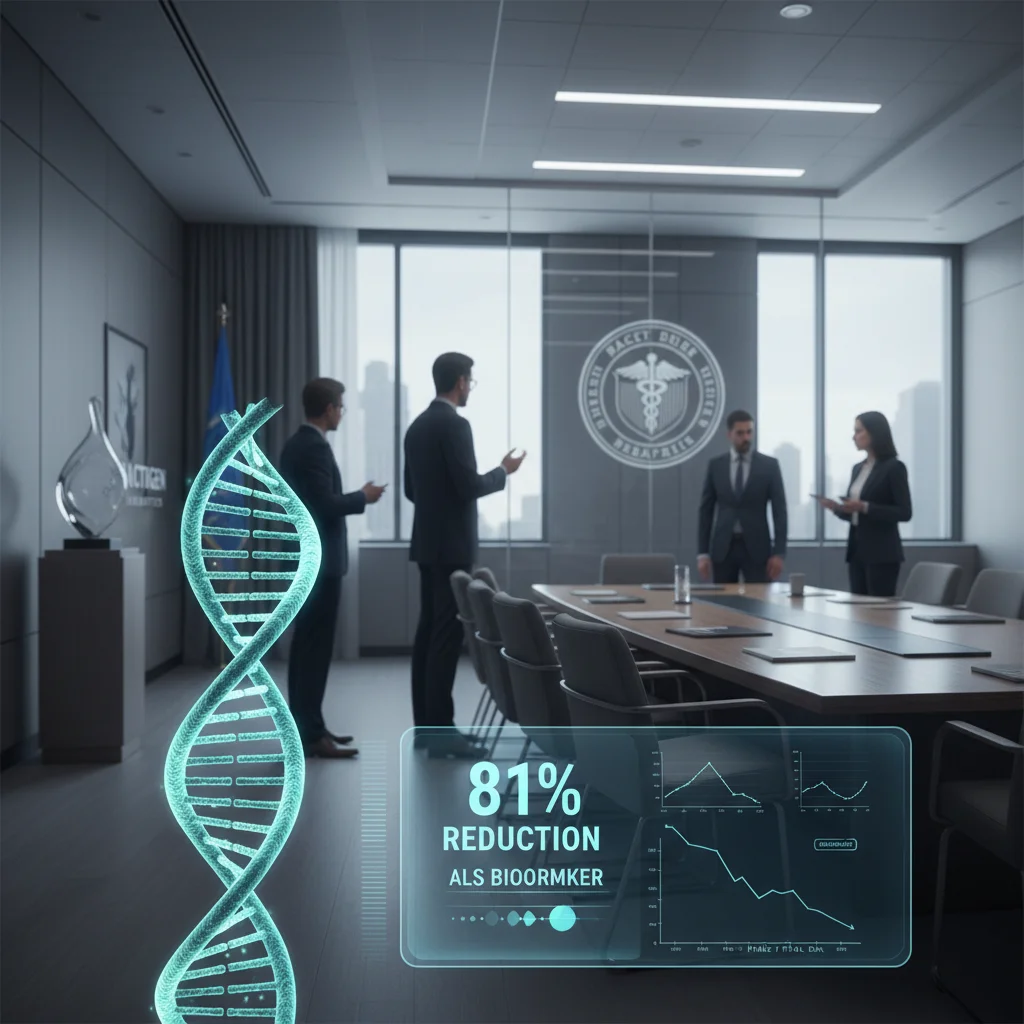
Ractigen Therapeutics RAG-17 Shows 81% Reduction in ALS Biomarker in Phase I Trial
Ractigen's RAG-17 siRNA therapy demonstrates 81% reduction in neurofilament light chain and clinical stabilization trends in SOD1-ALS patients at AAN 2026.
Executive Summary
- RAG-17 achieved an 81% reduction in neurofilament light chain, a key neurodegeneration biomarker, with favorable safety profile
- Preliminary data shows clinical stabilization trends in the 180 mg dose group using ALSFRS-R scoring
- Phase II trial is now actively enrolling patients, indicating rapid development progression for this rare ALS subtype
Market Impact
| Regulatory | medium |
|---|---|
| Commercial | medium |
| Competitive | low |
| Investment | low |
Ask about this article
AI-assisted answers grounded in NovaPharmaNews intelligence
Answers use retrieved site intelligence plus AI synthesis. Verify critical decisions with primary sources.
Key Takeaways
- RAG-17 achieved an 81% reduction in neurofilament light chain, a key neurodegeneration biomarker, with favorable safety profile
- Preliminary data shows clinical stabilization trends in the 180 mg dose group using ALSFRS-R scoring
- Phase II trial is now actively enrolling patients, indicating rapid development progression for this rare ALS subtype
Ractigen Therapeutics announced breakthrough Phase I results for RAG-17, its investigational siRNA therapy for SOD1-associated amyotrophic lateral sclerosis (ALS), at the American Academy of Neurology (AAN) Annual Meeting on April 21, 2026.
The clinical-stage biopharmaceutical company reported that a single intrathecal dose of RAG-17 produced an 81% reduction in neurofilament light chain levels, a critical biomarker for neurodegeneration, while maintaining a favorable safety profile in SOD1-ALS patients.
Significant Biomarker Improvements Drive Optimism
Neurofilament light chain serves as a key indicator of nerve cell damage in ALS patients. The substantial 81% reduction observed with RAG-17 represents a meaningful biological effect that could translate to clinical benefits for patients with this devastating neurodegenerative disease.
The SCAD-siRNA (self-cleaving and circularizing antisense DNA-siRNA) therapeutic targets the SOD1 gene mutation responsible for approximately 2% of all ALS cases. While SOD1-ALS represents a small patient population, it offers a genetically defined target for precision medicine approaches.
Clinical Stabilization Trends Emerge
Preliminary data from the 180 mg cohort demonstrated trends toward clinical stabilization using the ALS Functional Rating Scale-Revised (ALSFRS-R), the gold standard for measuring disease progression in ALS clinical trials. This functional assessment measures patients’ ability to perform daily activities, with stabilization indicating a potential slowing of disease progression.
The single intrathecal administration approach offers potential advantages over repeated dosing regimens, reducing patient burden while delivering the therapeutic directly to the central nervous system where motor neurons are affected.
Competitive Landscape and Market Position
RAG-17 enters a competitive but underserved market segment. Biogen’s tofersen (Qalsody) received FDA approval in 2023 for SOD1-ALS but requires multiple intrathecal injections. Ractigen’s single-dose approach could offer differentiation if durability data supports extended therapeutic effects.
Ionis Pharmaceuticals and Wave Life Sciences have also developed antisense and siRNA approaches for ALS, making this a closely watched therapeutic area despite the small patient population of approximately 300-400 SOD1-ALS patients in the United States.
Regulatory Pathway and Timeline
The rapid progression from Phase I to Phase II dosing suggests potential regulatory alignment and breakthrough therapy designation consideration. The FDA has shown willingness to work closely with companies developing treatments for rare ALS subtypes, given the significant unmet medical need and limited treatment options.
SOD1-ALS patients typically have a more aggressive disease course than sporadic ALS, with median survival of 1-2 years from symptom onset, creating urgency for effective interventions.
Investment and Development Implications
The positive Phase I data positions Ractigen favorably for continued development funding and potential partnership opportunities. The company’s next-generation RNA platform technology could have applications beyond SOD1-ALS if the mechanism proves successful.
Phase II trial results will be critical for determining whether the biomarker improvements translate to meaningful clinical benefits and whether the single-dose approach provides durable effects over time.
Frequently Asked Questions
What does this mean for SOD1-ALS patients?
The 81% reduction in neurofilament light chain and clinical stabilization trends suggest RAG-17 may slow disease progression, but patients must wait for Phase II results to confirm clinical benefits before potential FDA approval.
When will RAG-17 be available to patients?
RAG-17 is currently in Phase II trials. If successful, it could potentially reach market by 2028-2029, though this timeline depends on regulatory review and approval processes.
How does RAG-17 compare to existing SOD1-ALS treatments?
RAG-17’s single intrathecal dose approach may offer advantages over Biogen’s tofersen, which requires multiple injections. The 81% biomarker reduction appears substantial, but head-to-head comparisons are needed to determine relative efficacy.
About the Author

Related Articles
Neurocrine Biosciences INGREZZA Shows Clinically Meaningful Improvement in Tardive Dyskinesia Study

BRC Therapeutics Receives FDA Clearance for BRC-002 Phase I Trial in Complex Regional Pain Syndrome