FDA Approves First OTC Naloxone Nasal Spray for Opioid Overdose
In a groundbreaking move, the FDA has approved the first over-the-counter naloxone nasal spray, providing a critical tool in combating opioid overdose emergencies.
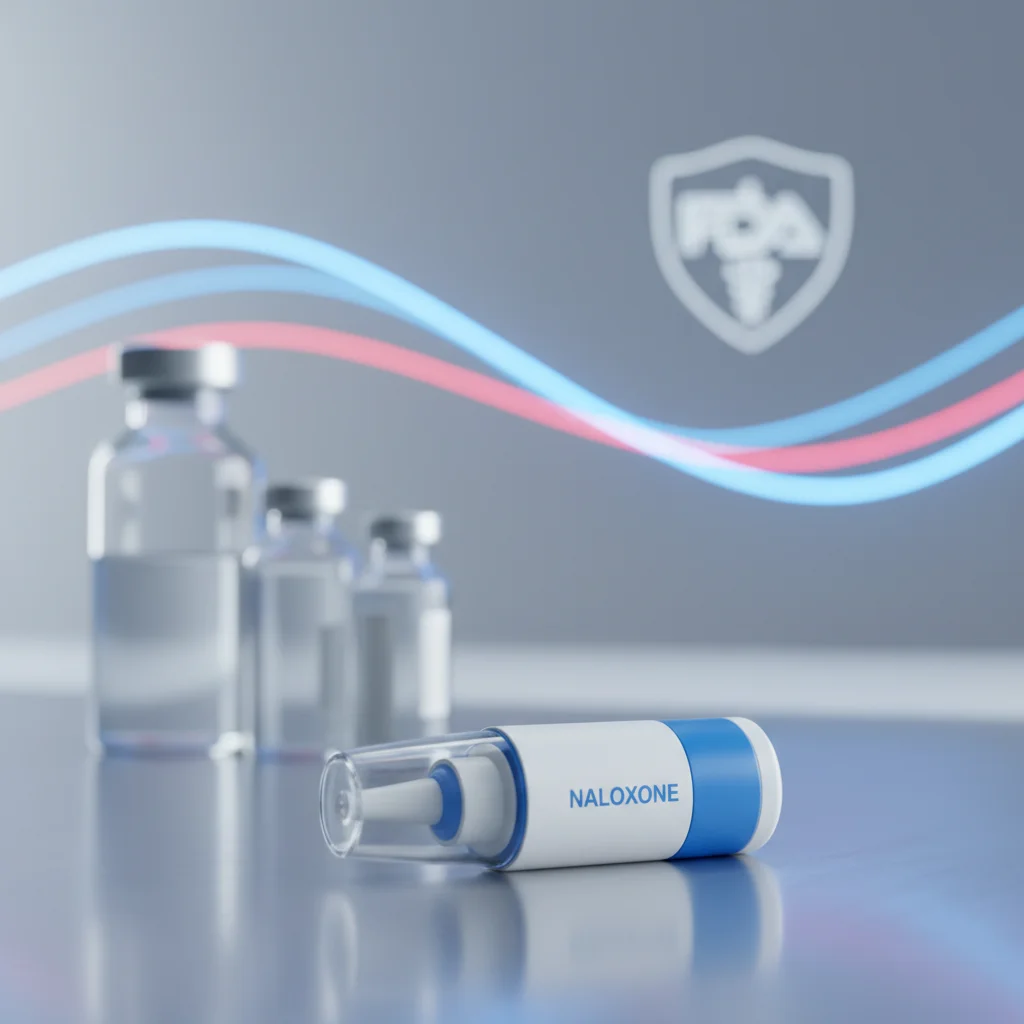
On March 29, 2023, the FDA approved naloxone 4 mg nasal spray (Narcan) as the first over-the-counter medication to reverse opioid overdoses. Sold by Emergent BioSolutions, this non-prescription nasal spray allows anyone to rapidly restore breathing during an opioid emergency.
Contents11 sections
Key Takeaways
- FDA approved Narcan (naloxone 4 mg nasal spray) for OTC sale on March 29, 2023, the first non-prescription opioid reversal medication in the US. [Source: FDA]
- OTC availability expands access beyond pharmacies to convenience stores, grocery stores, gas stations, and online retailers, enabling faster bystander intervention.
- The nasal spray can be administered by anyone without medical training; it blocks opioid receptors to restore respiration within 2-3 minutes.
- Each naloxone kit contains two 4 mg doses; a second dose may be needed for potent synthetic opioids like fentanyl.
Product Overview
Narcan nasal spray delivers 4 mg of naloxone hydrochloride per dose through a single-use, prefilled device. FDA guidance indicates that naloxone is an opioid antagonist that competitively binds to mu-opioid receptors, displacing opioids and restoring normal respiratory function.
The FDA approval applies specifically to the Emergent BioSolutions formulation, which uses an absorption-enhancing formulation to achieve rapid onset through nasal mucosa. Effects typically begin within 2-3 minutes and last 30-90 minutes—enough time to seek emergency medical care.
Clinical Mechanism and Efficacy
How does naloxone reverse opioid overdose? The medication acts as a competitive antagonist at mu-opioid receptors in the brain and spinal cord. By displacing opioid molecules from these receptors, naloxone rapidly restores respiratory drive that opioids suppress during overdose.
Key clinical considerations include:
- Onset: Respiratory improvement typically occurs within 2-3 minutes of intranasal administration.
- Duration: Effects persist 30-90 minutes, shorter than many opioids, necessitating emergency medical follow-up.
- Multiple doses: High-potency synthetic opioids (fentanyl analogs) may require repeated administration.
- Withdrawal risk: Opioid-dependent patients may experience acute withdrawal symptoms upon reversal.
FDA safety data show that common adverse events include nasal irritation, headache, and injection site reactions (for injectable formulations). Serious adverse events are rare when used as directed.
What Prompted the OTC Approval?
The FDA's Center for Drug Evaluation and Research (CDER) approved the switch from prescription to OTC status after reviewing clinical data showing that laypersons could correctly identify overdose signs and administer the nasal spray without healthcare supervision.
According to FDA's March 2023 announcement, the approval addresses the ongoing opioid overdose crisis in the United States, where over 80,000 people die annually from opioid-related deaths. Making naloxone available without a prescription removes barriers that delay intervention during the critical window after overdose onset.
The regulatory pathway required demonstrating that consumers could understand labeling instructions, recognize overdose symptoms, and administer the product safely based on the Drug Facts label alone.
Availability and Distribution
Where can you purchase OTC naloxone? Following the March 29, 2023 FDA approval, Narcan became available for over-the-counter purchase at:
| Channel | Availability | Notes |
|---|---|---|
| Chain pharmacies | Widespread | CVS, Walgreens, Rite Aid, Walmart |
| Convenience stores | Phased rollout | 7-Eleven, gas station chains |
| Online retailers | Available | Amazon, manufacturer direct |
| Community programs | Free in many areas | Public health departments, harm reduction orgs |
Emergent BioSolutions worked with the FDA to transition manufacturing and packaging to OTC-compliant labeling. Prescription formulations of naloxone remain available for patients with insurance coverage.
How Does This Fit Into Opioid Crisis Response?
The OTC approval aligns with federal and state initiatives to expand naloxone access as a harm reduction strategy. The FDA, CDC, and SAMHSA have prioritized naloxone distribution as a pillar of overdose prevention.
Key contextual data points:
- The opioid overdose death rate exceeded 107,000 in 2023, with synthetic opioids driving mortality.
- Most overdoses occur in private residences where bystander intervention is crucial.
- Naloxone distribution programs in communities with high overdose rates show 30-40% reductions in opioid mortality.
Related coverage includes FDA approval of Vertex's Journavx, the first non-opioid pain drug for acute pain, which could reduce opioid prescribing.
Future Outlook for Naloxone Access
Will other naloxone formulations become OTC? The FDA has indicated openness to additional OTC applications for other dosages and delivery mechanisms. Emergent BioSolutions may expand labeling to include specific instructions for youth populations and combination strategies with other emergency medications.
Competition in the naloxone market includes Hikma's nasal spray and various generic injectable formulations. However, as of the March 2023 approval date, Narcan remains the only FDA-approved OTC option. Future regulatory activity may address higher-dose formulations needed for potent synthetic opioid overdoses.
Insurance coverage for OTC naloxone varies by payer, though many states mandate coverage. Generic OTC versions may enter the market as patents expire, potentially reducing prices from the current $40-50 per twin-pack retail price.
Frequently Asked Questions
What is naloxone and how does it work?
Naloxone is a fast-acting opioid antagonist that blocks opioid receptors in the brain to reverse respiratory depression caused by overdose. It restores normal breathing within 2-3 minutes and remains active for 30-90 minutes.
When did the FDA approve OTC naloxone nasal spray?
The FDA approved Narcan (naloxone hydrochloride) 4 mg nasal spray for over-the-counter sale on March 29, 2023. This marked the first non-prescription naloxone product in the United States. [Source: FDA]
Who can administer OTC naloxone?
Anyone can administer OTC naloxone nasal spray, including laypersons without medical training. The simplified nasal delivery makes it suitable for family members, first responders, and bystanders who witness an opioid overdose. No prescription or special certification is required.
What are the side effects of naloxone?
Common side effects include nasal irritation and headache. Opioid-dependent individuals may experience withdrawal symptoms including anxiety, restlessness, and GI distress. Serious adverse events are rare. Multiple doses may be needed for potent opioid overdoses.
Why is OTC naloxone important?
OTC naloxone availability enables rapid overdose intervention during the critical window before emergency services arrive. In the US, over 80,000 people die annually from opioid overdoses. Wider access can reduce mortality and support public health efforts to combat the opioid crisis.
Primary Sources
- U.S. Food and Drug Administration. FDA Approves First Over-the-Counter Naloxone Nasal Spray. FDA News Release, March 29, 2023. https://www.fda.gov/news-events/press-announcements/fda-approves-first-over-counter-naloxone-nasal-spray
- U.S. Food and Drug Administration. Naloxone. Drug Safety and Availability. https://www.fda.gov/drugs/drug-safety-and-availability/naloxone
- NovaPharmaNews. Naloxone Drug Profile. https://novapharmanews.com/drugs/naloxone
- NovaPharmaNews. Emergent BioSolutions Company Profile. https://novapharmanews.com/companies/emergent-biosolutions
Related profiles
Related coverage
Continue Exploring
Jump into the entities behind this story.
Follow Naloxone developments
FDA opioid overdose treatment alerts and Naloxone pipeline updates, every Monday.
This article follows our editorial standards. Report a correction via editorial contact.