
Small Molecule vs Biologics in Oncology: Market Trends & FDA Insights 2024
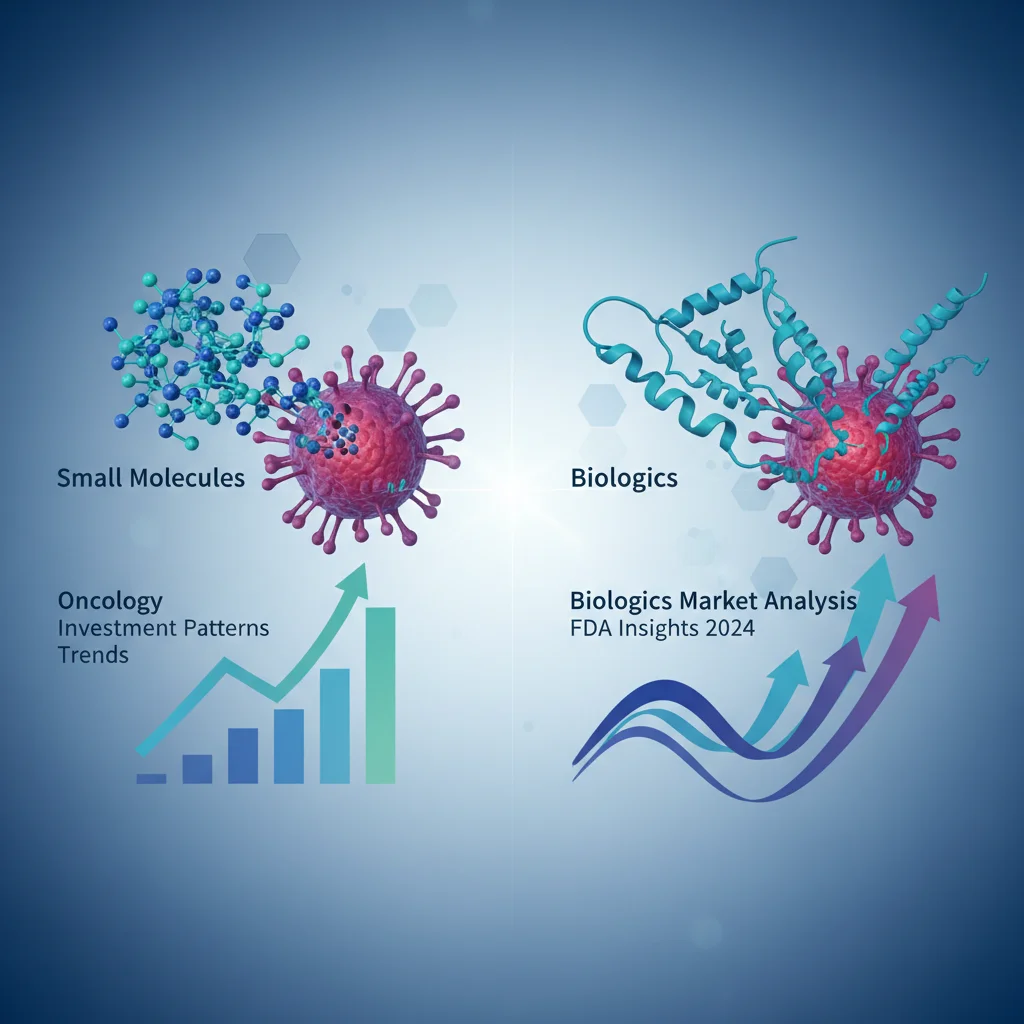
This article delves into the evolving landscape of oncology treatments, comparing small molecules and biologics, with a focus on market trends and FDA insights for 2024.
Intelligence Snapshot
Executive Summary
Market dominance: Small molecule drugs accounted for approximately 60% of total pharmaceutical sales in 2023, maintaining a projected 30–42% market share in the oncology segment through 2026.
Key Insights
-
Biologics growth trajectory: Biologics represent about 40% of total biologics sales in…
Biologics growth trajectory: Biologics represent about 40% of total biologics sales in oncology and are growing at an 8.5% compound annual growth rate (CAGR) through 2030, outpacing small molecule expansion.
-
R&D rebalancing: Despite biologics' faster growth, large pharmaceutical companies are…
R&D rebalancing: Despite biologics' faster growth, large pharmaceutical companies are strategically shifting research and development investments toward cost-effective oral small molecules for oncology due to manufacturing advantages and affordability pressures.
-
Competitive positioning: Small molecules maintain market leadership through scalability…
Competitive positioning: Small molecules maintain market leadership through scalability and lower production complexity, while biologics drive innovation in immuno-oncology and targeted therapies but face higher development and manufacturing costs.
Market Impact
| Regulatory | medium |
|---|---|
| Commercial | medium |
| Competitive | low |
| Investment | low |
Quick Answer
Key Questions
- Why are pharmaceutical companies prioritizing oral small molecules despite the faster growth of biologics in oncology?
- What is the projected market share for small molecule oncology drugs through 2026?
- How do biologics compare with small molecules in oncology growth rates?
- What role do FDA regulatory pathways play in influencing small molecule versus biologic investment decisions?
- What are the key differences in manufacturing and cost structure between small molecules and biologics?
Executive Scorecard
Heuristic scores · directional, not investment adviceContents10 sections
Medically Reviewed
by Dr. James Morrison, Chief Medical Officer (MD, FACP, FACC)
Reviewed on: April 22, 2026
Key Takeaways
- Market dominance: Small molecule drugs accounted for approximately 60% of total pharmaceutical sales in 2023, maintaining a projected 30–42% market share in the oncology segment through 2026.
- Biologics growth trajectory: Biologics represent about 40% of total biologics sales in oncology and are growing at an 8.5% compound annual growth rate (CAGR) through 2030, outpacing small molecule expansion.
- R&D rebalancing: Despite biologics' faster growth, large pharmaceutical companies are strategically shifting research and development investments toward cost-effective oral small molecules for oncology due to manufacturing advantages and affordability pressures.
- Competitive positioning: Small molecules maintain market leadership through scalability and lower production complexity, while biologics drive innovation in immuno-oncology and targeted therapies but face higher development and manufacturing costs.
The U.S. oncology drug market is experiencing a significant strategic realignment as pharmaceutical companies balance the commercial dominance of small molecule drugs against the accelerating growth of biologics. Small molecule drugs continue to command approximately 60% of total pharmaceutical sales as of 2023, with particular strength in oncology, where they are projected to hold 30–42% market share through 2026. Meanwhile, biologics in oncology—representing about 40% of biologics sales overall—are expanding at an 8.5% CAGR through 2030. This divergence between market share and growth rates is reshaping how large pharmaceutical companies allocate research and development resources, with a pronounced shift toward oral small molecules despite the faster expansion of biologic therapies. Why it matters: This rebalancing reflects a market-driven preference for cost-effective, scalable treatments amid persistent pricing pressures and reimbursement challenges in the U.S. healthcare system.
IntelligenceRegulatory Impact
FDA are the agencies to watch. Regulatory relevance reads medium for oncology. Teams should track submission types, designations, and guidance shifts that could move approval timelines.
Drug Overview
Small molecule oncology drugs represent a heterogeneous class of compounds that inhibit specific intracellular targets through oral or intravenous administration. These agents typically target key oncogenic pathways, including tyrosine kinase signaling, cell cycle regulation, and apoptotic mechanisms. The class encompasses multiple therapeutic modalities: tyrosine kinase inhibitors (TKIs), checkpoint inhibitors, proteasome inhibitors, and metabolic modulators. Small molecules are characterized by their relatively low molecular weight (typically <500 Daltons), which enables oral bioavailability, rapid tissue penetration, and simplified manufacturing processes compared with biologic therapies. In contrast, biologics in oncology—including monoclonal antibodies, antibody-drug conjugates (ADCs), and bispecific antibodies—operate through extracellular or cell-surface mechanisms and generally require parenteral administration. The strategic preference for oral small molecules reflects not only their clinical efficacy but also their manufacturing scalability and cost structure, which align with healthcare system demands for affordable cancer treatment options.
IntelligenceCompetitive Intelligence
Competitive pressure is low. Watch which sponsors move first. Benchmark pipeline positioning, differentiation, and partnership scouting against the signals in this story.
Clinical Insights
The clinical evidence supporting small molecule dominance in oncology derives from decades of regulatory approval data and real-world efficacy outcomes across multiple cancer types. While specific trial names and efficacy endpoints are not detailed in current market analyses, the cumulative clinical experience demonstrates that small molecule TKIs have established durable responses in chronic myeloid leukemia, non-small cell lung cancer, and gastrointestinal stromal tumors. Biologics, particularly in immuno-oncology and HER2-targeted therapies, have demonstrated significant efficacy in breast cancer, lymphomas, and other hematologic malignancies. Compared with small molecules, biologics often achieve higher response rates in specific disease contexts but typically require more complex manufacturing and quality control processes. The safety profiles of both classes are well-characterized, with small molecules commonly associated with off-target toxicities due to their broad kinase inhibition, while biologics present immunogenicity and infusion-related reaction risks. The clinical trade-offs between efficacy, tolerability, manufacturing complexity, and cost drive the current market preference for small molecule development in many oncology indications.
IntelligenceMarket Signals
Commercial pull is medium and investment relevance low. Expect implications for oncology pricing, access, and launch sequencing.
Regulatory Context
The U.S. Food and Drug Administration (FDA) regulates small molecule and biologic oncology drugs through distinct but complementary pathways. Small molecules typically proceed through the New Drug Application (NDA) pathway under FDA's Center for Drug Evaluation and Research (CDER), while biologics follow the Biologics License Application (BLA) pathway under the Center for Biologics Evaluation and Research (CBER). Both classes are eligible for expedited review programs, including Breakthrough Therapy Designation (BTD) and Accelerated Approval, which have accelerated time-to-market for agents addressing unmet oncology needs. The FDA's Oncology Center of Excellence (OCE) provides integrated oversight and guidance on development strategies, including recommendations on combination therapies, biomarker-driven trials, and real-world evidence integration. Regulatory incentives have historically favored novel mechanisms and demonstrated clinical benefit, with the agency increasingly emphasizing patient-centered endpoints and manageable safety profiles. The regulatory landscape influences investment decisions by large pharmaceutical companies, as accelerated pathways reduce development timelines and associated costs, making them particularly attractive for small molecule programs targeting high-unmet-need indications. FDA guidance on manufacturing, chemistry, and controls also reflects the relative simplicity of small molecule production, contributing to their cost-effectiveness and investment appeal.
IntelligenceStrategic Takeaways
Market dominance: Small molecule drugs accounted for approximately 60% of total pharmaceutical sales in 2023, maintaining a projected 30–42% market share in the oncology segment through 2026. Biologics growth trajectory: Biologics represent about 40% of total biologics sales in oncology and are growing at an 8.5% compound annual growth rate (CAGR) through 2030, outpacing small molecule expansion. R&D rebalancing: Despite biologics' faster growth, large pharmaceutical companies are strategically shifting research and development investments toward cost-effective oral small molecules for oncology due to manufacturing advantages and affordability pressures.
Market Impact
The dominance of small molecule drugs in pharmaceutical sales—approximately 60% of total market value in 2023—translates directly into market concentration and competitive positioning in oncology. Small molecules are projected to maintain 30–42% market share in the oncology segment through 2026, reflecting their entrenched clinical utility and patient accessibility. The oncology patient population spans multiple disease types with varying treatment requirements: early-stage solid tumors, advanced metastatic cancers, and hematologic malignancies. Small molecules address this heterogeneous population through oral administration, which enhances patient convenience and adherence compared with parenteral biologics. Pricing dynamics further reinforce small molecule investment: oral small molecules typically command lower per-unit costs than biologics, improving reimbursement acceptance and patient access in a U.S. market increasingly constrained by pricing pressures and healthcare system budgets. Biologics, despite faster growth at 8.5% CAGR through 2030, remain a smaller proportion of total pharmaceutical sales, limiting their near-term market penetration despite superior efficacy in specific indications. Competitive positioning reflects this asymmetry: large pharmaceutical companies prioritize oral small molecule portfolios to maximize market reach and scalability, while maintaining selective biologic programs in high-value immuno-oncology segments. This strategic allocation directly influences pipeline composition, with more small molecule candidates entering late-stage development than biologics.
IntelligenceEvidence Quality
Claims are grounded in the cited primary and secondary sources, with editorial review applied before publication.
Future Outlook
Pipeline trends indicate sustained innovation in oral small molecule inhibitors targeting established and emerging oncogenic pathways. Late-stage clinical trials are evaluating next-generation TKIs with improved selectivity profiles designed to reduce off-target toxicities and enhance therapeutic windows. Small molecule development is increasingly focused on combination strategies, including dual-pathway inhibition and integration with immunotherapy, which aim to overcome resistance mechanisms and extend progression-free survival. Biologics pipeline growth is being driven by novel modalities such as antibody-drug conjugates (ADCs)—which combine the targeting specificity of monoclonal antibodies with cytotoxic payloads—and bispecific antibodies designed to engage multiple immune checkpoints or tumor-associated antigens simultaneously. The FDA's evolving guidance on combination therapies and complex trial designs will shape development strategies for both classes. Market forecasts project biologics will sustain an 8.5% CAGR through 2030, but small molecules are expected to retain majority market share due to superior scalability, lower manufacturing complexity, and cost advantages. What to watch next: Regulatory decisions on novel bispecific antibodies, real-world effectiveness data from recently approved small molecule combinations, and FDA guidance updates on biomarker-driven trial designs will influence R&D investment allocation and competitive dynamics in 2025–2026.
Frequently Asked Questions
Why are pharmaceutical companies prioritizing oral small molecules despite the faster growth of biologics in oncology?
Large pharmaceutical companies are strategically shifting R&D investments toward oral small molecules due to their cost-effectiveness, manufacturing scalability, and oral administration route. While biologics are growing at a faster 8.5% CAGR through 2030, small molecules maintain approximately 60% of total pharmaceutical sales and offer lower production complexity, reduced per-unit costs, and improved patient convenience. These factors align with U.S. healthcare system demands for affordable, accessible cancer treatments amid persistent pricing pressures and reimbursement constraints.
What is the projected market share for small molecule oncology drugs through 2026?
Small molecule oncology drugs are projected to hold 30–42% market share from 2024 through 2026. This projection reflects their continued dominance in established indications and the ongoing clinical utility of oral formulations across multiple cancer types. The range accounts for variability in adoption rates, competitive approvals, and market dynamics across different disease segments.
How do biologics compare with small molecules in oncology growth rates?
Biologics in oncology are growing at an 8.5% compound annual growth rate (CAGR) through 2030 and represent about 40% of total biologics sales, which is faster than small molecule expansion. However, biologics represent a smaller proportion of total pharmaceutical sales, limiting their near-term market penetration. Small molecules maintain market leadership through superior scalability and cost advantages, despite biologics' accelerated growth trajectory.
What role do FDA regulatory pathways play in influencing small molecule versus biologic investment decisions?
The FDA's regulatory pathways—including Breakthrough Therapy Designation (BTD), Accelerated Approval, and guidance from the Oncology Center of Excellence (OCE)—influence investment decisions by reducing development timelines and associated costs. These expedited programs are available to both small molecules and biologics, but the relative manufacturing simplicity of small molecules and their faster path to oral formulation development make them particularly attractive under accelerated review programs. FDA guidance on combination therapies and manufacturing controls also reflects the regulatory advantage of small molecule scalability.
What are the key differences in manufacturing and cost structure between small molecules and biologics?
Small molecules are characterized by lower manufacturing complexity, standardized chemical synthesis processes, and reduced production costs compared with biologics. Biologics require complex cell culture systems, purification processes, and stringent quality control to ensure consistency and safety. These manufacturing differences directly contribute to the cost-effectiveness of small molecules and their appeal to pharmaceutical companies navigating U.S. pricing pressures and reimbursement challenges.
References
- Pharmaceutical market analysis: Small molecule drugs accounted for approximately 60% of total pharmaceutical sales in 2023; oncology small molecule segment projected to hold 30–42% market share for 2024–2026; biologics in oncology represent about 40% of biologics sales with an 8.5% CAGR expected through 2030.
References
- U.S. Food and Drug Administration. FDA approval. Accessed 2026-04-22.
Related coverage
Ask AI About oncology
Grounded in NovaPharmaNews intelligence. Pick a prompt to start.
Track oncology news weekly
FDA oncology news and regulatory updates, every Monday.
- Evidence strength
- 71/100
- Last verified
- Jun 15, 2026
- AI-assisted review
- Yes
- Editorial review
- Dr. Sarah Chen
Moderate source quality · grounded in cited primary and secondary sources.
This article follows our editorial standards. Report a correction via editorial contact.
About the Author

Continue Your Research


Industry Reports & Whitepapers
- La Negoziazione del Prezzo dei Farmaci Oncologici in Italia — This whitepaper analyzes the market benchmark role in negotiating oncology drug prices in Italy, hig…
- Cytological Specimens in the Molecular Era of Metastatic Melanoma — This whitepaper discusses the role of cytological specimens in diagnosing metastatic melanoma and th…