EU HTA Radioligand Therapy Assessment: Price, Access & Challenges
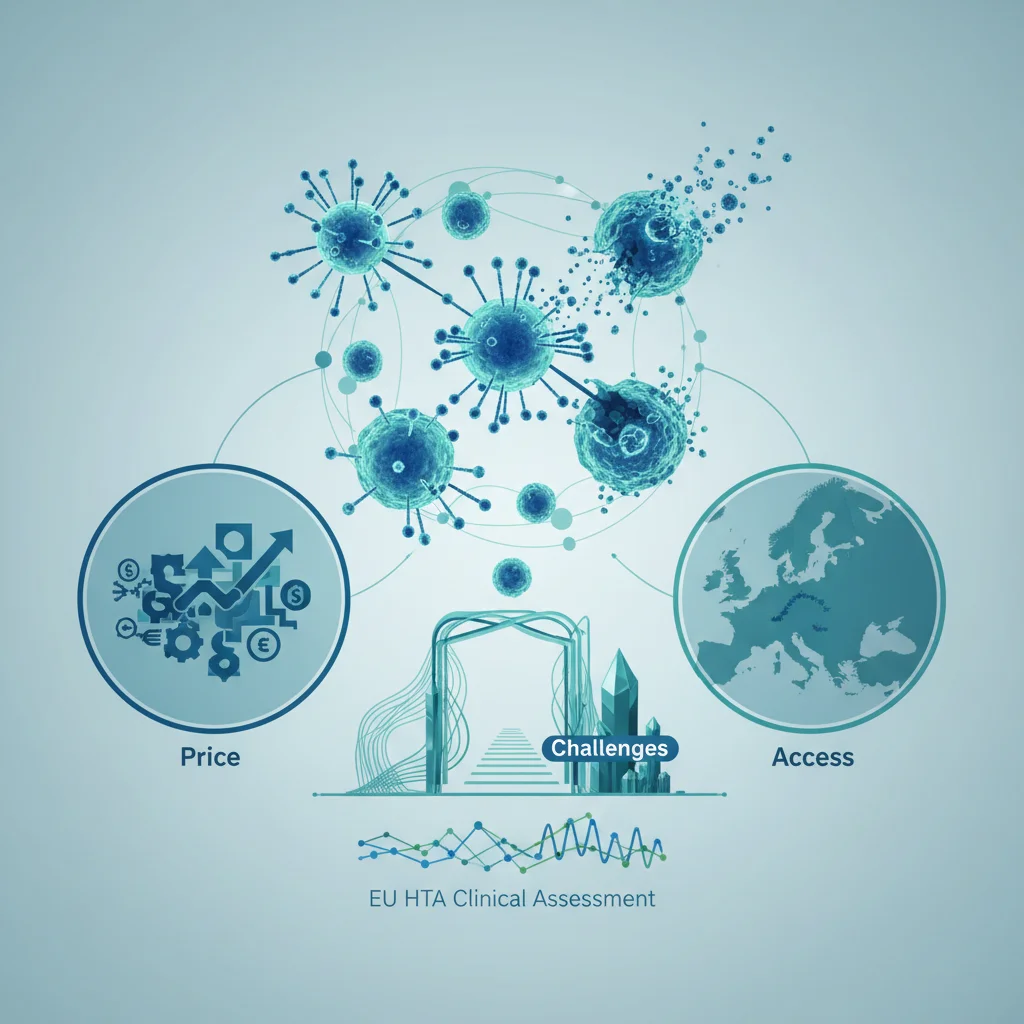
This article delves into the EU HTA's evaluation of radioligand therapy for prostate cancer, highlighting pricing, access issues, and the challenges in the healthcare landscape.

Medically Reviewed
by Dr. James Morrison, Chief Medical Officer (MD, FACP, FACC)
Reviewed on: April 20, 2026
Key Takeaways
- EU HTA assessment framework: The European Medicines Agency (EMA) and national Health Technology Assessment (HTA) bodies are harmonizing evaluation of radioligand therapies for prostate cancer, focusing on clinical benefit, cost-effectiveness, and implementation feasibility across member states.
- Clinical promise with access barriers: Radioligand therapies targeting prostate-specific membrane antigen (PSMA)—such as 177Lu-PSMA-617—offer targeted treatment for metastatic castration-resistant prostate cancer but face pricing pressures and infrastructure gaps that limit equitable access across the EU.
- Implementation challenges: High manufacturing complexity, need for specialized nuclear medicine facilities, multidisciplinary teams, and variable national healthcare budgets create significant barriers to standardized access and reimbursement across EU5 markets.
- Strategic inflection point: HTA Joint Clinical Assessment outcomes will directly influence pricing negotiations, market uptake, and competitive positioning for radioligand therapies in the EU oncology landscape through 2025 and beyond.
The EU's Health Technology Assessment Joint Clinical Assessment process is reshaping how radioligand therapies for advanced prostate cancer are evaluated, priced, and reimbursed across member states. These targeted nuclear medicine treatments—which use radioactive isotopes linked to PSMA-binding ligands to deliver radiation directly to tumor cells—represent a significant clinical advance for men with metastatic castration-resistant prostate cancer (mCRPC) who have exhausted conventional therapies. However, steep manufacturing costs, infrastructure requirements, and fragmented national reimbursement policies threaten to create a two-tier access landscape in Europe, raising critical questions about equitable patient access and market viability for manufacturers.
Drug Overview
Radioligand therapies (RLTs) for prostate cancer represent a distinct class of targeted nuclear medicine agents designed to deliver localized radiation to tumor cells while minimizing systemic exposure. The mechanism of action relies on a radioactive isotope—typically lutetium-177 (177Lu)—linked to a small-molecule ligand that binds with high affinity to prostate-specific membrane antigen (PSMA), a transmembrane protein overexpressed on prostate cancer cells. Upon binding, the radioactive isotope delivers targeted beta radiation directly to PSMA-positive tumors, inducing DNA damage and cell death.
The lead compound in clinical development is 177Lu-PSMA-617, which has emerged as the reference standard for this therapeutic class in the EU. Alternative agents, including lutetium (177Lu) vipivotide tetraxetan, represent next-generation iterations with refined targeting properties and potentially improved tolerability profiles. These agents are indicated for men with advanced, PSMA-positive mCRPC, typically after progression on docetaxel chemotherapy and androgen receptor pathway inhibitors (ARPIs) such as abiraterone or enzalutamide.
Clinical Insights
Radioligand therapies for prostate cancer have demonstrated clinical activity in Phase III trials, with primary endpoints centered on overall survival (OS), progression-free survival (PFS), and quality of life measures. Specific efficacy data from pivotal trials—including exact hazard ratios, confidence intervals, and median survival durations—have informed EMA regulatory submissions and are now central to EU HTA Joint Clinical Assessment deliberations. Safety profiles are generally manageable but require careful patient selection and monitoring.
Class-typical adverse events include hematological toxicities such as anemia and thrombocytopenia, xerostomia (dry mouth), fatigue, and potential renal toxicity. Grade ≥3 hematological events have been observed in clinical populations, particularly in patients with baseline cytopenias or prior chemotherapy exposure. Xerostomia and fatigue, while often reversible, can impact quality of life and treatment adherence. Renal toxicity, though typically mild to moderate, necessitates baseline and serial monitoring of creatinine and estimated glomerular filtration rate (eGFR) in all treated patients. Why it matters: The manageable safety profile, when coupled with demonstrated clinical benefit in heavily pre-treated populations, positions radioligand therapies as a rational treatment option for men with limited alternatives—yet access disparities threaten to undermine this potential across the EU.
Regulatory Context
In the EU, radioligand therapies undergo centralized marketing authorization via the European Medicines Agency (EMA) following submission to the Committee for Medicinal Products for Human Use (CHMP). The centralized procedure enables a single regulatory review across all EU member states, streamlining approval timelines and ensuring consistent quality, safety, and efficacy standards. Following EMA approval, the EU HTA regulation mandates that national HTA bodies conduct joint clinical assessments to evaluate comparative clinical benefit and cost-effectiveness, informing reimbursement decisions at the national level. [Source: European Medicines Agency]
The EU HTA Joint Clinical Assessment process typically spans 12 to 24 months post-authorization and involves structured evaluation of clinical evidence, economic models, and implementation feasibility. Unlike traditional single-country HTA submissions, the joint assessment aims to harmonize evidence interpretation and reduce duplicative review burden on national systems. However, final reimbursement decisions remain the prerogative of individual member states, creating potential for divergent pricing and access outcomes across the EU5 (Germany, France, Italy, Spain, United Kingdom). What to watch next: Regulatory decisions and HTA outcomes for emerging radioligand therapies will establish precedent for how the EU evaluates and prices next-generation PSMA-targeting agents and alternative isotope-ligand combinations entering the market through 2026.
Market Impact
The competitive landscape for radioligand therapies in prostate oncology is consolidating around PSMA-targeting agents, with 177Lu-PSMA-617 and lutetium (177Lu) vipivotide tetraxetan leading clinical adoption. These agents compete indirectly with established systemic therapies—including docetaxel, cabazitaxel, abiraterone, enzalutamide, and olaparib—in the mCRPC setting, though they occupy a distinct niche for patients with PSMA-positive disease and adequate performance status. Compared with conventional chemotherapy and hormone therapies, radioligand therapies require specialized nuclear medicine infrastructure, multidisciplinary team coordination, and patient counseling regarding radiation safety—factors that limit their deployment to centers with nuclear medicine expertise.
The target patient population comprises men with mCRPC who have progressed on or are ineligible for docetaxel and ARPIs, representing an estimated 40,000 to 60,000 newly eligible patients annually across the EU5. Pricing for radioligand therapies is anticipated to range from €30,000 to €60,000 per treatment course, reflecting complex manufacturing processes, personalized dosing protocols, and specialized delivery infrastructure. This high cost has prompted intense scrutiny from national HTA bodies and payers, who must weigh clinical benefit against budget impact in constrained healthcare systems. Access disparities are already emerging: centers in Germany and France with established nuclear medicine programs report faster patient access, while member states with limited infrastructure face delays and rationing. Compared with oral or intravenous systemic therapies, radioligand therapies require decentralized production and regional distribution networks, complicating supply chain management and cost predictability.
Future Outlook
The pipeline for radioligand therapies in prostate cancer is expanding beyond PSMA-targeting agents. Future innovations include development of alternative isotopes (e.g., actinium-225 for alpha-particle therapy), novel ligands with enhanced tumor targeting and reduced off-target toxicity, and combination strategies pairing radioligand therapy with checkpoint inhibitors or DNA repair inhibitors. Label expansion studies are underway to evaluate radioligand therapies in earlier disease stages (e.g., hormone-sensitive prostate cancer or biochemical recurrence), potentially broadening the addressable patient population.
Regulatory and reimbursement trends will likely emphasize health economic outcomes, real-world evidence generation, and implementation feasibility assessments. EU HTA bodies are increasingly demanding patient-reported outcome data, cost-effectiveness analyses stratified by prognostic subgroups, and evidence of equitable access across socioeconomic strata. Manufacturers will need to invest in health economics research, health equity initiatives, and capacity-building programs to support infrastructure development in underserved member states. Harmonization of reimbursement policies across EU5 markets remains an aspirational goal; however, persistent budget constraints and variable nuclear medicine capacity suggest that access disparities will persist, creating opportunities for manufacturers to differentiate through pricing flexibility, outcomes-based contracting, and implementation support services.
Frequently Asked Questions
What is the difference between radioligand therapy and conventional chemotherapy for prostate cancer?
Radioligand therapies deliver targeted radiation directly to PSMA-positive tumor cells via a radioactive isotope-ligand conjugate, enabling higher local tumor doses with potentially lower systemic toxicity compared with conventional chemotherapy. Conventional agents (e.g., docetaxel, cabazitaxel) are non-selective cytotoxic drugs that affect both tumor and normal cells, whereas radioligand therapies exploit PSMA overexpression on prostate cancer cells to achieve selective targeting. This mechanistic difference translates to distinct toxicity profiles: radioligand therapies typically cause hematological and salivary gland toxicities, while conventional chemotherapy causes broader gastrointestinal and hematological toxicities.
How does the EU HTA Joint Clinical Assessment process influence pricing and reimbursement for radioligand therapies?
The EU HTA Joint Clinical Assessment evaluates clinical effectiveness and cost-effectiveness using standardized methodologies, generating evidence that informs national reimbursement decisions. HTA bodies assess whether the clinical benefit (e.g., OS or PFS improvement) justifies the high cost of radioligand therapies relative to comparator treatments. Negative HTA assessments or recommendations for conditional reimbursement (e.g., price reductions, patient selection criteria) can substantially impact market access and pricing negotiations. Manufacturers must present robust health economic data and real-world evidence to support reimbursement applications in individual member states.
What infrastructure and expertise are required to safely administer radioligand therapy?
Safe radioligand therapy delivery requires multidisciplinary teams including nuclear medicine physicians, oncologists, medical physicists, and radiation safety specialists. Specialized facilities must include equipped nuclear medicine departments with imaging capabilities (PET/CT), radiation shielding, waste disposal systems, and patient isolation protocols. Staff must complete radiation safety training and comply with regulatory requirements for radioactive material handling. These infrastructure demands limit radioligand therapy deployment to tertiary centers, creating geographic access barriers in member states with limited nuclear medicine capacity.
Are there any patient selection criteria or biomarkers that predict response to radioligand therapy?
PSMA expression level, as assessed by PSMA PET imaging, is the primary biomarker guiding patient selection. Patients with high PSMA uptake on baseline imaging are expected to derive greater clinical benefit from radioligand therapy. Additional prognostic factors include baseline performance status, renal function, bone marrow reserve, and prior treatment history. Patients with significant renal impairment or severe hematological toxicity from prior chemotherapy may be at higher risk for grade ≥3 adverse events and may require dose modifications or exclusion from treatment.
What is the timeline for EU HTA assessments and national reimbursement decisions for new radioligand therapies?
Following EMA approval, the EU HTA Joint Clinical Assessment typically requires 12 to 24 months for completion. National HTA bodies then conduct their own assessments, which may take an additional 6 to 12 months. Final reimbursement decisions vary by member state and can range from full reimbursement to conditional coverage with price restrictions or patient selection criteria. The total timeline from EMA approval to broad reimbursement across EU5 markets can extend to 24 to 36 months, creating a significant lag between regulatory approval and real-world patient access.
References
- European Medicines Agency (EMA). Guideline on the evaluation of medicinal products indicated for the treatment of prostate cancer. CHMP/EMA; accessed mid-2024.
- EU Health Technology Assessment Regulation. Joint Clinical Assessment procedures for innovative medicinal products. Official Journal of the European Union; 2021.
- Regulatory frameworks for radioligand therapies in oncology: Comparative analysis of EMA, FDA, and PMDA approaches. Pharmaceutical Regulatory Affairs; 2024.
- Health economics and cost-effectiveness of PSMA-targeting radioligand therapies in metastatic castration-resistant prostate cancer across European healthcare systems. Health Policy and Technology; 2024.
- Infrastructure and workforce requirements for nuclear medicine-based cancer therapies in the EU: A survey of member state capabilities. European Journal of Nuclear Medicine and Molecular Imaging; 2024.
References
- European Medicines Agency. EMA approval. Accessed 2026-04-20.

European Regulatory Correspondent
Dr. Marcus Weber is a cardiologist and former EMA rapporteur with expertise in European pharmaceutical policy. He holds degrees from Heidelberg University and has advised on over 50 marketing authoriz...