
EU Biopharma Clinical Trials: AI & Gene Therapy Surge
EU biopharma clinical trials are undergoing rapid transformation in 2026, driven by AI integration, global trial expansion, and breakthrough advances in cell and gene therapies. These shifts are compressing development timelines and lowering costs, though regulatory pressures and Chinese competition present significant headwinds.
Intelligence Snapshot
Executive Summary
AI and global expansion are compressing EU clinical trial timelines and reducing costs , with nearly 50% of tech leaders expecting measurable R&D value from AI integration in drug discovery and trial optimization.
Key Insights
-
Cell and gene therapy pipelines are scaling rapidly in late-stage development , with over…
Cell and gene therapy pipelines are scaling rapidly in late-stage development , with over 30 FDA-approved therapies and many more in clinical trials for oncology, rare diseases, and autoimmune conditions, straining workforce capacity across Europe.
-
Novel modalities including RNA-based therapies and gene editing represent 30% of 2025…
Novel modalities including RNA-based therapies and gene editing represent 30% of 2025 approvals , with Chinese firms now accounting for 20% of global drugs in development, intensifying competition and creating cross-border trial opportunities.
-
Bioprocessing innovations—including single-use systems, continuous processing, and…
Bioprocessing innovations—including single-use systems, continuous processing, and AI-driven analytics—are accelerating scalability for personalized and cell-based therapies while reducing manufacturing bottlenecks.
Market Impact
| Regulatory | medium |
|---|---|
| Commercial | medium |
| Competitive | low |
| Investment | low |
Quick Answer
Key Questions
- How is AI transforming EU biopharma clinical trial design and execution?
- What is driving the rapid expansion of cell and gene therapy clinical trials in Europe?
- How are geopolitical tensions and the BIOSECURE Act affecting EU clinical trial operations?
- What role are decentralized and hybrid trial models playing in EU biopharma development?
- How is CRO consolidation affecting clinical trial timelines and costs?
Executive Scorecard
Heuristic scores · directional, not investment adviceContents5 sections
Key Takeaways
- AI and global expansion are compressing EU clinical trial timelines and reducing costs, with nearly 50% of tech leaders expecting measurable R&D value from AI integration in drug discovery and trial optimization.
- Cell and gene therapy pipelines are scaling rapidly in late-stage development, with over 30 FDA-approved therapies and many more in clinical trials for oncology, rare diseases, and autoimmune conditions, straining workforce capacity across Europe.
- Novel modalities including RNA-based therapies and gene editing represent 30% of 2025 approvals, with Chinese firms now accounting for 20% of global drugs in development, intensifying competition and creating cross-border trial opportunities.
- Bioprocessing innovations—including single-use systems, continuous processing, and AI-driven analytics—are accelerating scalability for personalized and cell-based therapies while reducing manufacturing bottlenecks.
EU Biopharma Clinical Trials: AI and Gene Therapy Surge Reshaping Drug Development
The European biopharma clinical trial landscape is undergoing rapid transformation in 2026, driven by artificial intelligence integration, global trial expansion, and breakthrough advances in cell and gene therapies. These shifts are compressing development timelines, lowering costs, and enabling faster access to novel treatments for patients across Europe and globally. However, regulatory pressures, geopolitical tensions, and intensified competition from Chinese firms present significant headwinds for EU-based sponsors and contract research organizations (CROs).
Timeline Compression via AI and Global Expansion
Artificial intelligence is fundamentally reshaping how EU biopharma companies design and execute clinical trials. AI tools now predict trial outcomes, patient responses, and optimal dosage regimens with increasing accuracy, enabling sponsors to optimize patient recruitment, reduce protocol deviations, and accelerate time-to-market. According to industry analysis, nearly 50% of technology leaders in biopharma expect measurable AI value in R&D functions, including drug discovery and trial optimization.
Multinational trial designs have become standard practice for precision medicine, rare disease, and oncology programs. By distributing patient recruitment across multiple regions—including Eastern Europe, India, and other emerging markets—EU sponsors can overcome local recruitment bottlenecks while gaining regulatory insights from diverse populations. This globalization strategy is particularly critical for rare disease trials, where patient populations are geographically dispersed.
Regulatory support from the European Medicines Agency (EMA) and FDA has accelerated this shift. The FDA's advancement of real-time clinical trial frameworks and adaptive trial designs provides a regulatory pathway for faster decision-making and protocol modifications based on interim data. These policy changes, combined with AI-driven efficiency, are expected to reduce the $100 billion+ in annual trial failures and compress development timelines by months or years.
Cell and Gene Therapy Advancement: Scaling Late-Stage Pipelines
Cell and gene therapy represents one of the most dynamic segments of EU biopharma clinical development. With over 30 FDA-approved cell and gene therapies now available globally, and many more in late-stage clinical trials, this modality is transitioning from niche innovation to mainstream drug development. European sponsors are increasingly integrating cell and gene therapies into core pipelines for oncology, rare genetic diseases, and autoimmune conditions.
However, this rapid scaling is creating significant workforce and capacity challenges. Manufacturing, quality assurance, and clinical operations teams are stretched thin as demand for complex therapies accelerates. Data infrastructure and talent acquisition have emerged as critical competitive differentiators for EU biopharma firms seeking to maintain pace with global competitors.
The EMA has been actively engaged in providing guidance on cell and gene therapy development, including recommendations on manufacturing controls, potency assays, and post-market surveillance strategies. These regulatory frameworks are essential for ensuring product safety and efficacy while enabling faster approval pathways for breakthrough therapies.
Shift to Novel Modalities: RNA-Based and Gene Editing Therapies
Novel modalities are reshaping the therapeutic landscape. In 2025, approximately 30% of new drug approvals were classified as first-in-class or differentiated therapies, with RNA-based therapies and gene editing platforms representing a significant portion of this growth. These modalities offer potential advantages in targeting previously undruggable disease mechanisms and enabling personalized medicine approaches.
Chinese pharmaceutical firms have emerged as formidable competitors in global drug development, now representing 20% of drugs in development globally. This competitive pressure is driving EU sponsors to accelerate innovation timelines and explore cross-border partnerships and licensing opportunities. The rise of Chinese competitors has also created opportunities for EU CROs and biotech firms to establish strategic alliances in Asia-Pacific markets.
The shift toward novel modalities is also reflected in clinical trial design innovations. Decentralized trials, hybrid trial models combining in-person and remote monitoring, and adaptive trial designs are becoming increasingly common for RNA and gene therapy programs. These innovations improve patient access, reduce protocol burden, and enable real-time data collection through wearable devices and digital health platforms.
Bioprocessing Innovations Supporting Trial Scale-Up
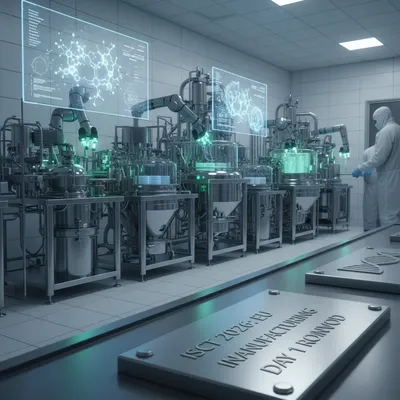
Bioprocessing innovations are critical enablers of clinical trial success for cell and gene therapies. Single-use bioreactor systems, continuous processing technologies (such as those offered by Cytiva, a Danaher company), and advanced chromatography platforms are accelerating manufacturing scalability while reducing bottlenecks that historically delayed trial initiation.
Digital AI analytics platforms are optimizing bioprocess parameters in real-time, improving yield and reducing batch failures. mRNA platform technologies are enabling rapid manufacturing of personalized cancer vaccines and other RNA-based therapeutics, with implications for both clinical trials and commercial supply chains. These innovations are particularly important for cell therapies, where manufacturing complexity and cost have historically limited trial expansion.
CRO consolidation is amplifying these bioprocessing advantages. Recent deals, including Thermo Fisher's acquisition of Clario (March 2026) and Worldwide Clinical Trials' merger with Catalyst (January 2026), have created integrated service providers capable of offering end-to-end solutions spanning trial design, patient recruitment, bioprocessing, and regulatory strategy. However, consolidation also presents risks, including personnel disruptions mid-study and data integration challenges that can slow decision-making.
Funding and Deal Activity: Capital Reopening for Biopharma Trials
Biopharma funding and deal activity showed signs of recovery in early 2026. Venture funding reached $5.2 billion, while licensing deals totaled $77.3 billion (with 6% average upfront cash). Mergers and acquisitions activity generated $15.6 billion across 19 deals, and six initial public offerings raised $1.8 billion—surpassing the entire 2025 full-year IPO total. This capital reopening is providing essential funding for clinical trial expansion, particularly for early-stage and mid-stage programs.
However, funding volatility remains a concern. Binary trial readouts continue to create market volatility, as exemplified by Moderna's Q4 2025 revenue of $0.7 billion and full-year net loss of $2.8 billion, reflecting the company's post-COVID revenue decline and ongoing pivot toward new therapeutic areas. This volatility underscores the importance of diversified trial portfolios and risk mitigation strategies for EU sponsors.
Regulatory Landscape and EMA Guidance
The European Medicines Agency has been actively updating regulatory guidance to support innovation in clinical trials while maintaining rigorous safety and efficacy standards. Key areas of focus include:
- Real-time clinical trial frameworks: The EMA is harmonizing with FDA guidance on adaptive trial designs, real-time data monitoring, and protocol amendments based on interim efficacy or safety signals.
- Cell and gene therapy manufacturing: Updated EMA guidance on potency assays, comparability studies, and post-market surveillance is facilitating faster approvals while ensuring product consistency.
- Decentralized and hybrid trial models: EMA guidance on remote monitoring, digital health technologies, and patient-centric trial designs is enabling broader patient participation and improved data quality.
- Geopolitical and supply chain considerations: The EMA and European Commission are addressing supply chain resilience and data security concerns, particularly in response to the U.S. BIOSECURE Act, which has prompted companies like WuXi AppTec to divest certain operations and shift manufacturing to India and Eastern Europe.
Broader Biopharma Sector Context: Tailwinds and Headwinds
Tailwinds supporting trial expansion include:
- AI-driven efficiency across the R&D value chain, reducing trial costs and timelines
- Selective IPO and M&A reopening, providing capital for trial funding
- Stabilizing financing conditions after 2024-2025 volatility
- Strategic focus on unmet medical needs via RNA and gene therapies
Headwinds creating challenges include:
- Regulatory pressures and evolving compliance requirements across EU member states
- Funding shifts toward profitable, late-stage programs and away from early-stage exploration
- Geopolitical tensions affecting supply chains and international collaboration
- Estimated $32 billion in cost cuts needed across the biopharma sector by 2030
- Binary trial readouts creating market volatility and investor uncertainty
- Intensified competition from Chinese firms in both trial execution and manufacturing
- High valuations for unprofitable firms (e.g., Axsome), creating M&A and financing challenges
HCP Engagement and Real-World Evidence Integration
Healthcare provider (HCP) engagement strategies are evolving to reflect real-world clinical context and outcome-based metrics. Post-Fierce Pharma 2026 analysis indicates that successful engagement now emphasizes prescriber adoption rates, real-world evidence integration, and precise timing of communications over historical modeling approaches. This shift is driving trial sponsors to collect more granular real-world data during and after clinical trials, enabling better prediction of commercial success and clinical utility.
However, diversity gaps in clinical trial participation persist as a significant challenge. EU regulatory bodies and sponsors are increasingly focused on ensuring that trial populations reflect the demographic diversity of patient populations who will ultimately use approved therapies. This focus is driving protocol amendments, expanded recruitment strategies, and partnerships with patient advocacy organizations.
Market and Investor Implications
The convergence of AI integration, global trial expansion, and novel modality advancement is reshaping investor expectations for EU biopharma companies. Investors are increasingly valuing:
- AI and data science capabilities: Companies with proprietary AI platforms for trial design, patient recruitment, and outcome prediction command premium valuations.
- Global trial infrastructure: Sponsors with established networks across Europe, Asia, and emerging markets can execute multinational trials faster and more cost-effectively.
- Bioprocessing expertise: Companies with advanced manufacturing capabilities for cell and gene therapies are positioned to capture significant value as these modalities scale.
- Regulatory relationships: Strong relationships with the EMA and national regulatory authorities enable faster approvals and smoother trial execution.
Conversely, investors are increasingly cautious about companies with high burn rates, limited trial diversity, or exposure to geopolitical risks. The $32 billion in sector-wide cost cuts expected by 2030 suggests that consolidation and strategic partnerships will accelerate, particularly among mid-sized CROs and biotech firms.
What to Watch Next
Several key developments will shape EU biopharma clinical trials in the coming months:
- EMA guidance updates on AI in clinical trials: Regulatory clarity on AI validation, data security, and algorithmic transparency will be critical for widespread adoption.
- CRO consolidation outcomes: The integration of Thermo Fisher/Clario and Worldwide/Catalyst will demonstrate whether consolidation delivers promised efficiencies or creates operational disruptions.
- Gene therapy manufacturing scale-up: Success in scaling manufacturing for cell and gene therapies will determine whether these modalities can achieve commercial viability.
- Chinese competition in EU markets: Regulatory and geopolitical responses to Chinese firm participation in EU trials will shape competitive dynamics.
- Real-world evidence integration: Adoption of real-world data collection and analysis in clinical trials will accelerate, driven by regulatory incentives and investor demand.
Frequently Asked Questions
How is AI transforming EU biopharma clinical trial design and execution?
AI tools are optimizing multiple trial functions: predicting patient responses and optimal dosages, identifying eligible patients faster through electronic health record analysis, detecting protocol deviations in real-time, and analyzing unstructured data from wearables and digital health platforms. Nearly 50% of technology leaders in biopharma expect measurable AI value in R&D, with applications spanning drug discovery, trial design, patient recruitment, and outcome prediction. These capabilities are reducing trial timelines and costs while improving success rates.
What is driving the rapid expansion of cell and gene therapy clinical trials in Europe?
Multiple factors are accelerating cell and gene therapy trial expansion: over 30 FDA-approved therapies have demonstrated clinical and commercial viability; regulatory pathways have become clearer with EMA guidance on manufacturing and potency assays; bioprocessing innovations are reducing manufacturing costs and timelines; and significant unmet medical needs exist in oncology, rare genetic diseases, and autoimmune conditions. However, workforce shortages and manufacturing capacity constraints are limiting the pace of expansion.
How are geopolitical tensions and the BIOSECURE Act affecting EU clinical trial operations?
The U.S. BIOSECURE Act has prompted companies like WuXi AppTec to divest certain operations, creating supply chain disruptions and shifting manufacturing to India and Eastern Europe. EU sponsors are increasingly diversifying their CRO and manufacturing partnerships to reduce geopolitical risk. Additionally, data security and regulatory concerns are driving investment in EU-based bioprocessing and data analytics capabilities to ensure compliance and reduce dependence on non-EU vendors.
What role are decentralized and hybrid trial models playing in EU biopharma development?
Decentralized trials (conducted entirely remotely) and hybrid models (combining in-person and remote components) are becoming standard for many therapeutic areas, particularly for rare diseases and RNA-based therapies. These models improve patient access, reduce protocol burden, enable real-time data collection through wearables, and support diverse patient participation. EMA guidance on remote monitoring and digital health technologies is facilitating adoption, though regulatory and data security considerations remain important.
How is CRO consolidation affecting clinical trial timelines and costs?
CRO consolidation (e.g., Thermo Fisher/Clario, Worldwide/Catalyst) creates integrated service providers capable of offering end-to-end solutions, enabling faster trial execution and reduced costs through scale economies. However, consolidation also presents risks: personnel changes mid-study can disrupt trial operations; data integration challenges can slow decision-making; and reduced competition may limit pricing flexibility. Early outcomes from recent deals will determine whether consolidation delivers net benefits or creates operational challenges.
References
- [1] RSM US LLP. "Clinical Trial Timelines in Flux: AI, Global Expansion, and Regulatory Shifts." Life Sciences Insights. Accessed 2026. https://rsmus.com/insights/industries/life-sciences/clinical-trial-timelines-in-flux.html
- [2] Kavout. "What Are the Major Headwinds and Tailwinds Shaping the Biotech Sector in 2026?" Market Lens. Accessed 2026. https://www.kavout.com/market-lens/what-are-the-major-headwinds-and-tailwinds-shaping-the-biotech-sector-in-2026
- [3] Cora Systems. "Life Sciences Trends 2026: Biopharma Clinical Trials and R&D Transformation." Guidebooks. Accessed 2026. https://corasystems.com/guidebooks/life-sciences-trends
- [4] Diaceutics. "HCP Engagement Strategies: 4 Takeaways from Fierce Pharma 2026." Articles. Accessed 2026. https://www.diaceutics.com/articles/hcp-engagement-strategies-4-takeaways-from-fierce-pharma-2026
- [5] GHP News. "8 Top Bioprocessing Technologies Transforming Pharma in 2026." Digital. Accessed 2026. https://ghpnews.digital/8-top-bioprocessing-technologies-transforming-pharma-in-2026/
- [6] Clinical Trials Arena. "Wave of AI and Data Science Tools Set to Transform Clinical Trials." Features. Accessed 2026. https://www.clinicaltrialsarena.com/features/wave-of-ai-and-data-science-tools-set-to-transform-clinical-trials/
- [7] JP Morgan. "Biopharma & Medtech Deal Reports: Q1 2026 Funding and M&A Activity." Insights: Markets and Economy. Accessed 2026. https://www.jpmorgan.com/insights/markets-and-economy/outlook/biopharma-medtech-deal-reports
- [8] Intuition Labs. "CRO Consolidation and Clinical Trials: Impact on Trial Operations and Timelines." Articles. Accessed 2026. https://intuitionlabs.ai/articles/cro-consolidation-clinical-trials-impact
Compliance Statement: This article reports on industry trends, regulatory guidance, and market analysis based on publicly available sources and industry reports. Clinical trial data, regulatory decisions, and company information are accurate as of the publication date. Readers should consult official sources including the European Medicines Agency (EMA), the EU Clinical Trials Register, and individual company disclosures for the most current information. This article does not constitute medical advice, regulatory guidance, or investment recommendations. All clinical trial participation should be conducted in accordance with applicable regulations, ethical guidelines, and informed consent requirements.
Related coverage
Ask AI About general
Grounded in NovaPharmaNews intelligence. Pick a prompt to start.
Track general news weekly
EMA general news and regulatory updates, every Monday.
- Evidence strength
- 71/100
- Last verified
- Jun 18, 2026
- AI-assisted review
- Yes
- Editorial review
- Dr. Sarah Chen
Moderate source quality · grounded in cited primary and secondary sources.
This article follows our editorial standards. Report a correction via editorial contact.

About the Author

Continue Your Research


Industry Reports & Whitepapers
- Navigating Human Research: Mass General Brigham's IRB Guidance for Ethical Clinical Trials — Explore Mass General Brigham's comprehensive IRB guidance for ethical human subject research, crucia…