Arvinas VEPPANU (Vepdegestrant) Receives FDA Approval as First PROTAC Drug for ESR1-Mutated Breast Cancer
Arvinas' VEPPANU becomes the first FDA-approved PROTAC drug for ESR1-mutated, ER+/HER2- advanced breast cancer, marking a breakthrough in protein degradation therapy.


Key Takeaways
- VEPPANU (vepdegestrant) is the first-ever FDA-approved PROTAC (protein degrader) drug, representing a breakthrough in cancer treatment technology
- The approval provides a new treatment option for patients with ESR1-mutated, ER+/HER2- advanced breast cancer, a challenging-to-treat population
- FDA approval came ahead of the original June 5, 2026 PDUFA date, suggesting strong clinical data and potential for accelerated market entry
Arvinas announced that the FDA has approved VEPPANU™ (vepdegestrant) for the treatment of ESR1-mutated, ER+/HER2- advanced breast cancer, making it the first-ever approved PROTAC (PROteolysis TArgeting Chimera) drug. This historic approval represents a major breakthrough in protein degradation technology and opens a new therapeutic pathway for cancer patients.
Revolutionary PROTAC Technology
VEPPANU is a heterobifunctional protein degrader that works by targeting and eliminating disease-causing proteins rather than simply inhibiting them. This PROTAC technology represents a paradigm shift from traditional small molecule inhibitors, offering the potential to target previously “undruggable” proteins.
The drug specifically targets the estrogen receptor (ER) in breast cancer cells with ESR1 mutations, which are associated with resistance to standard hormone therapies. By degrading these mutated receptors, VEPPANU offers a novel approach to overcoming treatment resistance.
Addressing Unmet Medical Need
ESR1-mutated, ER+/HER2- advanced breast cancer represents a significant unmet medical need. These mutations typically develop after prolonged exposure to hormone therapies and are associated with treatment resistance and poor outcomes. Current treatment options for this patient population are limited, making VEPPANU’s approval particularly significant.
The early FDA approval, received ahead of the original PDUFA (Prescription Drug User Fee Act) date of June 5, 2026, suggests robust clinical data supporting the drug’s efficacy and safety profile in this challenging patient population.
Market Impact and Partnership
Arvinas has been developing VEPPANU in collaboration with Pfizer, leveraging both companies’ expertise in oncology and drug development. The companies remain on track to announce the selection of a third party, likely for commercialization or additional development activities.
This approval validates Arvinas’ PROTAC platform technology and positions the company as a pioneer in the protein degradation field. The success of VEPPANU could accelerate development of other PROTAC candidates in Arvinas’ pipeline and attract additional pharmaceutical partnerships.
Clinical Significance
The approval of VEPPANU marks a watershed moment for precision oncology, particularly for patients whose tumors harbor specific genetic mutations that confer resistance to standard treatments. The drug’s mechanism of action—completely eliminating target proteins rather than just blocking their function—offers theoretical advantages over traditional inhibitors.
For healthcare providers, VEPPANU provides a new tool in the treatment arsenal for advanced breast cancer, particularly for patients who have exhausted other hormone therapy options or whose tumors have developed resistance mutations.
Future Implications
The successful approval of the first PROTAC drug is expected to accelerate interest and investment in protein degradation technologies across the pharmaceutical industry. Multiple companies are developing PROTAC and other protein degrader platforms, and VEPPANU’s approval provides clinical validation for this emerging therapeutic class.
Arvinas’ achievement also demonstrates the potential for PROTAC technology to address other therapeutic areas beyond oncology, including neurological disorders, autoimmune diseases, and other conditions where protein dysfunction plays a central role.
Frequently Asked Questions
What does VEPPANU approval mean for breast cancer patients?
VEPPANU provides a new treatment option specifically for patients with ESR1-mutated, ER+/HER2- advanced breast cancer who have limited therapeutic options. This represents the first PROTAC therapy available to patients, offering a novel mechanism that degrades disease-causing proteins rather than just inhibiting them.
When will VEPPANU be available to patients?
With FDA approval now granted ahead of the original June 2026 PDUFA date, VEPPANU should become available to patients relatively soon. The exact timeline will depend on manufacturing scale-up and distribution arrangements between Arvinas and their partners.
How does VEPPANU compare to existing breast cancer treatments?
VEPPANU uses a completely different mechanism than existing treatments—it degrades the estrogen receptor protein entirely rather than just blocking it. This approach may be more effective in ESR1-mutated cancers that have become resistant to traditional hormone therapies like fulvestrant or CDK4/6 inhibitors.
About the Author
Related Articles

Arvinas Receives FDA Approval for VEPPANU (Vepdegestrant), First PROTAC Drug for ESR1-Mutated Breast Cancer
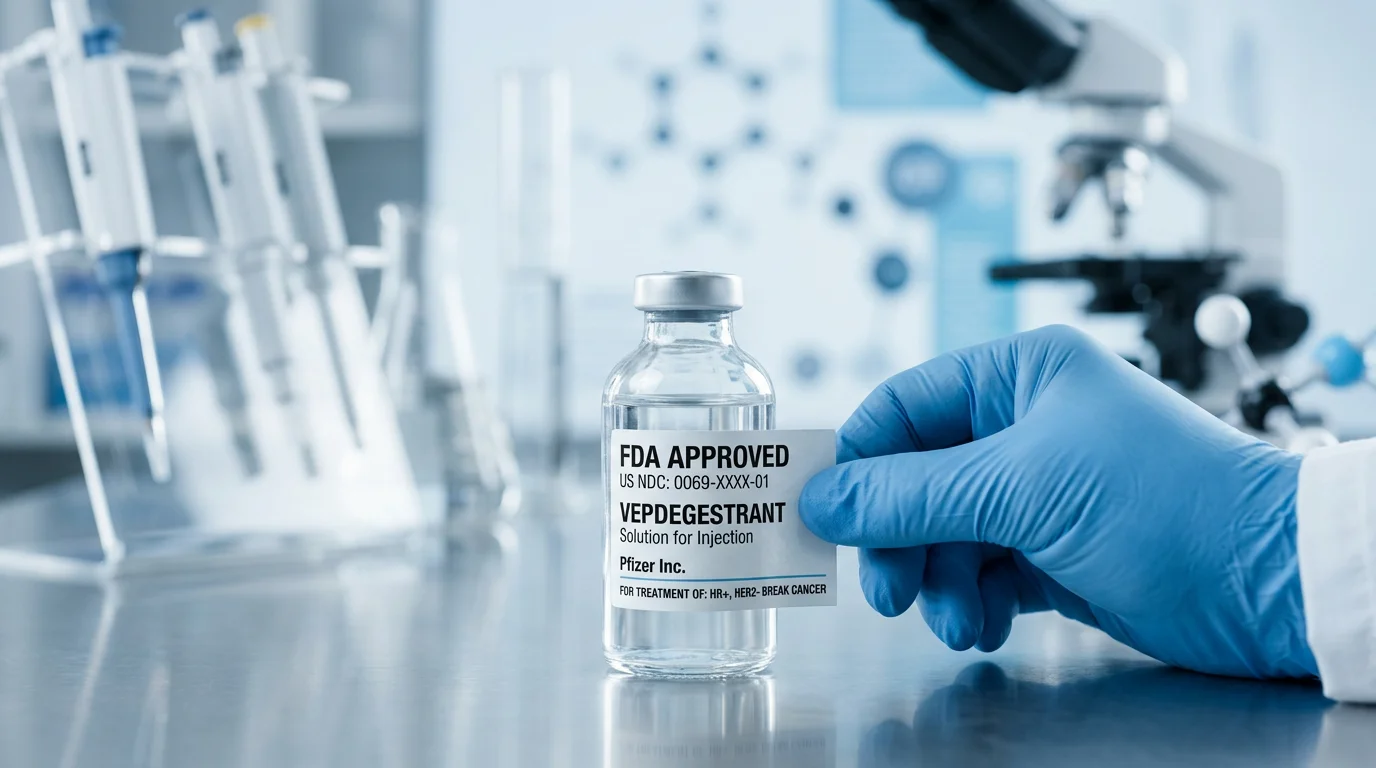
FDA Approval for Pfizer's Breast Cancer Drug: Vepdegestrant
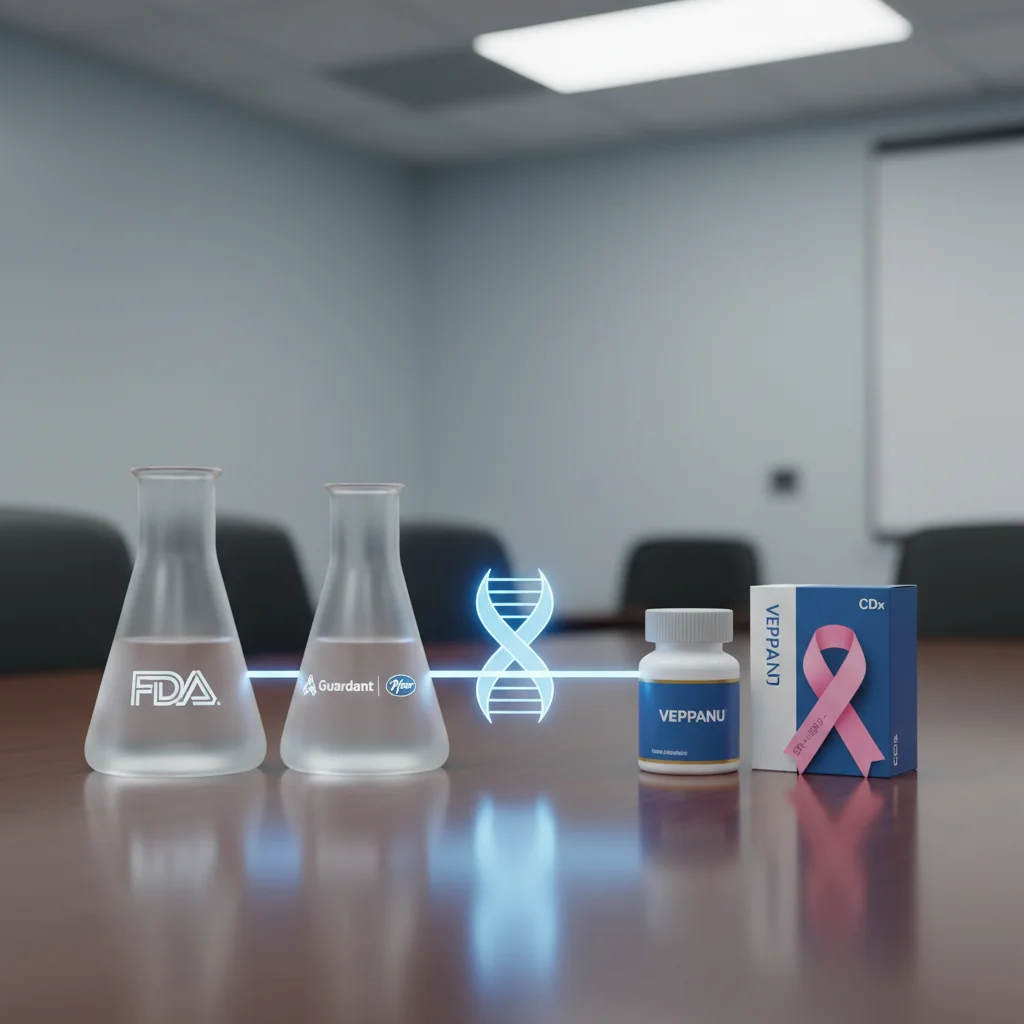
FDA Approves Guardant360 CDx Companion Diagnostic for Pfizer's VEPPANU in ER+/HER2- Breast Cancer