Arvinas Receives FDA Approval for VEPPANU (Vepdegestrant), First PROTAC Drug for ESR1-Mutated Breast Cancer
Arvinas announces FDA approval of VEPPANU, the first PROTAC protein degrader for ESR1-mutated, ER+/HER2- advanced breast cancer treatment.


Key Takeaways
- VEPPANU becomes the first FDA-approved PROTAC (protein degrader) drug, marking a breakthrough in targeted cancer therapy
- The approval addresses treatment resistance in ESR1-mutated, ER+/HER2- advanced breast cancer patients who have limited options
- FDA approval came ahead of the June 5, 2026 PDUFA date, indicating strong clinical data supporting the drug’s efficacy
NEW HAVEN, Conn. – May 1, 2026 – Arvinas, Inc. announced today that the U.S. Food and Drug Administration (FDA) has approved VEPPANU™ (vepdegestrant) for the treatment of ESR1-mutated, estrogen receptor-positive/HER2-negative (ER+/HER2-) advanced or metastatic breast cancer.
Historic First for PROTAC Technology
VEPPANU represents a landmark achievement as the first FDA-approved PROTAC (PROteolysis TArgeting Chimera), a novel class of heterobifunctional protein degraders. Unlike traditional inhibitors that block protein function, PROTAC technology hijacks the cell’s natural protein disposal system to eliminate disease-causing proteins entirely.
The approval comes more than a month ahead of the FDA-assigned Prescription Drug User Fee Act (PDUFA) target date of June 5, 2026, suggesting robust clinical trial data supported the regulatory decision.
Addressing Critical Treatment Resistance
ESR1 mutations occur in approximately 30-40% of patients with advanced ER+ breast cancer who have received prior endocrine therapy. These mutations cause resistance to standard hormone therapies, leaving patients with limited effective treatment options.
“VEPPANU offers a new therapeutic mechanism for patients facing treatment resistance in ESR1-mutated advanced breast cancer,” the company stated. The drug specifically targets and degrades mutated estrogen receptors that drive cancer growth despite conventional hormone-blocking treatments.
Market Impact and Partnership Implications
The approval validates Arvinas’ protein degradation platform and positions the company as a pioneer in the emerging PROTAC field. Arvinas has been collaborating with pharmaceutical giant Pfizer on vepdegestrant development, and the companies remain on track to announce selection of a third party, likely for commercialization or expanded development.
This breakthrough could accelerate interest in protein degradation technology across the pharmaceutical industry, as companies seek novel approaches to “undruggable” protein targets that have historically been difficult to address with conventional small molecule inhibitors.
Clinical Significance
Breast cancer remains the second most common cancer in women, with ER+ disease representing approximately 70% of all breast cancer cases. Advanced or metastatic breast cancer typically requires multiple lines of therapy as tumors develop resistance to initial treatments.
The ESR1-mutated patient population represents a particularly challenging subset where existing endocrine therapies lose effectiveness. VEPPANU’s protein degradation mechanism offers a fundamentally different approach that could overcome resistance mechanisms that limit current treatments.
Future Implications
The FDA approval of VEPPANU establishes important regulatory precedent for PROTAC drugs and could pave the way for additional protein degraders in Arvinas’ pipeline. The company has multiple PROTAC candidates in development targeting various cancer-driving proteins.
The success also validates the broader potential of targeted protein degradation technology, which could eventually address previously “undruggable” proteins across multiple disease areas beyond oncology.
Frequently Asked Questions
What does this approval mean for breast cancer patients?
VEPPANU provides a new treatment option specifically for patients with ESR1-mutated, ER+/HER2- advanced breast cancer who have developed resistance to standard hormone therapies. This represents about 30-40% of advanced ER+ breast cancer patients who previously had limited effective options.
When will VEPPANU be available to patients?
With FDA approval granted on May 1, 2026, VEPPANU should become commercially available in the coming weeks to months, pending final manufacturing and distribution arrangements. Patients should consult their oncologists about access and eligibility.
How does VEPPANU differ from existing breast cancer treatments?
Unlike traditional hormone therapies that block estrogen receptor function, VEPPANU uses PROTAC technology to completely eliminate the mutated estrogen receptors from cancer cells. This protein degradation approach can potentially overcome resistance mechanisms that limit conventional treatments.
About the Author
Related Articles

Arvinas VEPPANU (Vepdegestrant) Receives FDA Approval as First PROTAC Drug for ESR1-Mutated Breast Cancer
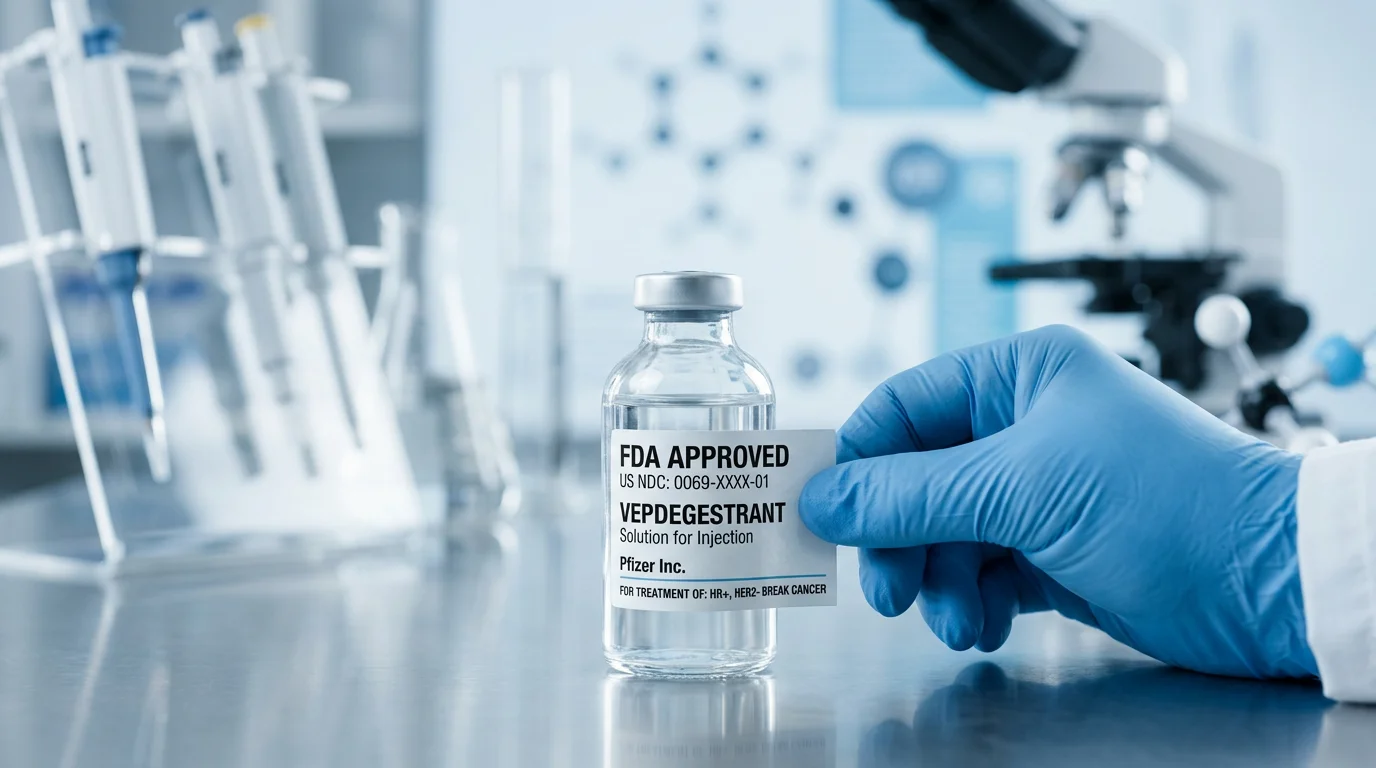
FDA Approval for Pfizer's Breast Cancer Drug: Vepdegestrant
FDA Approves Guardant360 CDx Companion Diagnostic for Pfizer's VEPPANU in ER+/HER2- Breast Cancer