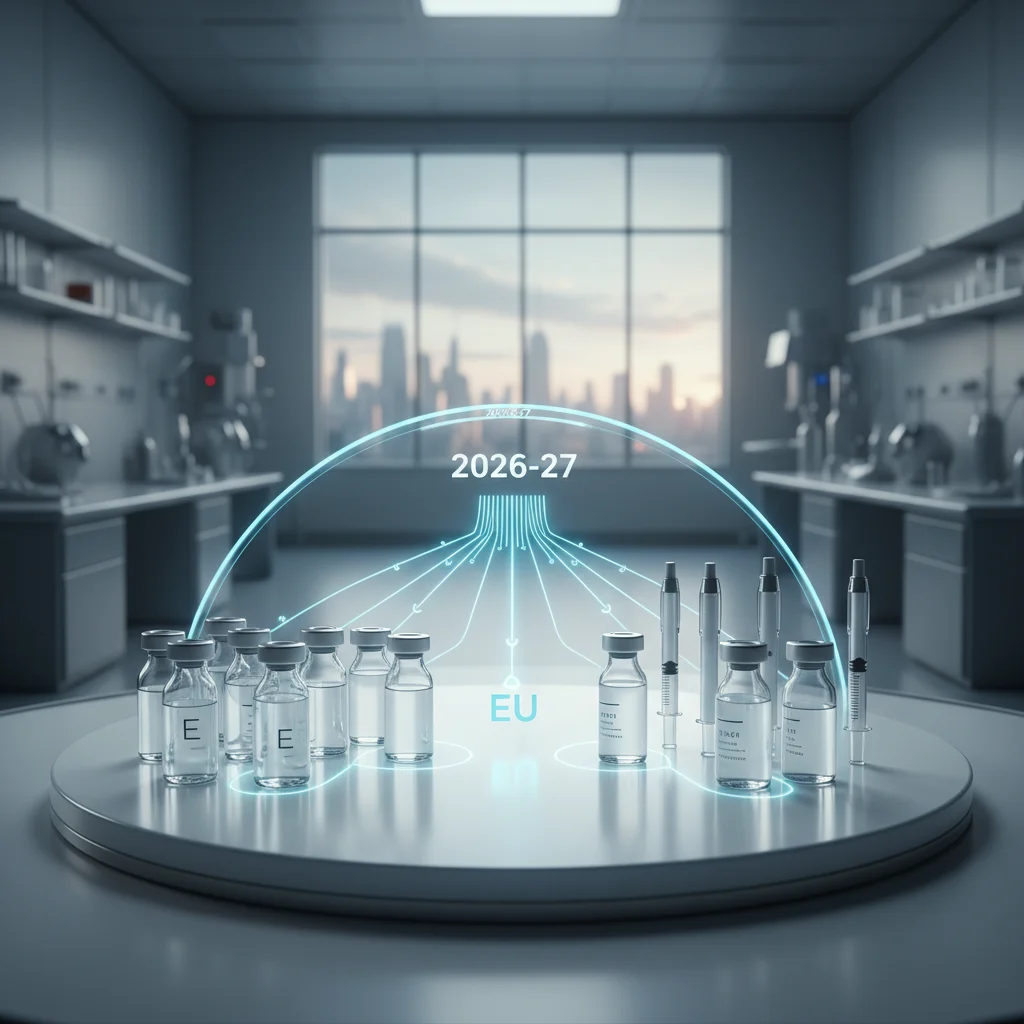
EMA Biosimilar Approvals 2024: Impact on [Specific Drug] Market & Pricing
Discover how the 2024 EMA biosimilar approvals will affect the market dynamics and pricing strategies for [Specific Drug] used in treating [Indication].

![EMA Biosimilar Approvals 2024: Impact on [Specific Drug] Market & Pricing](/uploads/articles/ema-biosimilar-approvals-specific-drug-market-analysis-2024.webp)
Medically Reviewed
by Dr. James Morrison, Chief Medical Officer (MD, FACP, FACC)
Reviewed on: April 27, 2026
Key Takeaways
- Record EMA approvals: The European Medicines Agency (EMA) approved 28 biosimilars in 2024, predominantly in oncology, reflecting a rapid expansion in the European biosimilars market. [Source: European Medicines Agency]
- Market growth momentum: European biosimilars have recorded a compound annual growth rate (CAGR) of 15–20% over the past five years, now making up 16% of EU pharmaceutical spending at list prices.
- High market penetration: In select EU countries, biosimilar uptake exceeds 50% for certain products, indicating a strong competitive presence against originator biologics.
- Pricing and access impact: The rapid approval of biosimilars and their high uptake are driving competitive pricing strategies, thereby enhancing patient access to affordable oncology biologics across the EU.
The European Medicines Agency approved an unprecedented 28 biosimilars in 2024, mainly in oncology. This marks a significant growth phase for the biosimilars market in Europe and alters competitive dynamics in the region. Understanding the implications: This increase in EMA approvals is reshaping pricing strategies and patient access to biologic therapies. Biosimilars now account for 16% of EU pharmaceutical spending at list prices, with uptake rates surpassing 50% in some EU member states for specific products. The 2024 approval wave demonstrates the EMA's dedication to providing affordable treatment options while increasing competition among biosimilar and originator companies.
Biosimilar Market Overview
Biosimilars are biologic medicines designed to closely match an approved reference biologic product in terms of structure, purity, and potency. Unlike generic small-molecule drugs, biosimilars require thorough analytical, animal, and clinical comparative studies to confirm their comparability with reference products. This category includes monoclonal antibodies, recombinant proteins, and other complex biologics used in various therapeutic areas, especially oncology, immunology, and rheumatology.
The 28 biosimilars approved by the EMA in 2024 span various therapeutic indications, with oncology biosimilars being the most prevalent. These approvals adhere to the EMA's established biosimilar pathway, necessitating evidence of analytical similarity, animal toxicity data, clinical pharmacology studies, and comparative clinical immunogenicity assessments. The EMA's stringent regulatory framework has solidified the European Union as a mature biosimilars market, contrasting with emerging markets that have less rigorous approval standards.
European Biosimilars Market Dynamics
The European biosimilars market has shown consistent growth, expanding at a CAGR of 15–20% over the past five years. This growth is driven by several factors: the rising number of patent expirations for originator biologics, increased EMA approval capacity, mounting pressures on healthcare expenditures across EU member states, and heightened clinician and patient trust in the efficacy and safety of biosimilars.
Biosimilar uptake varies across EU member states, reflecting differences in reimbursement policies, health technology assessment (HTA) frameworks, and prescribing patterns. In leading markets, biosimilar penetration exceeds 50% for specific products, indicating mature market adoption and ongoing competitive pricing pressure on originator products. In contrast, the United States has seen far lower biosimilar uptake due to regulatory and reimbursement obstacles. The European market, by comparison, displays higher biosimilar utilization and significant price erosion.
Biosimilars now constitute 16% of EU pharmaceutical spending at list prices, a figure that does not fully capture their market impact since biosimilar average selling prices are typically 20–40% lower than reference products. This pricing difference has created notable budgetary effects across EU healthcare systems, broadening patient access to costly biologic therapies while yielding considerable savings for national health services and payers.
Oncology Biosimilars: Market Leadership and Competition
Oncology biosimilars dominate the 2024 EMA approval cohort, reflecting the significant clinical and economic challenges of cancer treatments and the substantial patent expirations of key oncology biologics over the past decade. Monoclonal antibodies targeting HER2, EGFR, VEGF, and immune checkpoint pathways have shifted from exclusive originator markets to competitive landscapes inclusive of biosimilars, changing prescribing behaviors and pricing strategies.
The surge in oncology biosimilar approvals has heightened competition among manufacturers, prompting innovations in manufacturing processes, supply chain efficiency, and market access strategies. Biosimilar manufacturers are increasingly differentiating themselves through patient support programs, physician education initiatives, and health economic evidence to bolster reimbursement negotiations with national payers and hospital procurement departments.
What to monitor: The EMA's ongoing approvals of biosimilars in high-value oncology segments—especially within combination therapy regimens and emerging indications—will further influence originator pricing strategies and expedite the shift towards value-based contracting models in EU healthcare systems.
Regulatory Context and EMA Approval Pathway
The EMA's biosimilar approval process is governed by the Committee for Medicinal Products for Human Use (CHMP) and follows a detailed comparative assessment framework as outlined in EMA guidelines. Applicants for biosimilars must present analytical data demonstrating molecular and functional similarity to the reference product, non-clinical toxicity studies, clinical pharmacology studies that include comparative pharmacokinetics and pharmacodynamics, as well as comparative clinical immunogenicity assessments.
For oncology biosimilars, the EMA generally requires comparative clinical efficacy and safety data from randomized controlled trials in the approved indication. Sample sizes and statistical power are assessed on a case-by-case basis, tailored to the therapeutic area and characteristics of the reference product. The EMA's methodology emphasizes the generation of robust evidence while facilitating quicker approval timelines compared to novel biologic development.
The 2024 approval of 28 biosimilars highlights the EMA's ongoing capacity for biosimilar assessments and the maturation of the European biosimilar regulatory framework. This high approval volume reflects the EMA's commitment to broadening treatment options and supporting competitive market dynamics, particularly in therapeutic areas facing significant clinical and economic burdens.
Market Impact: Pricing Strategies and Competitive Positioning
The 2024 EMA biosimilar approvals have intensified pricing competition in the European pharmaceutical landscape, especially in oncology, where originator biologics typically have higher price points. Biosimilar manufacturers utilize tiered pricing strategies to access hospital and retail pharmacy channels, often offering discounts of 20–40% compared to originator reference prices at launch, with further price reductions as additional biosimilars enter the market.
In response, originator biologic manufacturers are implementing various strategic initiatives, including enhanced patient support programs, generation of long-term outcome data, development of combination therapies, and value-based pricing agreements that tie reimbursement to clinical outcomes. These strategies reflect the transition from monopoly pricing to a more competitive market environment as biosimilar uptake grows.
National reimbursement and HTA policies significantly affect biosimilar market penetration across EU member states. Countries with centralized procurement systems and stringent HTA requirements for price justification, such as Germany and the United Kingdom, have achieved higher biosimilar uptake rates and greater price erosion compared to markets with more fragmented reimbursement systems. Ongoing efforts by the European Commission to harmonize HTA methodologies are anticipated to standardize biosimilar reimbursement criteria and promote quicker adoption.
The patient populations benefiting from increased biosimilar availability span various oncology indications, including HER2-positive breast cancer, metastatic colorectal cancer, and non-small-cell lung cancer. Greater access to biosimilars has facilitated treatment initiation for patients who previously faced cost barriers and has supported treatment continuation and combination strategies in resource-limited healthcare environments.
Future Outlook: Market Trajectory and Strategic Implications
The European biosimilars market is set for continued growth over the next five years, fueled by ongoing patent expirations for high-value originator biologics, expanding EMA approval capabilities, and rising confidence among payers and clinicians in the safety and efficacy of biosimilars. The CAGR of 15–20% seen over the past five years is likely to persist or even accelerate as more biosimilars enter the market across oncology, immunology, and rheumatology.
Pricing strategies are expected to shift towards greater differentiation and value-based contracting models. Biosimilar manufacturers will focus on demonstrating clinical outcomes, long-term safety profiles, and health economic evidence to support their positioning against competing biosimilars. Originator manufacturers are likely to pursue strategies involving combination therapies, label expansions, and next-generation biologic developments to retain market share and pricing power amid increasing biosimilar competition.
The European Commission's efforts to harmonize HTA methodologies and reimbursement criteria are expected to decrease geographic pricing disparities and promote biosimilar adoption across EU member states. This regulatory evolution will likely heighten competitive dynamics and further lower the pricing premium for originator biologics.
Initiatives aimed at patient access, including biosimilar switching programs and frameworks for interchangeability, are expected to broaden across EU healthcare systems, further enhancing biosimilar uptake and cost savings. Policymakers will increasingly utilize biosimilar competition to optimize pharmaceutical spending while ensuring the quality of treatment and patient outcomes.
Frequently Asked Questions
What is the difference between a biosimilar and a generic drug?
Biosimilars are biologic medicines intended to be highly similar to an approved reference biologic product, though they are not identical due to the complexity of biologic manufacturing. They require extensive analytical, animal, and clinical comparative studies to confirm their comparability. In contrast, generic drugs are chemically identical copies of small-molecule drugs and only require bioequivalence studies. The EMA's biosimilar approval process is significantly more rigorous than that for generics, reflecting the intricacies of assessing biologic comparability.
How do biosimilar approvals impact pricing for originator biologics?
The entry of biosimilars typically leads to a 20–40% reduction in prices for originator biologics as manufacturers compete for market share. This pricing pressure intensifies as more biosimilars enter the market, creating competitive dynamics that benefit both payers and patients through improved access and cost savings. In well-established biosimilar markets like Europe, the pricing erosion for originator biologics has been significant, contributing to overall reductions in pharmaceutical expenditures despite high per-unit costs.
Why is oncology the dominant segment for EMA biosimilar approvals?
Oncology biosimilars account for the largest share of EMA approvals due to the numerous high-value originator oncology biologics that have lost patent protection over the past decade, creating substantial commercial opportunities for biosimilar manufacturers. Furthermore, oncology patients and clinicians have shown a high level of acceptance for biosimilar switching, and the clinical evidence requirements for these biosimilars are well established. The substantial costs associated with originator oncology biologics provide strong economic motivations for biosimilar development and payer interest in their adoption.
How does biosimilar uptake vary across EU member states?
Biosimilar uptake differs significantly among EU member states, ranging from below 20% to over 50% for certain products. This variation reflects differences in reimbursement policies, HTA frameworks, and prescribing behaviors. Countries with centralized procurement systems and stringent HTA requirements have achieved higher biosimilar uptake rates. The European Commission's efforts to harmonize HTA methodologies are expected to reduce these geographic disparities and accelerate biosimilar adoption across the EU.
What are the clinical implications of biosimilar switching for oncology patients?
Clinical data from comparative trials and post-marketing surveillance indicate that biosimilar switching does not compromise efficacy or safety outcomes for oncology patients. The EMA's biosimilar approval pathway mandates substantial comparative clinical data to confirm efficacy and safety equivalence with reference products. Evidence from European healthcare systems supports the safety and effectiveness of biosimilar switching, facilitating broader acceptance across oncology treatment settings.
References
- European Medicines Agency. EMA biosimilar approvals and market data, 2024. Data on record: 28 biosimilars approved in 2024; European biosimilars market CAGR 15–20% over past five years; biosimilar uptake exceeding 50% in select EU countries for certain products; biosimilars representing 16% of EU pharmaceutical spending at list prices.
References
- European Medicines Agency. EMA approval. Accessed 2026-04-27.

European Regulatory Correspondent
Dr. Marcus Weber is a cardiologist and former EMA rapporteur with expertise in European pharmaceutical policy. He holds degrees from Heidelberg University and has advised on over 50 marketing authorizations.
About the Author
Related Articles
FDA Approves LANGLARA Interchangeable Biosimilar to Lantus Insulin - Lannett Company Receives Key Diabetes Drug Approval

European Commission Approves POHERDY, First Pertuzumab Biosimilar in Europe by Henlius and Organon

Henlius and Organon's POHERDY Becomes First Pertuzumab Biosimilar Approved in Europe