Pulse Biosciences Reports 100% Success Rate in Atrial Fibrillation Treatment Trial at Heart Rhythm 2026
Pulse Biosciences achieves 100% procedural success in atrial fibrillation treatment study with 95 evaluable patients at 6 months, presenting data at Heart Rhythm 2026.

Key Takeaways
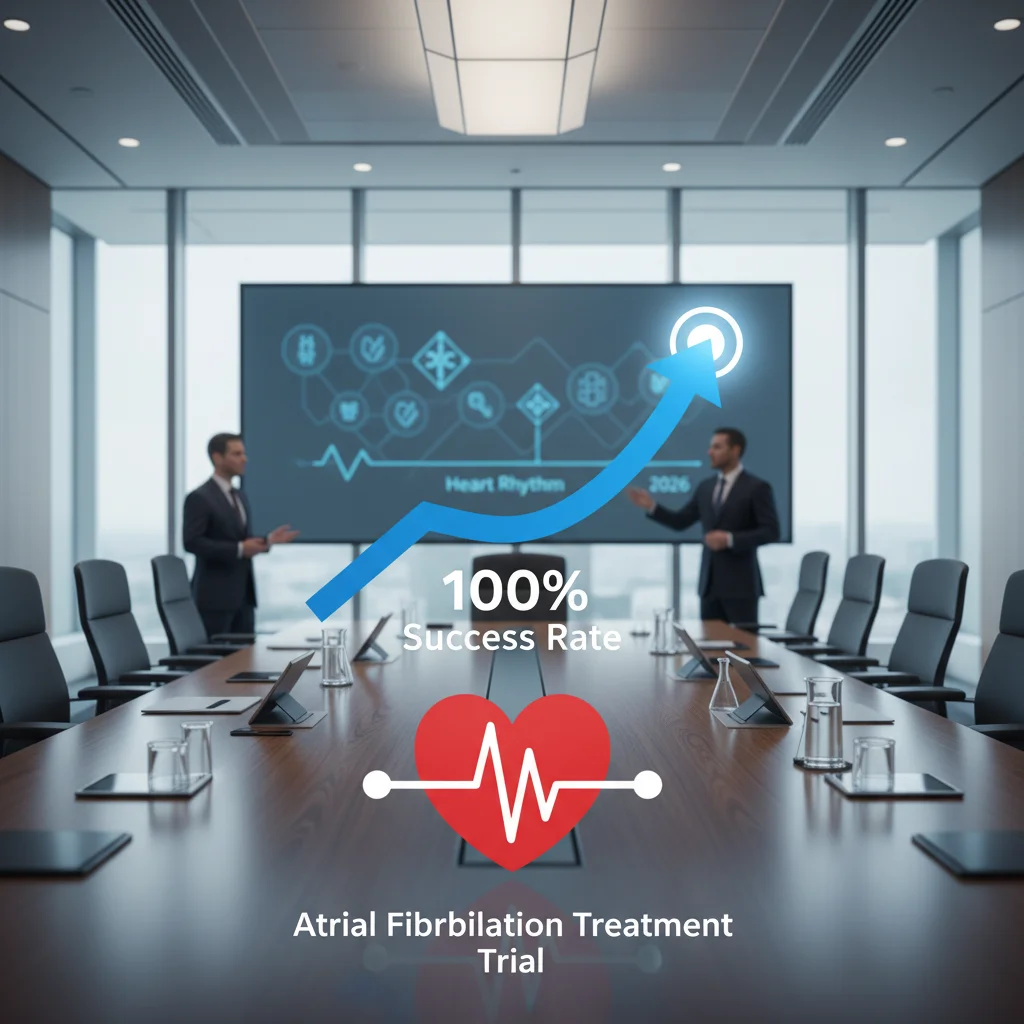
- Pulse Biosciences achieved 100% procedural success rate at 6 months in first-in-human European feasibility study for atrial fibrillation treatment
- 96% success rate maintained at 12 months with 90% freedom from atrial arrhythmias, demonstrating sustained efficacy
- Over 60 patients treated across three European sites as company advances novel pulsed field ablation technology
Pulse Biosciences reported breakthrough clinical results for its atrial fibrillation treatment at Heart Rhythm 2026, demonstrating 100% procedural success in its first-in-human European feasibility study.
The medical device company presented expanded data from 95 evaluable patients showing sustained 100% procedural success by Holter monitor at 6 months. The impressive results continued at 12 months, with 96% procedural success (51/53 patients) and a 90% Kaplan-Meier estimate of freedom from atrial arrhythmias including atrial fibrillation, atrial flutter, and atrial tachycardia.
Clinical Trial Progress
The company has treated over 60 patients across three European sites in this ongoing first-in-human study. The trial evaluates Pulse Biosciences’ proprietary pulsed field ablation technology, which uses nanosecond pulsed electric fields to treat cardiac arrhythmias.
Market Impact and Technology Advantage
Atrial fibrillation affects over 33 million people worldwide, making it the most common cardiac arrhythmia. Current treatment options include catheter ablation using radiofrequency or cryoablation, but these approaches can cause collateral tissue damage.
Pulse Biosciences’ nanosecond pulsed field ablation technology aims to provide more precise tissue targeting while minimizing damage to surrounding structures. The consistently high success rates demonstrated in this European study suggest the technology could offer significant advantages over existing treatments.
Financial and Business Updates
Alongside the clinical data presentation, Pulse Biosciences released its first quarter 2026 financial results. The company continues advancing its regulatory pathway in Europe while preparing for potential expansion into additional markets.
The sustained high success rates at both 6 and 12 months represent a critical milestone for the company’s atrial fibrillation program, potentially positioning the technology as a next-generation treatment option for patients with this common heart rhythm disorder.
Frequently Asked Questions
What does this mean for atrial fibrillation patients?
The 100% success rate at 6 months and 96% at 12 months suggest Pulse Biosciences’ technology could offer a highly effective treatment option with potentially fewer side effects than current ablation methods.
When will this treatment be available to patients?
The treatment is currently in first-in-human trials in Europe. Commercial availability will depend on completing clinical studies and obtaining regulatory approvals, which typically takes several years.
How does this compare to existing atrial fibrillation treatments?
The 96% success rate at 12 months compares favorably to traditional radiofrequency and cryoablation procedures, which typically show 70-80% success rates, while potentially offering more precise targeting.
About the Author
Related Articles
Cytokinetics MYQORZO (Aficamten) Takes Center Stage at European Society of Cardiology Heart Failure 2026 Congress
Biotheryx BTX-9341 Phase 1A Results to Be Presented at ESMO Breast Cancer Congress 2026

CVRx Enrolls First Patient in BENEFIT-HF Heart Failure Trial Testing Barostim Device