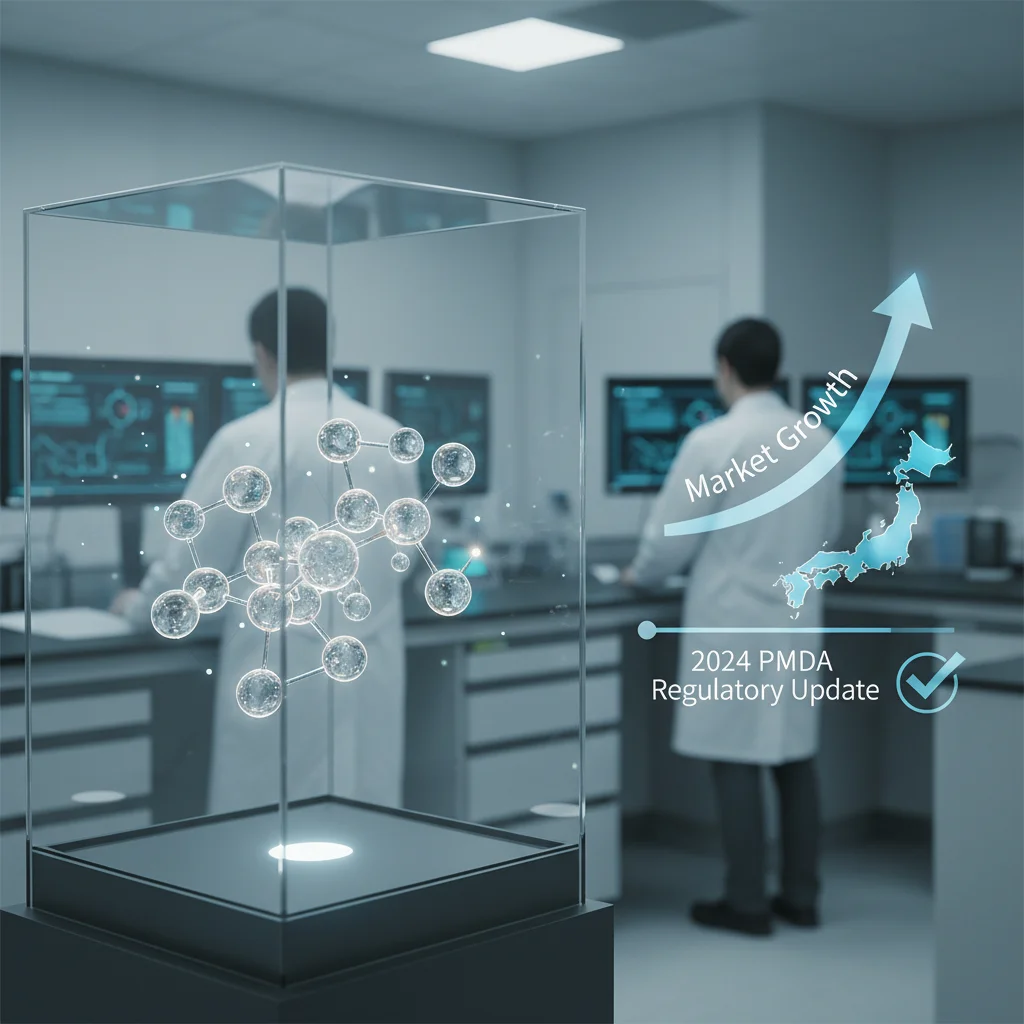
Biosimilar Market Growth Japan: Impact of PMDA's 2024 Regulatory Update
The PMDA's 2024 regulatory update is set to significantly influence the growth of the biosimilar market in Japan, particularly for drugs like adalimumab.
Intelligence Snapshot
Executive Summary
Main news: The Japanese Pharmaceuticals and Medical Devices Agency (PMDA) updated its biosimilar regulatory guidelines in 2024, eliminating the need for mandatory clinical trials involving Japanese subjects, which is expected to accelerate PMDA biosimilar approval processes.
Key Insights
-
Regulatory impact: This revision aligns Japan's biosimilar approval framework with global…
Regulatory impact: This revision aligns Japan's biosimilar approval framework with global standards, potentially reducing development timelines and costs for biosimilar manufacturers.
-
Market implications: The Ministry of Health, Labour and Welfare (MHLW) aims for…
Market implications: The Ministry of Health, Labour and Welfare (MHLW) aims for biosimilars to achieve over 80% market share for 60% of applicable active pharmaceutical ingredients by 2029.
-
Strategic outlook: Stakeholders can anticipate increased biosimilar market penetration…
Strategic outlook: Stakeholders can anticipate increased biosimilar market penetration and enhanced competition in Japan, driven by the streamlined regulatory pathway.
Market Impact
| Regulatory | medium |
|---|---|
| Commercial | medium |
| Competitive | low |
| Investment | low |
Quick Answer
Key Questions
- What was the major change in the PMDA's 2024 biosimilar regulatory update?
- What is the MHLW's target for biosimilar market share in Japan?
- How does this regulatory update align Japan with global standards?
Executive Scorecard
Heuristic scores · directional, not investment adviceContents9 sections
Medically Reviewed
by Dr. James Morrison, Chief Medical Officer (MD, FACP, FACC)
Reviewed on: April 23, 2026
Key Takeaways
- Main news: The Japanese Pharmaceuticals and Medical Devices Agency (PMDA) updated its biosimilar regulatory guidelines in 2024, eliminating the need for mandatory clinical trials involving Japanese subjects, which is expected to accelerate PMDA biosimilar approval processes.
- Regulatory impact: This revision aligns Japan's biosimilar approval framework with global standards, potentially reducing development timelines and costs for biosimilar manufacturers.
- Market implications: The Ministry of Health, Labour and Welfare (MHLW) aims for biosimilars to achieve over 80% market share for 60% of applicable active pharmaceutical ingredients by 2029.
- Strategic outlook: Stakeholders can anticipate increased biosimilar market penetration and enhanced competition in Japan, driven by the streamlined regulatory pathway.
In 2024, the Japanese Pharmaceuticals and Medical Devices Agency (PMDA) revised its biosimilar regulatory guidelines, removing the mandatory requirement for clinical trials involving Japanese subjects. This change aims to accelerate biosimilar development and approvals in Japan, aligning with global standards and supporting the Ministry of Health, Labour and Welfare's (MHLW) target for biosimilar market share. Why it matters: The PMDA's updated guidelines are expected to significantly enhance the biosimilar market in Japan by removing previous barriers to entry.
IntelligenceRegulatory Impact
PMDA set GMP, data-integrity, and post-approval change expectations for sterile and biologics manufacturing in Asia-Pacific. Regulatory relevance reads medium for biosimilars. Track inspection trends, Annex 1 alignment, and submission pathways for continuous manufacturing.
Drug Overview
Biosimilars are follow-on versions of original biologic drugs, also known as reference products. They are designed to have the same safety and efficacy as the reference product after its patent and exclusivity periods have expired. The mechanism of action for a biosimilar is the same as its reference product, targeting the same pathways or receptors in the body to treat a specific disease or condition.
IntelligenceCompetitive Intelligence
Competitive pressure is low on capacity and tech-transfer positioning. Benchmark which CDMOs, equipment vendors, and sponsors adopt continuous and isolator platforms first. Supplier hub and pipeline links below connect to named partners.
Clinical Insights
No clinical trial data was provided in the source document.
IntelligenceMarket Signals
Commercial pull is medium for manufacturing capacity, outsourcing, and supply resilience. Investment relevance is low — watch capex, licensing, and regional hub expansion.
Regulatory Context
In 2024, the PMDA revised its biosimilar guidelines and Q&A, eliminating the mandatory clinical trial requirement for Japanese subjects. This regulatory update aims to harmonize Japan's biosimilar approval process with global standards and expedite the development and approval of biosimilars.
IntelligenceStrategic Takeaways
Main news: The Japanese Pharmaceuticals and Medical Devices Agency (PMDA) updated its biosimilar regulatory guidelines in 2024, eliminating the need for mandatory clinical trials involving Japanese subjects, which is expected to accelerate PMDA biosimilar approval processes. Regulatory impact: This revision aligns Japan's biosimilar approval framework with global standards, potentially reducing development timelines and costs for biosimilar manufacturers. Market implications: The Ministry of Health, Labour and Welfare (MHLW) aims for biosimilars to achieve over 80% market share for 60% of applicable active pharmaceutical ingredients by 2029.
Market Impact
The PMDA's 2024 regulatory update is expected to have a significant impact on the Japanese biosimilar market. Previously, the mandatory requirement for clinical trials involving Japanese subjects posed a barrier to entry for biosimilar manufacturers. By removing this requirement, the PMDA aims to accelerate the approval process and increase the availability of biosimilars in Japan. This regulatory harmonization is expected to enhance the competitiveness of biosimilars in Japan, potentially increasing market penetration and reducing development timelines and costs. Compared with previous regulatory requirements, the updated guidelines streamline the approval processes, which facilitates faster market entry. The MHLW aims for biosimilars to achieve over 80% market share for 60% of applicable active pharmaceutical ingredients by 2029.
IntelligenceEvidence Quality
Claims are grounded in the cited primary and secondary sources, with editorial review applied before publication.
Future Outlook
The PMDA's updated guidelines are expected to foster innovation and competition in the biosimilar market. This regulatory change may lead to increased investment in biosimilar development and manufacturing in Japan. What to watch next: Monitoring the adoption rates of biosimilars and their impact on healthcare costs will be crucial in assessing the success of these updated guidelines.
Frequently Asked Questions
What was the major change in the PMDA's 2024 biosimilar regulatory update?
The major change was the elimination of the mandatory requirement for clinical trials involving Japanese subjects for biosimilar approvals.
What is the MHLW's target for biosimilar market share in Japan?
The MHLW aims for biosimilars to achieve over 80% market share for 60% of applicable active pharmaceutical ingredients by 2029.
How does this regulatory update align Japan with global standards?
By removing the requirement for clinical trials involving Japanese subjects, the PMDA is harmonizing its biosimilar approval process with those of other major regulatory agencies, such as the U.S. Food and Drug Administration (FDA) and the European Medicines Agency (EMA).
References
Related coverage
Ask AI About biosimilars
Grounded in NovaPharmaNews intelligence. Pick a prompt to start.
Track biosimilars news weekly
NMPA biosimilars news and regulatory updates, every Monday.
- Evidence strength
- 71/100
- Last verified
- Jun 17, 2026
- AI-assisted review
- Yes
- Editorial review
- Dr. Sarah Chen
Moderate source quality · grounded in cited primary and secondary sources.
This article follows our editorial standards. Report a correction via editorial contact.