
INTERPHEX 2026: Phillips Medisize's Embedded Sensing Tech
At INTERPHEX 2026, Phillips Medisize unveiled embedded sensing technology that transforms single-use bioprocessing systems into data-rich assets, enabling real-time monitoring of pH, dissolved oxygen, and metabolites while maintaining sterile, closed-system manufacturing environments.
Intelligence Snapshot
Executive Summary
Embedded sensing transforms single-use systems into data-rich assets for real-time bioprocess monitoring without compromising sterility.
Key Insights
-
Phillips Medisize demonstrated direct sensor integration for inline monitoring of pH,…
Phillips Medisize demonstrated direct sensor integration for inline monitoring of pH, dissolved oxygen, and metabolite levels at INTERPHEX 2026.
-
Wireless technologies (NFC and Bluetooth Low Energy) maintain sterile environments while…
Wireless technologies (NFC and Bluetooth Low Energy) maintain sterile environments while enabling continuous data transmission during pharmaceutical manufacturing.
-
Commercially validated embedded sensing systems anticipated within 3–5 years , addressing…
Commercially validated embedded sensing systems anticipated within 3–5 years , addressing custom engineering needs for cell and gene therapies.
Market Impact
| Regulatory | medium |
|---|---|
| Commercial | medium |
| Competitive | low |
| Investment | low |
Quick Answer
Key Questions
- What is embedded sensing in bioprocessing, and how does it differ from traditional process monitoring?
- How do wireless technologies like NFC and Bluetooth Low Energy maintain sterility during data transmission?
- What is the expected timeline for commercial availability of embedded sensing systems?
- How does embedded sensing support regulatory compliance and electronic batch records?
- Which biopharmaceutical applications benefit most from embedded sensing technology?
Executive Scorecard
Heuristic scores · directional, not investment adviceContents11 sections
Key Takeaways
- Embedded sensing transforms single-use systems into data-rich assets for real-time bioprocess monitoring without compromising sterility.
- Phillips Medisize demonstrated direct sensor integration for inline monitoring of pH, dissolved oxygen, and metabolite levels at INTERPHEX 2026.
- Wireless technologies (NFC and Bluetooth Low Energy) maintain sterile environments while enabling continuous data transmission during pharmaceutical manufacturing.
- Commercially validated embedded sensing systems anticipated within 3–5 years, addressing custom engineering needs for cell and gene therapies.
- INTERPHEX 2026 emphasized modular manufacturing and digital integration as critical drivers for supply chain resilience and cost-effective drug development.
Phillips Medisize Advances Embedded Sensing Technology for Next-Generation Bioprocessing
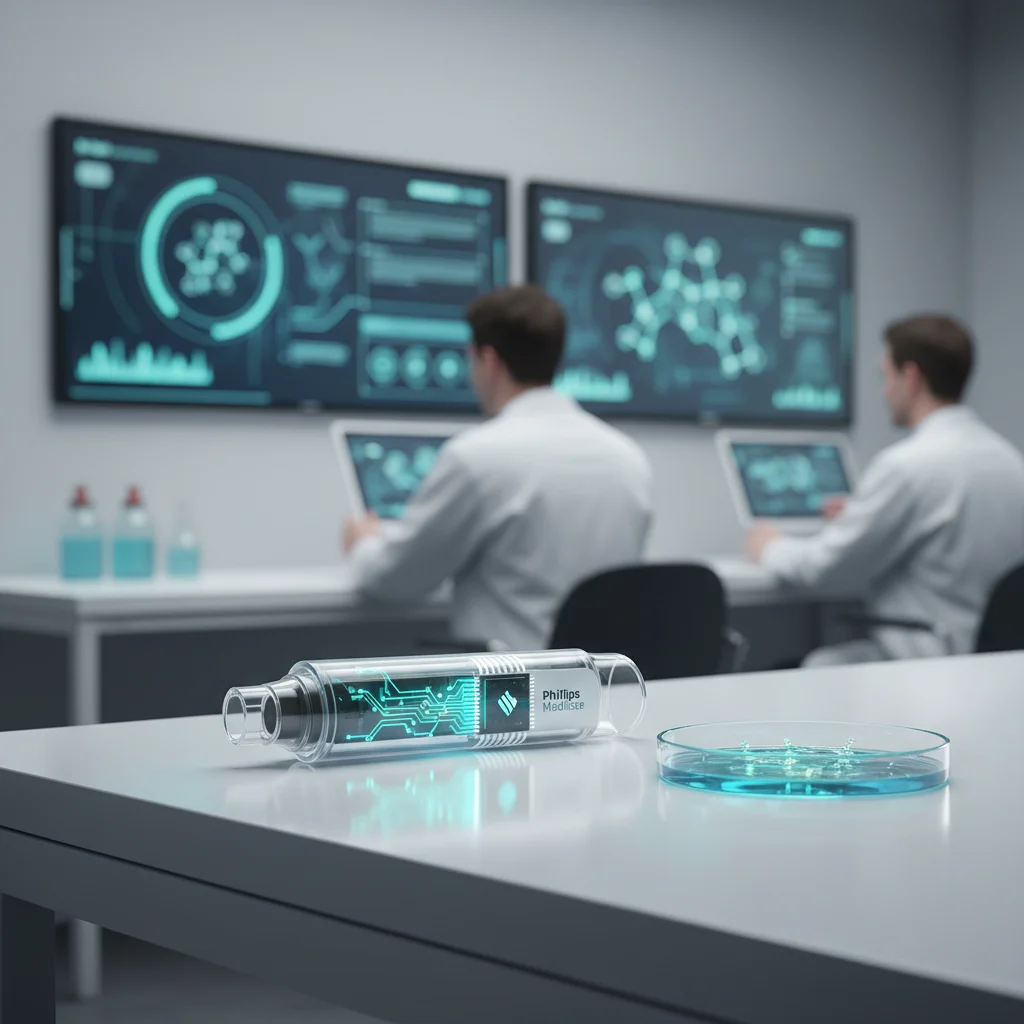
At INTERPHEX 2026, held April 21–23 at the Jacob K. Javits Convention Center in New York, Phillips Medisize showcased breakthrough innovations in embedded sensing for single-use bioprocessing systems. The company's technology directly integrates sensors into disposable components—including tubing and bioreactors—transforming traditional assemblies into intelligent, data-rich assets that enhance real-time monitoring and pharmaceutical manufacturing oversight without sacrificing product integrity or sterility.
IntelligenceRegulatory Impact
FDA are the agencies to watch. Regulatory relevance reads medium for biotech. Teams should track submission types, designations, and guidance shifts that could move approval timelines.
Embedded Sensing Innovation: Transforming Single-Use Systems into Decision-Ready Assets
Phillips Medisize's embedded sensing platform represents a fundamental shift in how biopharmaceutical manufacturers approach process monitoring and control. By integrating miniaturized sensors directly into single-use components, the company enables continuous, inline measurement of critical process parameters—including pH, dissolved oxygen (DO), and metabolite concentrations—without requiring external probes or manual sampling that could compromise sterile boundaries.
Key technical features include:
- Direct Component Integration: Sensors embedded within tubing, connectors, and bag assemblies provide real-time data at the point of measurement, eliminating lag time and reducing analytical uncertainty.
- Wireless Data Transmission: Near field communication (NFC) and Bluetooth Low Energy (BLE) protocols enable seamless data transfer to monitoring systems while maintaining closed, sterile processing environments—critical for cell and gene therapy (CGT) manufacturing and other sensitive bioprocesses.
- Continuous Integrity Verification: Sensing elements positioned at connection points and critical junctures monitor system integrity in real time, detecting pressure changes, temperature excursions, and mechanical stress that could compromise process closure. This replaces discrete integrity testing and supports electronic batch records with comprehensive component-level data.
- Sealed Process Assurance: Continuous monitoring ensures that bioreactors, transfer bags, and tubing assemblies remain sealed throughout manufacturing, eliminating contamination risk and supporting regulatory compliance for sterile drug development.
These capabilities address a longstanding challenge in bioprocessing: the tension between obtaining rich process data and maintaining the sterile, closed systems required for pharmaceutical manufacturing. Traditional approaches often require manual sampling or external sensor placement, both of which introduce contamination risk. Embedded sensing resolves this trade-off by keeping data collection within the closed system itself.
IntelligenceCompetitive Intelligence
Competitive pressure is low. Watch which sponsors move first. Benchmark pipeline positioning, differentiation, and partnership scouting against the signals in this story.
Custom Engineering for Complex Modalities: Addressing Cell and Gene Therapy Manufacturing Challenges
While off-the-shelf bioprocessing platforms serve many applications, cell and gene therapies present unique manufacturing constraints—including small batch sizes, complex media formulations, and stringent sterility requirements—that standard systems cannot adequately address. Phillips Medisize's custom engineering approach tackles these limitations through rapid prototyping and tailored workflow design.
Key advantages of the custom engineering model include:
- Tailored Sensor Placement: Engineers work with manufacturers to position sensors at process-critical points specific to each therapy's workflow, ensuring relevant data capture without unnecessary complexity.
- Rapid Prototyping and Validation: Accelerated development cycles allow manufacturers to test sensor configurations, wireless protocols, and data integration pathways before full-scale manufacturing deployment.
- Scalable Manufacturability: Custom designs are engineered from inception for commercial-scale production, reducing the risk of technical bottlenecks during scale-up and supporting cost-effective manufacturing as therapies move from clinical to commercial phases.
- Regulatory Alignment: Embedded systems are designed with regulatory requirements in mind, including data integrity, traceability, and electronic batch record compatibility, streamlining FDA and EMA submissions.
According to Phillips Medisize's INTERPHEX 2026 presentations, commercially validated embedded sensing systems for complex modalities are anticipated within 3–5 years, with broader industry adoption expected over the following decade as manufacturing partners gain confidence in the technology and regulatory pathways mature.
IntelligenceMarket Signals
Commercial pull is medium and investment relevance low. Expect implications for biotech pricing, access, and launch sequencing.
INTERPHEX 2026: Event Themes and Industry Context
INTERPHEX 2026 convened pharmaceutical manufacturing leaders, biotech innovators, and supply chain specialists around three central themes: modular manufacturing, digital integration, and supply chain resilience. These priorities reflect industry-wide recognition that traditional, monolithic manufacturing approaches cannot efficiently support the diversity of modern drug pipelines—from small-molecule therapeutics to advanced cell and gene therapies.
Phillips Medisize's embedded sensing strategy directly aligns with these themes. By enabling modular, sensor-equipped single-use systems that communicate wirelessly with centralized monitoring platforms, the company supports manufacturers in building flexible, data-driven production environments. This modularity also enhances supply chain resilience: if one component fails or requires replacement, the embedded sensor data provides complete traceability and integrity records, reducing investigation time and supporting rapid corrective action.
IntelligenceStrategic Takeaways
Embedded sensing transforms single-use systems into data-rich assets for real-time bioprocess monitoring without compromising sterility. Phillips Medisize demonstrated direct sensor integration for inline monitoring of pH, dissolved oxygen, and metabolite levels at INTERPHEX 2026. Wireless technologies (NFC and Bluetooth Low Energy) maintain sterile environments while enabling continuous data transmission during pharmaceutical manufacturing.
Complementary Innovations Showcased at INTERPHEX 2026
Phillips Medisize's embedded sensing technology was presented alongside other significant biotech manufacturing advancements at the conference:
BioLife Solutions' CellSeal® CryoCase Award: BioLife Solutions (NASDAQ: BLFS) received the INTERPHEX 2026 Biotech Innovation Award for its CellSeal CryoCase, a rigid cryogenic containment system designed for cell and gene therapy materials. The system addresses a critical manufacturing challenge: cryobag failures resulting from repeated freeze-thaw cycles and extended storage. CellSeal CryoCase supports closed-system workflows, enables visual inspection for integrity and particulate contamination, and facilitates regulatory compliance during CGT commercialization—complementing embedded sensing by providing physical containment assurance alongside real-time data monitoring.
Cost-Effective Pharmaceutical Manufacturing Panel: SSOE Group experts, including Pharmaceutical Business Leader Greg Verhoff, facilitated a panel discussion on "Cost-Effective Pharmaceutical Manufacturing for Global Drug Accessibility." The panel emphasized that early-stage facility design decisions—such as right-sized mechanical systems, advanced cleanroom modeling, and energy-efficient HVAC configurations—directly impact Cost of Goods Sold (COGS) and lifecycle costs. By reducing capital expenditure and operational expenses, these design strategies enable manufacturers to produce therapies at price points accessible to global patient populations, supporting supply chain resilience and affordable drug development.
Disinfection and Contamination Control Innovations: Berkshire presented recent trends in controlled environment disinfection, highlighting novel cleaning and disinfectant technologies that prioritize safety, material compatibility, environmental sustainability, and regulatory compliance. These advancements support the contamination control infrastructure necessary for embedded sensing systems and other advanced bioprocessing technologies to function reliably.
Avantor and AES Cleanroom Technology Milestones: Avantor showcased its unified Masterflex bioprocessing portfolio, streamlining tools for fluid handling, bioreactor control, and process automation. AES Cleanroom Technology celebrated 40 years of innovation in cleanroom solutions, underscoring the long-term industry commitment to contamination control and manufacturing excellence.
IntelligenceEvidence Quality
Claims are grounded in the cited primary and secondary sources, with editorial review applied before publication.
Market and Regulatory Implications
Regulatory Pathway Clarity: Embedded sensing systems will require FDA and EMA guidance on data integrity, cybersecurity, and electronic batch record integration. Phillips Medisize's 3–5 year timeline suggests that regulatory submissions and approvals will occur during this window, potentially establishing precedent for future embedded sensor deployments across the industry.
Competitive Advantage in CGT Manufacturing: As cell and gene therapies advance through clinical development and toward commercialization, manufacturers face mounting pressure to demonstrate process control and product consistency. Embedded sensing provides a competitive advantage by enabling real-time process optimization, reducing batch failures, and supporting regulatory submissions with comprehensive, auditable data. Companies that adopt embedded sensing early may achieve faster time-to-market and lower manufacturing costs.
Supply Chain Resilience: Embedded sensors provide end-to-end traceability and integrity verification, reducing investigation time during supply chain disruptions or quality events. This capability is particularly valuable for complex modalities like CGTs, where manufacturing delays can have significant clinical and commercial consequences.
Digital Transformation in Pharma Manufacturing: Embedded sensing is a cornerstone of Industry 4.0 adoption in pharmaceutical manufacturing. By generating rich, real-time process data, these systems enable advanced analytics, machine learning applications, and predictive maintenance—supporting the broader digital transformation agenda that INTERPHEX 2026 emphasized.
What to Watch Next
- Regulatory Submissions: Monitor FDA and EMA guidance documents on embedded sensors and wireless data transmission in pharmaceutical manufacturing. Early submissions from Phillips Medisize or other vendors may establish regulatory precedent.
- Clinical Trial Integration: Watch for announcements of clinical-stage CGT programs adopting embedded sensing in manufacturing. These real-world deployments will validate the technology's reliability and regulatory acceptability.
- Industry Adoption and Partnerships: Track partnerships between Phillips Medisize, contract manufacturers, and biopharmaceutical companies. Broad adoption signals will indicate market confidence and accelerate the 3–5 year commercialization timeline.
- Competitive Landscape: Monitor announcements from other single-use system vendors (e.g., Sartorius, Danaher, Merck KGaA) regarding embedded sensing or similar real-time monitoring technologies. Competition may accelerate innovation and reduce timelines.
- Cost-Benefit Analysis: As embedded sensing systems mature, expect published case studies and economic analyses demonstrating return on investment through reduced batch failures, faster process optimization, and lower regulatory risk.
Frequently Asked Questions
What is embedded sensing in bioprocessing, and how does it differ from traditional process monitoring?
Embedded sensing integrates miniaturized sensors directly into single-use bioprocessing components (tubing, bags, connectors) to enable continuous, inline measurement of critical parameters like pH, dissolved oxygen, and metabolite levels. Unlike traditional external probes or manual sampling, embedded sensors remain within the closed system, eliminating contamination risk and providing real-time data without breaching sterility. This approach is particularly valuable for cell and gene therapies, where maintaining closed, sterile processes is essential for product safety and regulatory compliance.
How do wireless technologies like NFC and Bluetooth Low Energy maintain sterility during data transmission?
Near field communication (NFC) and Bluetooth Low Energy (BLE) are wireless protocols that transmit data over short distances without requiring physical connections or openings in the bioprocessing system. Sensors embedded within single-use components communicate wirelessly to external monitoring devices, eliminating the need for cables or connectors that could compromise system integrity. The wireless signal passes through the component material without breaching the sterile boundary, allowing real-time data collection while maintaining a completely closed, contamination-free process.
What is the expected timeline for commercial availability of embedded sensing systems?
According to Phillips Medisize's INTERPHEX 2026 presentations, commercially validated embedded sensing systems for complex modalities like cell and gene therapies are anticipated within 3–5 years. This timeline includes regulatory submissions, clinical validation, and manufacturing scale-up. Broader industry adoption is expected over the following decade as regulatory pathways mature, manufacturing partners gain confidence, and cost-benefit analyses demonstrate clear return on investment.
How does embedded sensing support regulatory compliance and electronic batch records?
Embedded sensors generate continuous, auditable data on process parameters, system integrity, temperature history, and mechanical stress. This data integrates directly into electronic batch records (EBRs), providing FDA and EMA inspectors with comprehensive documentation of process control and product consistency. Continuous integrity monitoring at connection points replaces discrete testing, reducing investigation time during quality events and supporting faster regulatory submissions. The component-level data traceability also enhances supply chain transparency and supports rapid corrective action if issues arise.
Which biopharmaceutical applications benefit most from embedded sensing technology?
Cell and gene therapies represent the primary near-term beneficiaries of embedded sensing, as these modalities require small batch sizes, complex media formulations, and stringent sterility controls that off-the-shelf bioprocessing platforms cannot adequately address. However, embedded sensing also benefits other advanced therapies, including monoclonal antibodies, recombinant proteins, and viral vectors. As the technology matures and costs decline, adoption is expected to expand across the broader biopharmaceutical manufacturing landscape, including small-molecule drug production and contract manufacturing organizations (CMOs).
References
- [1] AI Media House. "Phillips Medisize Advances Embedded Sensing Ahead of INTERPHEX 2026." AI Lifesciences. Accessed April 2026. https://aimmediahouse.com/ai-lifesciences/phillips-medisize-advances-embedded-sensing-ahead-of-interphex-2026
- [2] Morningstar / PR Newswire. "BioLife Solutions Wins INTERPHEX 2026 Biotech Innovation Award for CellSeal CryoCase." April 21, 2026. https://www.morningstar.com/news/pr-newswire/20260421la40028/biolife-solutions-wins-interphex-2026-biotech-innovation-award-for-cellseal-cryocase
- [3] NovaPharmaNews. "INTERPHEX 2026: Avantor, BioLife, AES Highlights." Accessed April 2026. https://novapharmanews.com/us/news/interphex-2026-avantor-biolife-aes-highlights
- [4] SSOE Group. "SSOE Group Experts to Participate in INTERPHEX 2026 Panel on Cost-Effective Pharmaceutical Manufacturing for Global Drug Accessibility." Press Release. https://www.ssoe.com/press-releases/ssoe-group-experts-to-participate-in-interphex-2026-panel-on-cost-effective-pharmaceutical-manufacturing-for-global-drug-accessibility/
- [5] Berkshire. "INTERPHEX Panel Discussion: Recent Trends in the Disinfection of Controlled Environments." Accessed April 2026. https://berkshire.com/interphex-panel-discussion-recent-trends-in-the-disinfection-of-controlled-environments/
Related coverage
Ask AI About biotech
Grounded in NovaPharmaNews intelligence. Pick a prompt to start.
Track biotech news weekly
FDA biotech news and regulatory updates, every Monday.
- Evidence strength
- 79/100
- Last verified
- Jun 15, 2026
- AI-assisted review
- Yes
- Editorial review
- Dr. Sarah Chen
High source quality · grounded in cited primary and secondary sources.
This article follows our editorial standards. Report a correction via editorial contact.
About the Author

Continue Your Research


Industry Reports & Whitepapers
- America's Innovation Engine: Small and Mid-Sized Biotechs Drive U.S. Clinical Trials, FDA Filings — Small and mid-sized biotechs drive U.S. biotech employment, clinical trials, FDA filings, and most i…
- GxP Environmental Monitoring Systems: A Guide for Small Biotechs — Essential guide for small biotechs on GxP environmental monitoring systems to ensure compliance and …