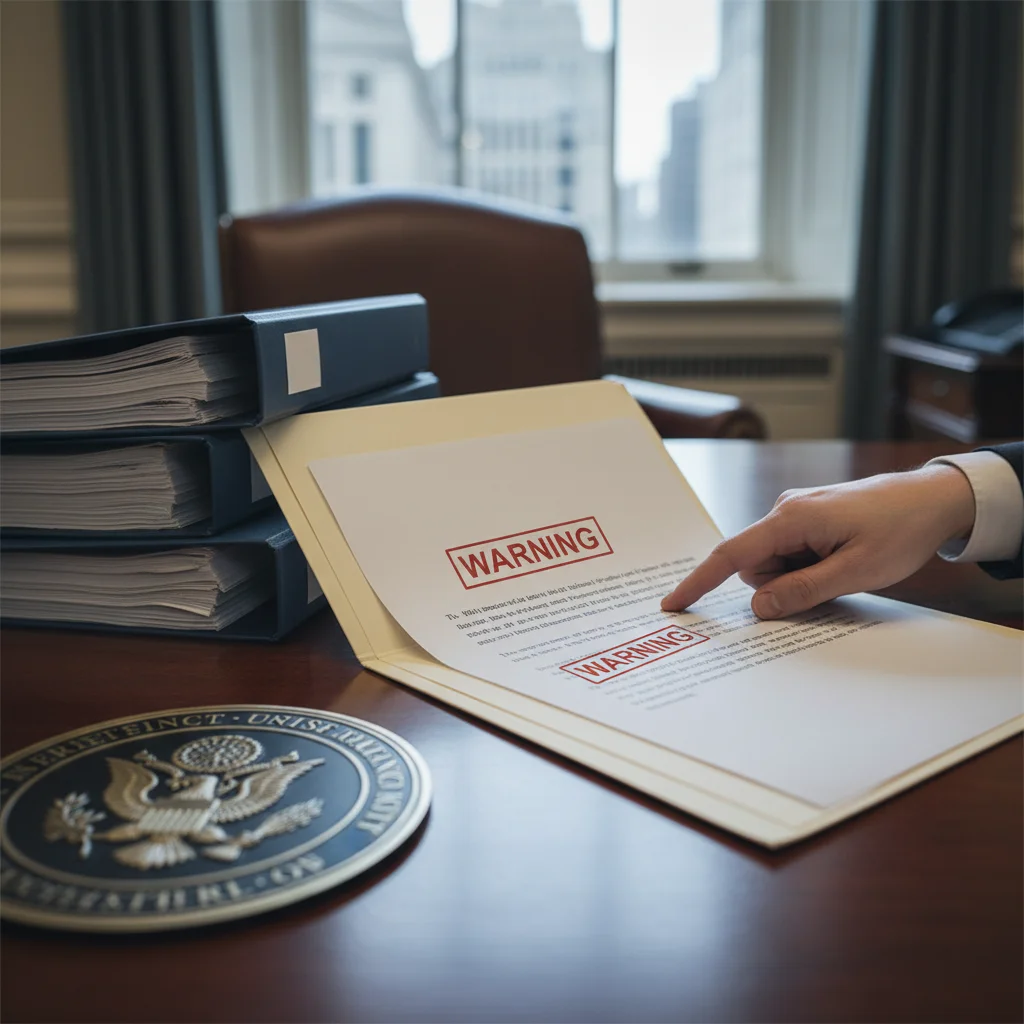
FDA Warning Letters: Understanding Pharmaceutical Compliance Actions and Their Impact on Drug Safety
FDA warning letters serve as critical regulatory tools for pharmaceutical compliance. Learn how these enforcement actions impact drug safety and market access.
Intelligence Snapshot
Executive Summary
FDA warning letters are formal enforcement actions that signal serious regulatory compliance violations in pharmaceutical manufacturing and marketing
Key Insights
-
Companies receiving warning letters must respond within 15 working days and implement…
Companies receiving warning letters must respond within 15 working days and implement corrective actions to avoid further regulatory consequences
-
Warning letters can impact drug approvals, market access, and company operations until…
Warning letters can impact drug approvals, market access, and company operations until compliance issues are fully resolved
Market Impact
| Regulatory | medium |
|---|---|
| Commercial | medium |
| Competitive | low |
| Investment | low |
Executive Scorecard
Heuristic scores · directional, not investment adviceContents8 sections
Key Takeaways
- FDA warning letters are formal enforcement actions that signal serious regulatory compliance violations in pharmaceutical manufacturing and marketing
- Companies receiving warning letters must respond within 15 working days and implement corrective actions to avoid further regulatory consequences
- Warning letters can impact drug approvals, market access, and company operations until compliance issues are fully resolved
FDA Warning Letters: A Critical Regulatory Enforcement Tool
The FDA’s warning letter system represents one of the most significant regulatory enforcement mechanisms in the pharmaceutical industry, serving as a formal notice to companies that have violated federal regulations governing drug safety, manufacturing, or marketing practices.
IntelligenceRegulatory Impact
FDA are the agencies to watch. Regulatory relevance reads medium for pharmaceutical intelligence. Teams should track submission types, designations, and guidance shifts that could move approval timelines.
Understanding FDA Warning Letters
Warning letters are issued when the FDA identifies violations that may lead to enforcement action if not promptly and adequately corrected. These letters are publicly available and represent serious regulatory concerns that go beyond minor compliance issues.
The FDA typically issues warning letters for violations including:
- Current Good Manufacturing Practice (cGMP) deviations
- Clinical trial protocol violations
- Unapproved drug marketing
- Labeling and advertising violations
- Data integrity issues
IntelligenceCompetitive Intelligence
Competitive pressure is low. Watch which sponsors move first. Benchmark pipeline positioning, differentiation, and partnership scouting against the signals in this story.
Immediate Impact on Pharmaceutical Companies
When a company receives an FDA warning letter, several immediate consequences follow. The company must respond within 15 working days, outlining specific corrective actions and timelines for implementation. Failure to respond adequately can result in more severe enforcement actions, including product seizures, injunctions, or criminal prosecution.
Warning letters often trigger:
- Suspension of new drug application reviews
- Import alerts preventing product entry into the US market
- Increased regulatory scrutiny and follow-up inspections
- Potential impact on stock prices and investor confidence
IntelligenceMarket Signals
Commercial pull is medium and investment relevance low. Expect implications for pharmaceutical intelligence pricing, access, and launch sequencing.
Market and Patient Implications
For patients and healthcare providers, FDA warning letters serve as important safety signals. They indicate potential quality issues with medications and manufacturing processes that could affect drug efficacy or safety.
The pharmaceutical industry closely monitors warning letter trends to understand evolving FDA priorities and ensure proactive compliance. Recent years have seen increased focus on data integrity, supply chain security, and manufacturing quality systems.
IntelligenceStrategic Takeaways
FDA warning letters are formal enforcement actions that signal serious regulatory compliance violations in pharmaceutical manufacturing and marketing Companies receiving warning letters must respond within 15 working days and implement corrective actions to avoid further regulatory consequences Warning letters can impact drug approvals, market access, and company operations until compliance issues are fully resolved
Resolution and Follow-up
Successful resolution of warning letter citations requires comprehensive corrective action plans, often including third-party audits, facility upgrades, and enhanced quality systems. The FDA conducts follow-up inspections to verify that violations have been adequately addressed before considering the warning letter resolved.
Frequently Asked Questions
What happens when a pharmaceutical company receives an FDA warning letter?
The company must respond within 15 working days with a detailed corrective action plan. The FDA may also suspend review of new applications and increase inspection frequency until violations are resolved.
How do FDA warning letters affect drug availability for patients?
Warning letters can lead to supply disruptions if manufacturing issues aren’t quickly resolved. However, the FDA works to minimize patient impact while ensuring safety standards are maintained.
Are FDA warning letters public information?
Yes, FDA warning letters are publicly available on the FDA website, providing transparency about regulatory enforcement actions and helping inform healthcare professionals and patients about potential safety concerns.
Related coverage
Ask AI About This Topic
Grounded in NovaPharmaNews intelligence. Pick a prompt to start.
Stay Updated on Pharma News
Get the latest drug approvals, clinical trials, and regulatory updates delivered to your inbox.
- Evidence strength
- 71/100
- Last verified
- Jun 15, 2026
- AI-assisted review
- Yes
- Editorial review
- Dr. Sarah Chen
Moderate source quality · grounded in cited primary and secondary sources.
This article follows our editorial standards. Report a correction via editorial contact.