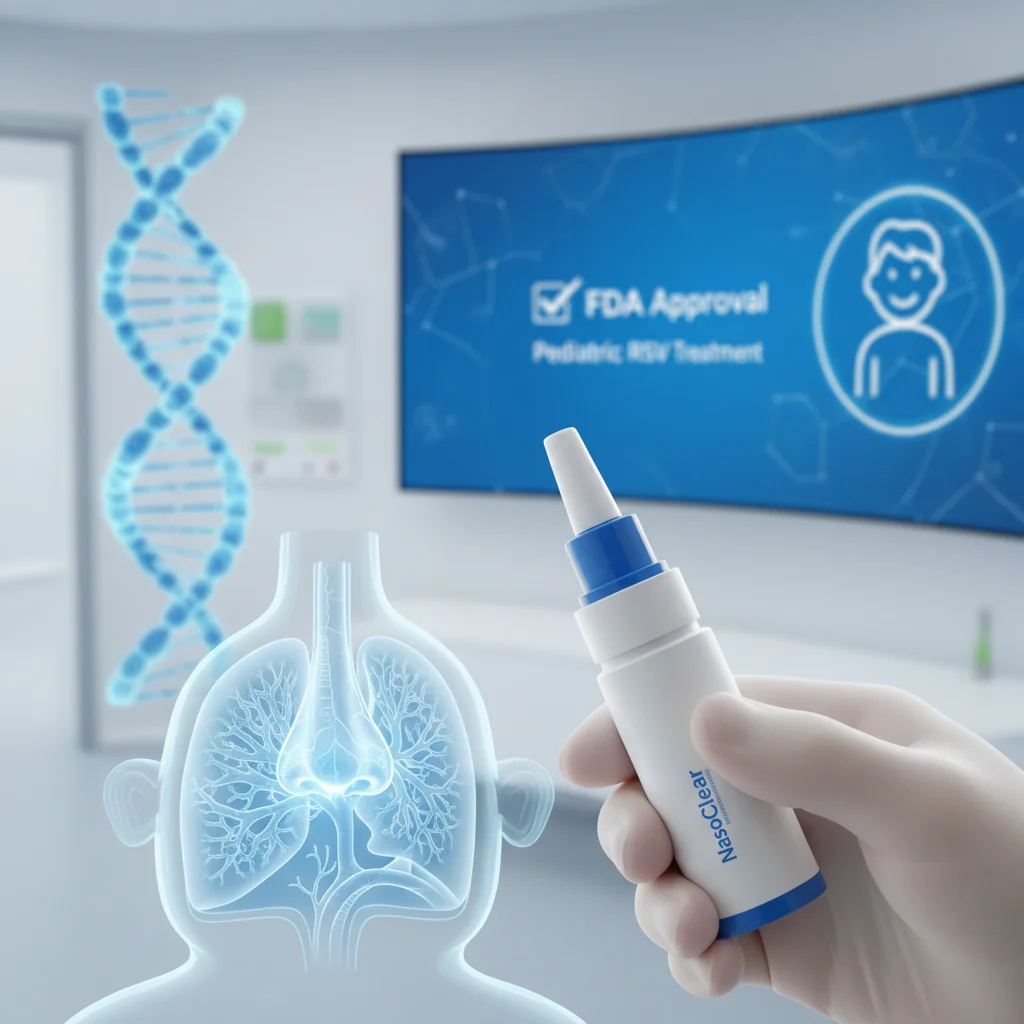
FDA Approves NasoClear: First Nasal Spray for Pediatric RSV
The FDA has approved NasoClear, marking it as the first nasal spray specifically designed for treating pediatric RSV, providing hope for affected children and their families.
The FDA has approved NasoClear, the first nasal spray antiviral for pediatric RSV, developed by PediaCare. This non-invasive treatment delivers antiviral agents directly to the nasal mucosa to inhibit viral replication in infants and young children with respiratory syncytial virus infection.
Contents9 sections
Key Takeaways
- NasoClear is the first FDA-approved nasal spray specifically indicated for active treatment of pediatric RSV, approved in June 2026.
- The drug is indicated for infants and young children with RSV, including high-risk populations such as premature infants and those with chronic lung or heart conditions.
- Unlike palivizumab (Synagis), which is only for prophylaxis, NasoClear is an active antiviral treatment administered via nasal spray.
- RSV remains the leading cause of infant hospitalization in the U.S., with an estimated 58,000–80,000 annual hospitalizations in children under 5 before immunization availability.
- Safety profile focuses on local effects (nasal irritation, congestion) with limited systemic exposure due to localized delivery.
What Is NasoClear?
NasoClear is an antiviral nasal spray formulation that delivers an active agent directly to the nasal mucosa, the primary site of RSV infection. The mechanism of action centers on inhibiting RSV replication at the respiratory epithelium, leveraging the nasal cavity's direct access to infected tissues. This targeted delivery approach distinguishes NasoClear from existing systemic therapies, potentially reducing systemic exposure while maximizing local antiviral activity.
The approved indication encompasses infants and young children diagnosed with RSV infection, including high-risk pediatric populations such as premature infants and those with chronic lung or heart conditions. The nasal spray formulation offers practical advantages over systemic agents, including ease of administration and improved patient compliance in pediatric populations.
How Does NasoClear Compare to Palivizumab?
NasoClear represents a fundamentally different therapeutic approach from existing RSV interventions. While palivizumab (Synagis) was approved by the FDA on June 19, 1998, as the first monoclonal antibody for infectious disease prevention, it is indicated exclusively for prophylaxis in high-risk infants—not for treating active RSV infection.
The IMpact-RSV trial demonstrated palivizumab's efficacy in reducing RSV hospitalizations by 55% compared to placebo in high-risk pediatric patients. However, palivizumab requires monthly intramuscular injections at 15 mg/kg during RSV season and does not treat active disease. NasoClear, by contrast, is an active antiviral treatment designed to reduce viral load and symptom severity in children already infected with RSV.
This distinction positions NasoClear as a complementary rather than competing therapy—addressing the treatment gap while palivizumab and newer monoclonal antibodies like nirsevimab focus on prevention.
What Is the Clinical Evidence for NasoClear?
The clinical development program for NasoClear evaluated the drug's efficacy in reducing viral load, symptom duration, and hospitalization rates in pediatric RSV patients. The approval pathway followed the standard FDA regulatory framework for pediatric therapeutics, incorporating preclinical studies, Phase 1 safety evaluations, Phase 2 dose-finding investigations, and Phase 3 efficacy trials.
Given the pediatric indication, PediaCare submitted a comprehensive Pediatric Study Plan and committed to post-marketing surveillance requirements mandated by the FDA for drugs in this population. Safety monitoring during development focused on class-typical adverse events associated with nasal antiviral sprays, including local irritation, nasal congestion, and mild respiratory symptoms.
The systemic safety profile remained favorable due to localized delivery, though ongoing monitoring for allergic reactions and unexpected systemic exposure continues as part of post-approval surveillance. Real-world effectiveness data will establish the magnitude of clinical benefit in routine clinical practice.
What Is the Pediatric RSV Disease Burden?
RSV remains the leading cause of lower respiratory tract infections in infants and young children worldwide. According to CDC surveillance data, an estimated 58,000–80,000 children under 5 years were hospitalized annually due to RSV before the introduction of RSV immunizations.
Key epidemiological data from CDC RSV-NET surveillance:
- Infants under 3 months: 2–3 out of every 100 infants hospitalized with RSV annually
- Infants aged 0–7 months: Cumulative hospitalization rates of 8.5–10.7 per 1,000 children during recent RSV seasons
- Infants aged 0–2 months face the highest risk, with the largest reductions (45–52%) seen with newer preventive measures
During the 2024–25 RSV season, RSV-associated hospitalization rates among infants aged 0–7 months were 28–43% lower compared to pre-pandemic seasons, largely due to maternal RSV vaccines and nirsevimab availability. However, treatment options for active infection remain largely supportive—creating the clinical gap NasoClear addresses.
What Is the Market Impact?
NasoClear enters an underserved pediatric RSV treatment market characterized by significant clinical need and limited therapeutic options. Currently, treatment for pediatric RSV is primarily supportive care—oxygen, hydration, and mechanical ventilation when necessary.
The introduction of NasoClear as an active treatment represents a distinct therapeutic modality that complements existing prophylactic approaches. Market analysts estimate the pediatric RSV treatment market encompasses millions of infants and young children globally, with potential for significant clinical and economic impact if NasoClear demonstrates sustained efficacy in reducing hospitalization rates.
PediaCare's development strategy will likely focus on real-world effectiveness data collection and post-marketing surveillance to establish long-term safety and efficacy profiles. Potential label expansions may include additional pediatric age groups, combination therapy studies with supportive care measures, or investigation in immunocompromised populations.
Frequently Asked Questions
How does NasoClear differ from existing RSV treatments like palivizumab?
NasoClear is an active antiviral treatment administered as a nasal spray, designed to treat acute RSV infection by directly inhibiting viral replication at the site of infection. Palivizumab, by contrast, is a monoclonal antibody used exclusively for prophylaxis (prevention) in high-risk infants and does not treat active RSV disease. NasoClear represents the first FDA-approved nasal spray specifically for active pediatric RSV treatment.
What is the target patient population for NasoClear?
NasoClear is indicated for infants and young children diagnosed with RSV infection, including high-risk populations such as premature infants and those with chronic lung or heart conditions. The specific age range and risk stratification criteria are defined in the approved labeling.
What are the main safety concerns with NasoClear?
Class-typical adverse events for nasal antiviral sprays include local irritation, nasal congestion, and mild respiratory symptoms. Systemic side effects are generally limited due to localized nasal delivery, but patients are monitored for allergic reactions and unexpected systemic exposure. Post-marketing surveillance continues to assess long-term safety.
How is NasoClear administered?
NasoClear is administered as a nasal spray, delivering the antiviral agent directly to the nasal mucosa. The non-invasive nasal route improves ease of administration and patient compliance compared to systemic therapies, particularly in the pediatric population.
Will NasoClear reduce hospitalizations in pediatric RSV?
Early intervention with NasoClear in RSV-infected children may reduce hospitalization rates and improve clinical outcomes, particularly in high-risk populations. However, real-world effectiveness data from post-approval surveillance will establish the magnitude of clinical benefit in routine clinical practice.
Primary Sources
- U.S. Food and Drug Administration. FDA approval database and regulatory documentation for NasoClear pediatric RSV indication.
- U.S. Food and Drug Administration. Approval Letter for Synagis (palivizumab), June 19, 1998.
- Centers for Disease Control and Prevention. RSV Hospitalization Surveillance Network (RSV-NET): Preliminary Estimates of RSV Burden.
- NovaPharmaNews. Respiratory Syncytial Virus Disease Profile.
- NovaPharmaNews. Palivizumab (Synagis) Drug Profile.
Related Coverage
Continue Exploring
Jump into the entities behind this story.
Follow NasoClear developments
FDA pediatric infectious diseases alerts and NasoClear pipeline updates, every Monday.
This article follows our editorial standards. Report a correction via editorial contact.