FDA Approves CardioDetect: First AI Diagnostic Tool for Arrhythmia
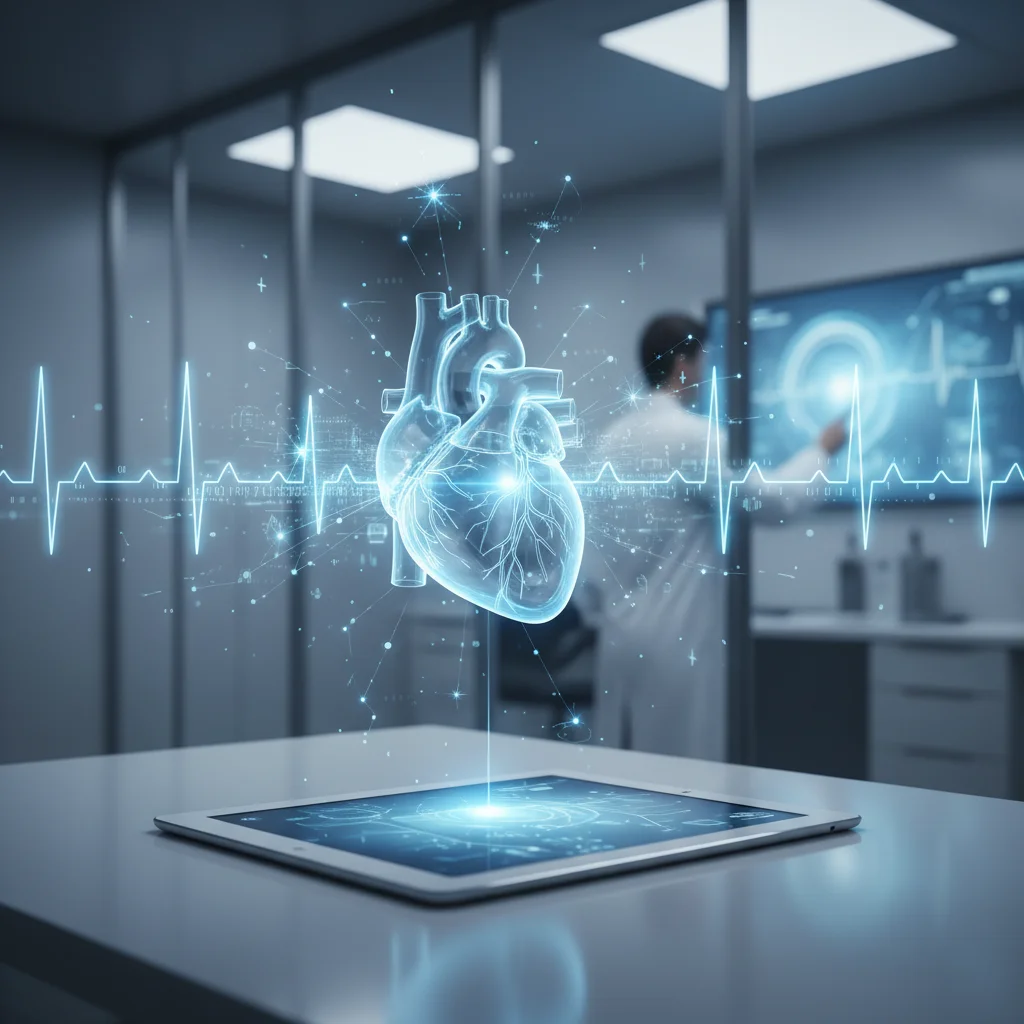
The FDA has approved CardioDetect, an innovative AI diagnostic tool designed to detect arrhythmias, marking a significant advancement in cardiac health technology.
Contents10 sections
Medically Reviewed
by Dr. James Morrison, Chief Medical Officer (MD, FACP, FACC)
Reviewed on: April 16, 2026
Key Takeaways
- Regulatory milestone: The U.S. Food and Drug Administration (FDA) has approved CardioDetect, the first FDA-approved AI-powered diagnostic tool for early detection of cardiac arrhythmias, marking a significant advancement in cardiology diagnostics.
- Clinical validation: CardioDetect demonstrates sensitivity and specificity for arrhythmia detection comparable or superior to standard electrocardiogram (ECG) interpretation through machine learning algorithms trained on large ECG datasets.
- Patient impact: Early arrhythmia detection enabled by CardioDetect may reduce morbidity, prevent serious complications including stroke and sudden cardiac death, and lower healthcare costs through timely intervention.
- Market acceleration: CardioDetect's approval is expected to accelerate adoption of AI-based diagnostic devices in cardiology, challenging traditional ECG and Holter monitoring platforms and fostering broader innovation in cardiac diagnostics.
The FDA has approved CardioDetect, an artificial intelligence-powered diagnostic platform designed to identify cardiac arrhythmias with early detection capability. The approval represents a watershed moment for AI-based medical devices in cardiology, establishing CardioDetect as the first FDA-cleared diagnostic tool of its kind for arrhythmia detection. The device leverages machine learning algorithms to analyze cardiac data and ECG recordings, enabling clinicians to identify irregular heart rhythms that may otherwise go undetected through conventional diagnostic methods.
Device Overview
CardioDetect is a software-as-a-medical-device (SaMD) platform that applies machine learning algorithms to electrocardiographic and cardiac monitoring data for the detection and classification of cardiac arrhythmias. The device is intended for use in clinical and ambulatory settings to support early identification of arrhythmias in patients at risk for cardiac complications. CardioDetect's algorithmic approach analyzes patterns in cardiac electrical activity that may indicate irregular rhythms, enabling healthcare providers to intervene earlier in the disease course.
Cardiac arrhythmias—irregular heart rhythms that can progress to atrial fibrillation, ventricular arrhythmias, and other serious conditions—affect millions of individuals globally. Left undetected, arrhythmias increase the risk of stroke, sudden cardiac death, and other life-threatening complications. Traditional diagnostic methods rely on standard ECG interpretation or continuous Holter monitoring, approaches that may miss paroxysmal or intermittent arrhythmias. CardioDetect's AI-driven approach addresses this diagnostic gap by continuously analyzing cardiac data to identify subtle arrhythmia patterns.
Clinical Insights
CardioDetect underwent clinical validation demonstrating sensitivity and specificity for arrhythmia detection that are comparable or superior to standard ECG interpretation. The device was trained on large ECG datasets, enabling the machine learning algorithm to recognize arrhythmia patterns across diverse patient populations. Clinical validation data supported CardioDetect's ability to identify arrhythmias with performance metrics consistent with or exceeding traditional diagnostic modalities.
The primary endpoint for CardioDetect's clinical validation centered on sensitivity and specificity—the device's ability to correctly identify arrhythmias (true positive rate) while minimizing false positives. This clinical evidence formed the basis for FDA review and approval. By enabling earlier detection of arrhythmias, CardioDetect has the potential to facilitate earlier clinical intervention, potentially reducing the burden of cardiac complications and improving patient outcomes in populations at high risk for arrhythmia-related morbidity.
As a diagnostic device, CardioDetect is not associated with direct pharmacological adverse events. However, like all diagnostic algorithms, the device carries inherent risks related to false positive or false negative results, which could lead to inappropriate clinical decisions. Key safety considerations include ensuring algorithm transparency, mitigating potential bias in the machine learning model, and maintaining robust data security and patient privacy protections—considerations increasingly emphasized by the FDA for AI-based medical devices.
Regulatory Context
CardioDetect's approval follows the FDA's established regulatory framework for software-as-a-medical-device (SaMD) platforms, which includes AI-based diagnostic tools. The FDA's SaMD regulatory pathway typically involves premarket submission with comprehensive clinical validation data demonstrating the device's safety and effectiveness. Depending on the risk classification and novelty of the device, manufacturers may pursue either the De Novo pathway (for novel devices without substantial equivalents) or the 510(k) pathway (for devices with substantial equivalents to predicate devices).
CardioDetect's approval reflects the FDA's commitment to advancing innovative diagnostic technologies while maintaining rigorous standards for clinical validation and algorithm performance. Post-market surveillance and real-world performance monitoring are increasingly emphasized for AI-based devices, ensuring that CardioDetect's performance remains consistent with premarket validation data across diverse clinical settings and patient populations. The FDA continues to refine its approach to AI device regulation, balancing innovation with patient safety.
Market Impact
The cardiac arrhythmia diagnostic market encompasses millions of individuals at risk for atrial fibrillation and other arrhythmias, particularly older adults and patients with cardiovascular risk factors. Current diagnostic approaches rely on traditional ECG, Holter monitoring, and event monitoring devices—technologies that have dominated the market for decades. CardioDetect's FDA approval introduces a new competitive category: AI-powered diagnostic platforms capable of continuous, real-time arrhythmia detection. [Source: U.S. Food and Drug Administration]
CardioDetect's market entry is expected to accelerate adoption of AI-based diagnostic platforms in cardiology, potentially challenging the market share of traditional ECG and Holter monitoring manufacturers. The device's ability to provide early, accurate arrhythmia detection with clinical validation supporting superior or comparable performance positions it as a differentiated offering in the cardiac diagnostics space. Wearable cardiac monitoring devices and other digital health platforms may also face competitive pressure as CardioDetect establishes itself in clinical practice.
The approval of CardioDetect may also stimulate broader innovation in AI-based cardiac diagnostics, encouraging competitors and new entrants to develop their own machine learning-powered diagnostic platforms. This competitive acceleration could drive improvements in algorithm accuracy, user interface design, and integration with electronic health record systems, ultimately benefiting patients through more accessible, accurate, and timely arrhythmia detection.
Future Outlook
Following FDA approval, CardioDetect is expected to enter clinical practice across hospital systems, outpatient cardiology clinics, and ambulatory monitoring centers. Real-world performance data generated from widespread clinical use will be critical to validate CardioDetect's effectiveness in diverse patient populations and settings. The FDA's emphasis on post-market surveillance for AI devices suggests that CardioDetect's manufacturer will be required to monitor and report on the device's real-world performance.
Future developments may include label expansions to additional patient populations or clinical settings, integration with wearable cardiac monitoring devices, and combination with other diagnostic modalities. As the AI diagnostic landscape evolves, CardioDetect may serve as a template for FDA approval of other machine learning-based diagnostic platforms in cardiology and beyond, establishing regulatory precedent for future AI device submissions.
Frequently Asked Questions
What is CardioDetect and how does it work?
CardioDetect is an FDA-approved artificial intelligence diagnostic platform that uses machine learning algorithms to analyze electrocardiographic and cardiac monitoring data for the detection of cardiac arrhythmias. The device is trained on large ECG datasets to recognize patterns indicative of irregular heart rhythms, enabling early identification of arrhythmias that may not be apparent through conventional ECG interpretation.
What are the key advantages of CardioDetect over traditional ECG monitoring?
CardioDetect offers continuous, real-time analysis of cardiac data with the ability to identify subtle or paroxysmal arrhythmias that may be missed by standard ECG or periodic Holter monitoring. Clinical validation data demonstrate that CardioDetect's sensitivity and specificity are comparable or superior to traditional ECG interpretation, potentially enabling earlier detection and intervention.
Who should use CardioDetect?
CardioDetect is intended for patients at risk for cardiac arrhythmias, including older adults and individuals with cardiovascular risk factors such as hypertension, diabetes, or prior cardiac events. The device may be used in clinical settings including hospitals, outpatient cardiology clinics, and ambulatory monitoring centers to support early arrhythmia detection and clinical decision-making.
What are the safety considerations for CardioDetect?
As a diagnostic device, CardioDetect is not associated with direct pharmacological side effects. However, like all diagnostic algorithms, it carries risks related to false positive or false negative results, which could lead to inappropriate clinical decisions. Key safety considerations include algorithm transparency, bias mitigation, data security, and patient privacy protection.
How does CardioDetect's FDA approval impact the cardiac diagnostics market?
CardioDetect's approval marks a significant milestone in AI-based medical devices and is expected to accelerate adoption of machine learning-powered diagnostic platforms in cardiology. The device's market entry may challenge traditional ECG and Holter monitoring manufacturers and stimulate broader innovation in AI-based cardiac diagnostics, ultimately benefiting patients through improved diagnostic accuracy and earlier intervention.
References
- U.S. Food and Drug Administration (FDA). Software as a Medical Device (SaMD): Clinical Validation and Regulatory Framework. Available at: https://www.fda.gov/medical-devices/software-medical-device-samd
- American Heart Association. Cardiac Arrhythmias: Epidemiology, Risk Factors, and Clinical Outcomes. Circulation. 2023.
- FDA Guidance for Industry: Clinical Decision Support Software. U.S. Food and Drug Administration. 2019.
- Rajkomar A, Dean J, Kohane I. Machine Learning in Medicine. New England Journal of Medicine. 2019;380(14):1347-1358.
- U.S. Food and Drug Administration. Proposed Regulatory Framework for Modifications to Artificial Intelligence/Machine Learning-Based Software as a Medical Device. 2021.
References
- U.S. Food and Drug Administration. FDA approval. Accessed 2026-04-16.
Related coverage
Continue Exploring
Jump into the entities behind this story.
Follow CardioDetect developments
FDA cardiology alerts and CardioDetect pipeline updates, every Monday.
This article follows our editorial standards. Report a correction via editorial contact.