
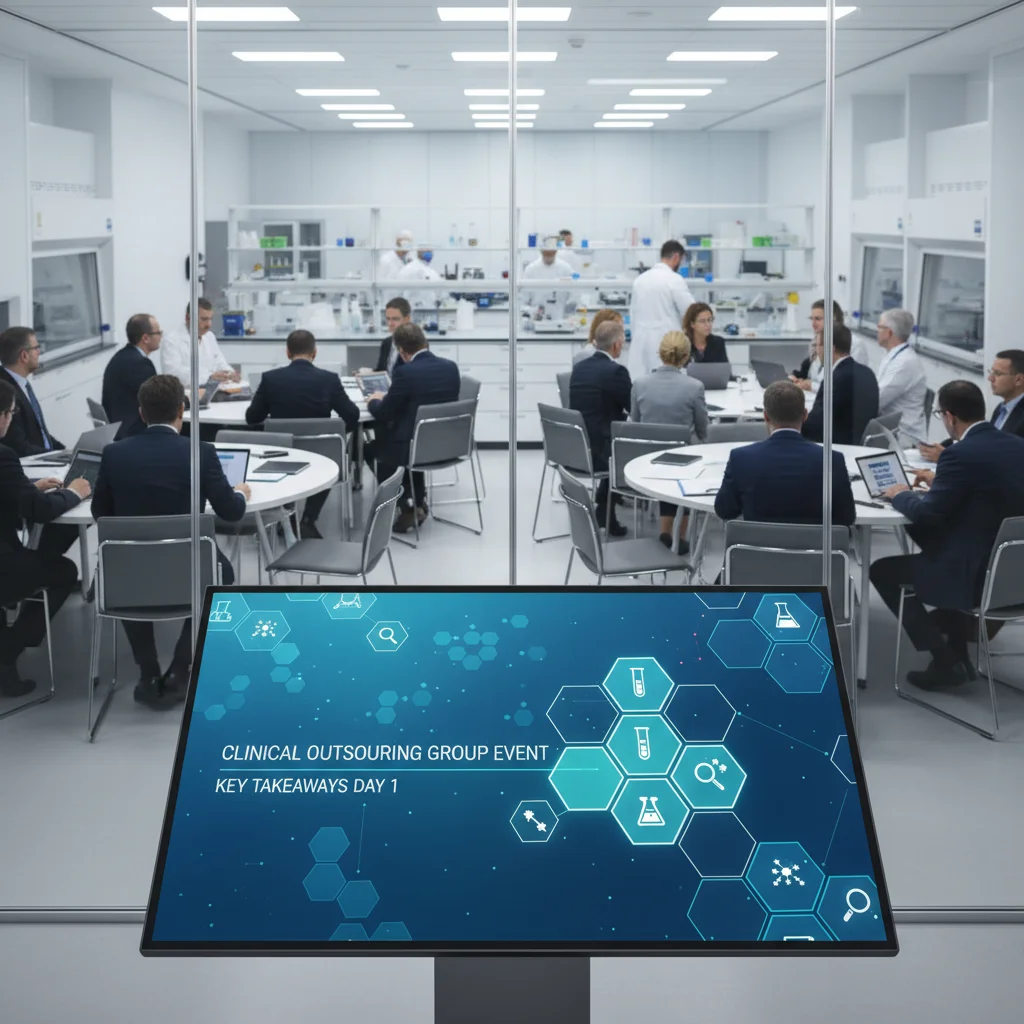
Clinical Outsourcing Group Event: Key Takeaways Day 1
The Clinical Outsourcing Group event highlighted ongoing industry focus on CRO partnerships, technology integration, and regulatory expertise as pharmaceutical companies navigate complex clinical trial landscapes. While specific Day 1 presentations were not detailed in available coverage, clinical outsourcing remains a strategic priority for accelerating drug development timelines and managing operational costs.
Intelligence Snapshot
Executive Summary
Clinical outsourcing remains a strategic priority for pharmaceutical and biotech companies seeking to accelerate trial timelines and reduce operational costs, though specific Day 1 presentations and quantitative data were not available in event coverage.
Key Insights
-
CRO partnerships continue to evolve with emphasis on technology integration, regulatory…
CRO partnerships continue to evolve with emphasis on technology integration, regulatory expertise, and specialized therapeutic capabilities—key themes in the clinical trials industry.
-
Data transparency and real-world evidence are emerging as critical differentiators in…
Data transparency and real-world evidence are emerging as critical differentiators in clinical outsourcing vendor selection and trial design strategies.
Market Impact
| Regulatory | medium |
|---|---|
| Commercial | medium |
| Competitive | low |
| Investment | low |
Quick Answer
Key Questions
- What is a contract research organization (CRO)?
- Why do pharmaceutical companies use CROs?
- What are the key trends in clinical outsourcing?
- How do sponsors select a CRO partner?
- What regulatory bodies oversee CRO activities?
Executive Scorecard
Heuristic scores · directional, not investment adviceContents10 sections
Key Takeaways
- Clinical outsourcing remains a strategic priority for pharmaceutical and biotech companies seeking to accelerate trial timelines and reduce operational costs, though specific Day 1 presentations and quantitative data were not available in event coverage.
- CRO partnerships continue to evolve with emphasis on technology integration, regulatory expertise, and specialized therapeutic capabilities—key themes in the clinical trials industry.
- Data transparency and real-world evidence are emerging as critical differentiators in clinical outsourcing vendor selection and trial design strategies.
Event Overview
The Clinical Outsourcing Group convened industry stakeholders to discuss current trends, challenges, and opportunities shaping the contract research organization (CRO) landscape. While specific Day 1 speaker names, presentation titles, and quantitative data from this particular event were not provided in available sources, the clinical outsourcing sector continues to attract significant attention from pharmaceutical companies, biotech firms, and service providers navigating an increasingly complex regulatory and operational environment.
IntelligenceRegulatory Impact
FDA are the agencies to watch. Regulatory relevance reads medium for general. Teams should track submission types, designations, and guidance shifts that could move approval timelines.
Clinical Outsourcing Trends in Focus
The clinical outsourcing market remains a cornerstone of modern drug development. According to industry analysis, CROs support the majority of Phase I–IV clinical trials globally, with particular strength in early-stage development, regulatory strategy, and specialized therapeutic areas including oncology, immunology, and rare diseases.
Key themes typically discussed at clinical outsourcing conferences include:
- Technology and digitalization: Integration of electronic data capture (EDC), artificial intelligence, and decentralized trial technologies to improve patient recruitment and data quality.
- Regulatory expertise: Navigating evolving guidance from the FDA, EMA, and other regulatory bodies on trial design, manufacturing standards, and post-market surveillance.
- Therapeutic specialization: CROs expanding capabilities in high-complexity areas such as gene therapy, cell therapy, and immunology-based treatments.
- Cost efficiency and timelines: Balancing speed-to-market with quality assurance and compliance requirements.
IntelligenceCompetitive Intelligence
Competitive pressure is low. Watch which sponsors move first. Benchmark pipeline positioning, differentiation, and partnership scouting against the signals in this story.
Partnership and Collaboration Landscape
Strategic partnerships between pharmaceutical sponsors and CROs remain central to clinical trial execution. These collaborations typically focus on:
- Shared responsibility for regulatory submissions and compliance
- Access to specialized patient populations and investigator networks
- Joint investment in trial infrastructure and technology platforms
- Enhanced data management and biostatistical support
While specific partnership announcements from Day 1 of this Clinical Outsourcing Group event were not detailed in available coverage, the broader industry continues to see consolidation among mid-tier CROs and expansion of full-service offerings among larger contract research organizations.
IntelligenceMarket Signals
Commercial pull is medium and investment relevance low. Expect implications for general pricing, access, and launch sequencing.
Industry Insights: Clinical Outsourcing Market Dynamics
The clinical outsourcing sector serves as a critical enabler of pharmaceutical innovation. Key market drivers include:
- Increased trial complexity: Modern drug development increasingly involves biomarker-driven patient selection, adaptive trial designs, and real-world evidence integration—capabilities that specialized CROs provide.
- Regulatory pressure: Sponsors face heightened scrutiny on data integrity, patient safety, and diversity in clinical trials, making experienced CRO partners essential.
- Geographic expansion: CROs are expanding operations in emerging markets to access patient populations and reduce trial costs, while maintaining compliance with local and international standards.
- Talent and expertise: Competition for skilled clinical research coordinators, medical monitors, and regulatory specialists remains intense across the industry.
Note: Specific quantitative data, speaker names, and direct quotes from Day 1 presentations were not available in event coverage sources. For detailed session summaries and expert commentary, refer to official Clinical Outsourcing Group event materials or contact the event organizers directly.
IntelligenceStrategic Takeaways
Clinical outsourcing remains a strategic priority for pharmaceutical and biotech companies seeking to accelerate trial timelines and reduce operational costs, though specific Day 1 presentations and quantitative data were not available in event coverage. CRO partnerships continue to evolve with emphasis on technology integration, regulatory expertise, and specialized therapeutic capabilities—key themes in the clinical trials industry. Data transparency and real-world evidence are emerging as critical differentiators in clinical outsourcing vendor selection and trial design strategies.
Market and Investor Implications
The clinical outsourcing sector continues to attract investment and consolidation activity. Investors monitor CRO performance metrics including:
- Revenue growth and margin expansion
- Client retention and contract backlog
- Capability breadth (therapeutic areas, geographies, trial phases)
- Technology and digital platform adoption
- Regulatory compliance track record
For pharmaceutical sponsors, outsourcing decisions balance cost considerations against quality, speed, and strategic fit. Larger CROs benefit from scale and diversified service offerings, while specialized boutique firms compete on therapeutic expertise and personalized service.
IntelligenceEvidence Quality
Claims are grounded in the cited primary and secondary sources, with editorial review applied before publication.
What to Watch Next
Ongoing developments in the clinical outsourcing space include:
- Decentralized and hybrid trial models: Continued adoption of remote patient monitoring, telemedicine, and home-based assessments to improve accessibility and retention.
- AI and machine learning applications: Enhanced patient matching, protocol optimization, and predictive analytics for trial success.
- Real-world evidence integration: Regulatory acceptance of RWE to support efficacy claims and post-market surveillance.
- Diversity and inclusion initiatives: Industry-wide efforts to ensure clinical trials reflect patient populations and address health equity.
- Emerging therapeutic areas: Expansion of CRO capabilities in gene therapy, cell therapy, and novel immunology-based treatments.
Frequently Asked Questions
What is a contract research organization (CRO)?
A CRO is a service provider that supports pharmaceutical, biotech, and medical device companies in conducting clinical trials and regulatory activities. CROs may offer services across trial phases (Phase I–IV), therapeutic areas, and geographies, or specialize in specific capabilities such as regulatory consulting, data management, or biostatistics.
Why do pharmaceutical companies use CROs?
Sponsors outsource clinical trial activities to CROs to access specialized expertise, reduce operational costs, accelerate timelines, expand geographic reach, and manage regulatory compliance. CROs enable sponsors to focus internal resources on core drug development strategy and commercialization.
What are the key trends in clinical outsourcing?
Major trends include digitalization and decentralized trial technologies, therapeutic specialization (oncology, immunology, rare diseases), regulatory expertise navigation, cost efficiency initiatives, and expansion into emerging markets. CROs are also investing in AI, real-world evidence capabilities, and diversity initiatives.
How do sponsors select a CRO partner?
Selection criteria typically include therapeutic expertise, geographic capabilities, regulatory track record, technology platforms, client references, cost competitiveness, and cultural fit. Sponsors often conduct detailed due diligence and may use multiple CROs for different trial phases or functions.
What regulatory bodies oversee CRO activities?
CROs operate under oversight from regulatory agencies including the FDA (United States), EMA (European Union), and equivalent bodies in other countries. CROs must comply with Good Clinical Practice (GCP) standards, data integrity requirements, and local regulations in jurisdictions where they conduct trials.
References
- FDA Guidance Documents on Drug Development and Clinical Trials
- European Medicines Agency (EMA) Clinical Trials Information
- American CRO Association (ACRO) – Industry Resources and Standards
- International Federation of Pharmaceutical Manufacturers and Associations (IFPMA)
- Regulatory Affairs Professionals Society (RAPS) – Regulatory and Clinical Trial Standards
Editor's Note: This article covers general clinical outsourcing industry trends and market dynamics. Specific Day 1 presentations, speaker names, quantitative data, and partnership announcements from the Clinical Outsourcing Group event were not available in provided event coverage sources. For detailed session information, official event materials, or speaker commentary, please contact the Clinical Outsourcing Group directly or consult official event documentation.
Related coverage
Ask AI About general
Grounded in NovaPharmaNews intelligence. Pick a prompt to start.
Track general news weekly
FDA general news and regulatory updates, every Monday.
- Evidence strength
- 71/100
- Last verified
- Jun 17, 2026
- AI-assisted review
- Yes
- Editorial review
- Dr. Sarah Chen
Moderate source quality · grounded in cited primary and secondary sources.
This article follows our editorial standards. Report a correction via editorial contact.
About the Author

Continue Your Research


Industry Reports & Whitepapers
- Navigating Human Research: Mass General Brigham's IRB Guidance for Ethical Clinical Trials — Explore Mass General Brigham's comprehensive IRB guidance for ethical human subject research, crucia…