NMPA Priority Review Pathway: Impact on Innovative Drug Approvals in China
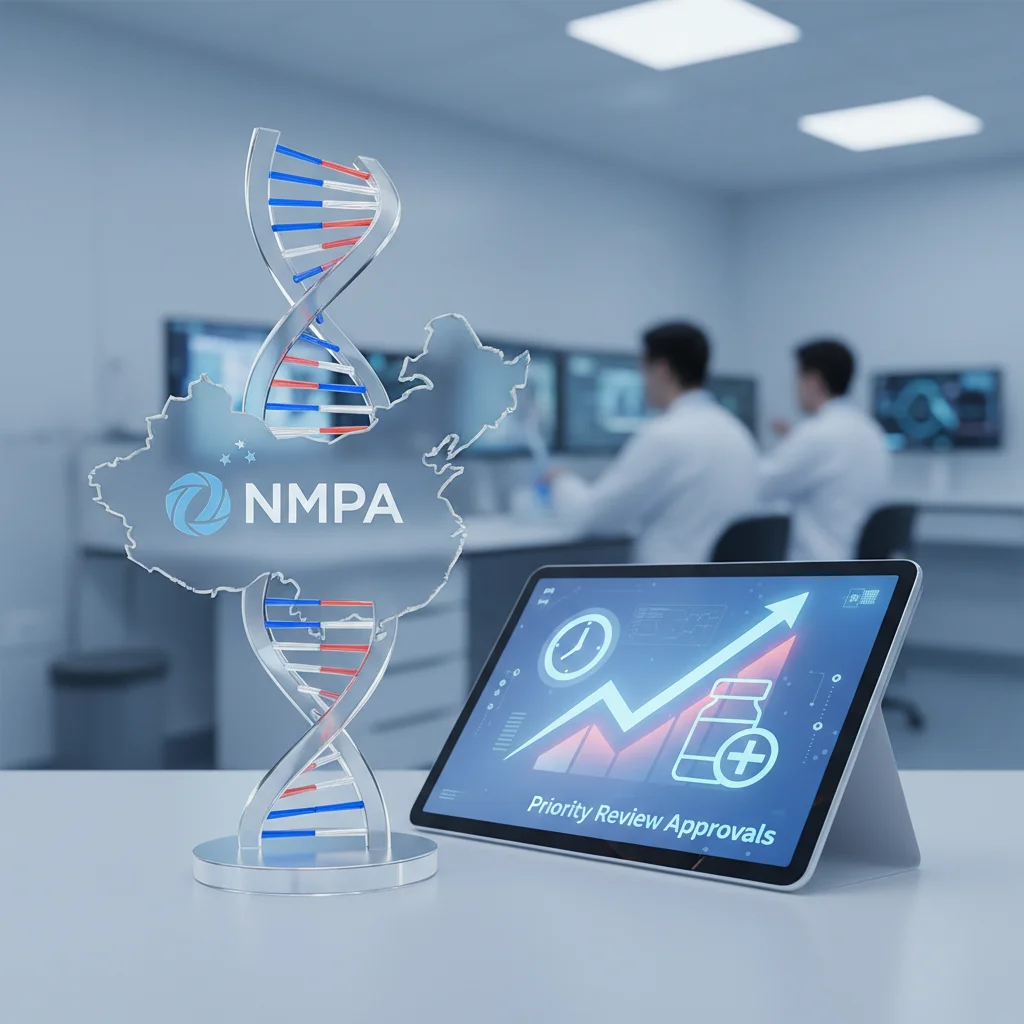
The NMPA Priority Review Pathway significantly impacts the approval process for innovative drugs in China, expediting access to critical therapies such as XYZ for cancer patients.

Medically Reviewed
by Dr. James Morrison, Chief Medical Officer (MD, FACP, FACC)
Reviewed on: April 22, 2026
Key Takeaways
- Regulatory acceleration: China's National Medical Products Administration (NMPA) Priority Review Pathway has reduced new drug application (NDA) and biologics license application (BLA) review times by 88.5 days for priority-reviewed cancer indications, from 352 days to 263.5 days.
- Record approval volume: In 2025, the NMPA approved 57 innovative drugs, with oncology drugs representing 48% of these approvals—demonstrating the pathway's outsized impact on oncology development.
- Market implications: The accelerated review environment has created a favorable competitive landscape for innovative drug developers targeting China, while raising questions about biosimilar manufacturing scale and cost-access dynamics across APAC.
- Strategic evolution: Introduced in 2015 and expanded in 2020, the Priority Review Pathway signals China's sustained commitment to expediting patient access to breakthrough therapies.
China's National Medical Products Administration (NMPA) has fundamentally reshaped the speed of innovative drug approvals through its Priority Review Pathway, a regulatory mechanism that has cut review timelines for priority-designated cancer drugs by nearly three months. In 2025, this pathway contributed to a record 57 innovative drug approvals, with oncology therapies accounting for nearly half of all approvals. Why it matters: The NMPA's accelerated pathway is reshaping global pharmaceutical strategy, compelling companies to prioritize the Chinese market earlier in development and forcing competitors to accelerate timelines in response to faster approvals in the world's second-largest pharmaceutical market.
NMPA Priority Review Pathway: Regulatory Architecture and Evolution
The National Medical Products Administration (NMPA) of China established the Priority Review Pathway in 2015 as a mechanism to expedite the evaluation of innovative drugs addressing unmet medical needs. The pathway was expanded in 2020 to broaden eligibility criteria and further streamline the review process. As China's primary regulatory authority for pharmaceutical and medical device approvals, the NMPA operates under the Center for Drug Evaluation (CDE), which conducts the technical assessment of applications.
The Priority Review Pathway represents a strategic policy shift toward aligning China's drug approval timeline with international standards, particularly those of the U.S. Food and Drug Administration (FDA). Unlike standard review pathways that follow sequential evaluation protocols, the priority track enables concurrent review of manufacturing and clinical data, parallel communication with applicants, and prioritized resource allocation within the CDE. This structural change reflects China's broader objective to position itself as a destination for early-stage pharmaceutical innovation and to reduce the lag time between global drug launches and Chinese market entry.
Quantitative Impact on Approval Timelines and Volume
The NMPA's Priority Review Pathway has delivered measurable reductions in regulatory review duration. For priority-reviewed cancer drug indications, the pathway reduced NDA/BLA review times by 88.5 days, compressing the median review period from 352 days to 263.5 days. This 25% reduction in review time represents a substantial acceleration, bringing China's oncology review timeline closer to FDA precedent, which typically ranges from 6 to 12 months for standard review.
The volume impact has been equally pronounced. In 2025, the NMPA approved a record 57 innovative drugs across all therapeutic areas. Oncology drugs comprised 48% of these approvals—approximately 27 oncology therapies—underscoring the pathway's concentrated impact on cancer drug development. This surge in approvals reflects both the pathway's operational effectiveness and a strategic market signal: China's regulatory environment now actively incentivizes oncology innovation. Compared with historical approval patterns, this 2025 figure represents a significant acceleration in the pace of novel oncology drug entry into the Chinese market.
Regulatory Context and Approval Mechanisms
The Priority Review Pathway operates as a voluntary designation available to drug developers who meet specific eligibility criteria established by the NMPA. Drugs addressing serious diseases with no adequate therapeutic alternatives, or those demonstrating substantial clinical advantages over existing therapies, qualify for priority review consideration. The CDE evaluates applications under this track using the same safety and efficacy standards as standard review pathways; the acceleration derives from procedural optimization rather than relaxed evidentiary requirements.
Applications submitted under the Priority Review Pathway benefit from several operational advantages: priority scheduling within the CDE's review queue, earlier and more frequent communication opportunities with reviewers, and concurrent evaluation of manufacturing quality data alongside clinical evidence. The pathway does not confer accelerated approval status or conditional approval mechanisms; final approval decisions maintain full alignment with China's pharmaceutical regulations and international standards for drug safety and efficacy.
The expansion of the pathway in 2020 broadened its scope beyond rare diseases and oncology to include other therapeutic areas addressing significant unmet medical needs. This evolution reflects the NMPA's confidence in the pathway's operational model and its recognition that expedited review can extend beyond traditional breakthrough therapy designations to encompass a wider spectrum of innovative therapies.
Market Impact and Competitive Implications
The NMPA's accelerated approval environment has created a favorable competitive landscape for pharmaceutical companies developing innovative therapies. The 88.5-day reduction in review time translates to earlier market entry, extended market exclusivity periods, and competitive advantages for first-movers in priority-designated categories. For oncology developers, the pathway's 48% representation in 2025 approvals signals that cancer drug innovation is a regulatory priority, likely to sustain robust approval activity in coming years.
The pathway has also influenced global pharmaceutical strategy. Companies now increasingly design development programs with China as a co-primary market rather than a secondary geography, leading to earlier patient enrollment in Chinese sites, concurrent regulatory submissions, and synchronized launch planning. This shift has accelerated the integration of China into global oncology development ecosystems, reducing the traditional lag between FDA approvals and Chinese market entry.
For biosimilar developers and generic manufacturers, the accelerated approval environment presents both opportunities and challenges. While the Priority Review Pathway is explicitly designed for innovative drugs, the regulatory efficiency gains achieved by the CDE may create spillover benefits for biosimilar and generic applications through improved procedural infrastructure and resource allocation. However, the concentration of approvals in innovative oncology drugs may constrain resources available for biosimilar manufacturing scale-up and cost-sensitive access programs—critical considerations for APAC markets where price sensitivity and manufacturing capacity directly influence market penetration.
Regulatory and Clinical Considerations
Balancing expedited review with rigorous safety and efficacy standards remains a central challenge for the NMPA. While the Priority Review Pathway reduces timeline, it does not lower evidentiary thresholds. The CDE continues to require comprehensive clinical trial data, manufacturing quality documentation, and post-approval safety monitoring commitments. This approach contrasts with some accelerated pathways in other jurisdictions that permit conditional or provisional approvals based on early efficacy signals; the NMPA maintains full approval standards even under priority review.
The Center for Drug Evaluation's capacity to execute concurrent review while maintaining rigorous evaluation standards depends on sustained investment in reviewer expertise, analytical infrastructure, and regulatory science capabilities. The 2025 record of 57 approvals reflects both pathway efficiency and adequate CDE resourcing; sustaining this pace will require continued institutional investment.
Cost dynamics and patient access remain evolving considerations. While faster approvals increase therapy availability, pricing negotiations between the NMPA, health authorities, and manufacturers will determine real-world access. The Chinese market's price-sensitive structure and the growing role of health technology assessment (HTA) in reimbursement decisions mean that regulatory approval alone does not guarantee rapid patient access—a distinction critical for developers planning market entry strategies.
Future Outlook and Regulatory Evolution
The NMPA's Priority Review Pathway is expected to sustain or accelerate its current pace of innovative drug approvals, particularly in oncology. What to watch next: Potential expansions of the pathway to emerging therapeutic areas such as advanced cell and gene therapies, rare genetic diseases, and regenerative medicine could further broaden the scope of expedited review and create new opportunities for innovative developers.
Global pharmaceutical companies targeting the Chinese market should anticipate continued evolution of the pathway's operational framework. The NMPA may implement additional refinements to reduce review timelines further, integrate real-world evidence into approval decisions, or establish expedited pathways for combination therapies and label expansions. Integration with broader APAC regulatory harmonization efforts—including alignment with the Pharmaceutical Inspection Cooperation Scheme (PIC/S) and discussions of mutual recognition agreements—could enhance the pathway's international credibility and facilitate simultaneous submissions across multiple APAC jurisdictions.
The 2025 approval milestone of 57 innovative drugs, with oncology representing 48% of the total, establishes a new baseline for regulatory performance. Sustaining this pace while maintaining rigorous safety and efficacy standards will be critical for the NMPA's credibility and for the Chinese pharmaceutical market's continued attractiveness to global innovators.
Frequently Asked Questions
What is the NMPA Priority Review Pathway, and how does it differ from standard drug review?
The NMPA Priority Review Pathway is an expedited regulatory track introduced in 2015 and expanded in 2020 that accelerates the evaluation of innovative drugs addressing unmet medical needs. Unlike standard review, the priority pathway enables concurrent evaluation of clinical and manufacturing data, prioritized resource allocation, and earlier communication with reviewers. The pathway reduces review times by 88.5 days for priority-reviewed cancer drugs (from 352 days to 263.5 days) but maintains the same safety and efficacy standards as standard review.
Which therapeutic areas benefit most from the Priority Review Pathway?
Oncology drugs have been the primary beneficiary of the pathway, comprising 48% of the 57 innovative drugs approved by the NMPA in 2025. Cancer therapies addressing serious unmet medical needs or demonstrating substantial clinical advantages over existing treatments are prioritized for designation. While the pathway's scope has expanded beyond oncology since 2020, cancer drug development remains the dominant category for priority approvals.
How has the Priority Review Pathway influenced global pharmaceutical development strategies?
The accelerated approval environment has prompted pharmaceutical companies to prioritize China as a co-primary development market rather than a secondary geography. This has led to earlier patient enrollment in Chinese clinical trial sites, concurrent regulatory submissions with other major markets, and synchronized global launch planning. Companies now factor the NMPA's 263.5-day review timeline into their commercial timelines, reducing the traditional lag between FDA and Chinese market entry.
What are the eligibility criteria for the NMPA Priority Review Pathway?
Drugs addressing serious diseases with no adequate therapeutic alternatives, or those demonstrating substantial clinical advantages over existing therapies, qualify for priority review designation. Oncology drugs have been the primary focus, but the 2020 expansion broadened eligibility to include other therapeutic areas with significant unmet medical needs. Applications are submitted voluntarily, and the NMPA's Center for Drug Evaluation (CDE) evaluates eligibility during the pre-submission consultation process.
Does the Priority Review Pathway affect pricing and reimbursement in China?
Regulatory approval through the Priority Review Pathway does not directly determine pricing or reimbursement decisions. While faster approvals increase therapy availability, pricing negotiations with Chinese health authorities and inclusion in reimbursement programs depend on health technology assessment (HTA) outcomes and budget considerations. The Chinese market's price-sensitive structure means that regulatory acceleration alone does not guarantee rapid patient access or favorable reimbursement terms.
References
- National Medical Products Administration (NMPA) of China. Priority Review Pathway for Innovative Drugs: 2025 Approval Summary and Timeline Analysis. Regulatory data on NDA/BLA review times and innovative drug approvals.

Asia-Pacific Editor
Dr. Yuki Tanaka is an oncologist specializing in Asian pharmaceutical markets and regulatory harmonization. Former PMDA reviewer with expertise in bridging studies and ethnic factors....