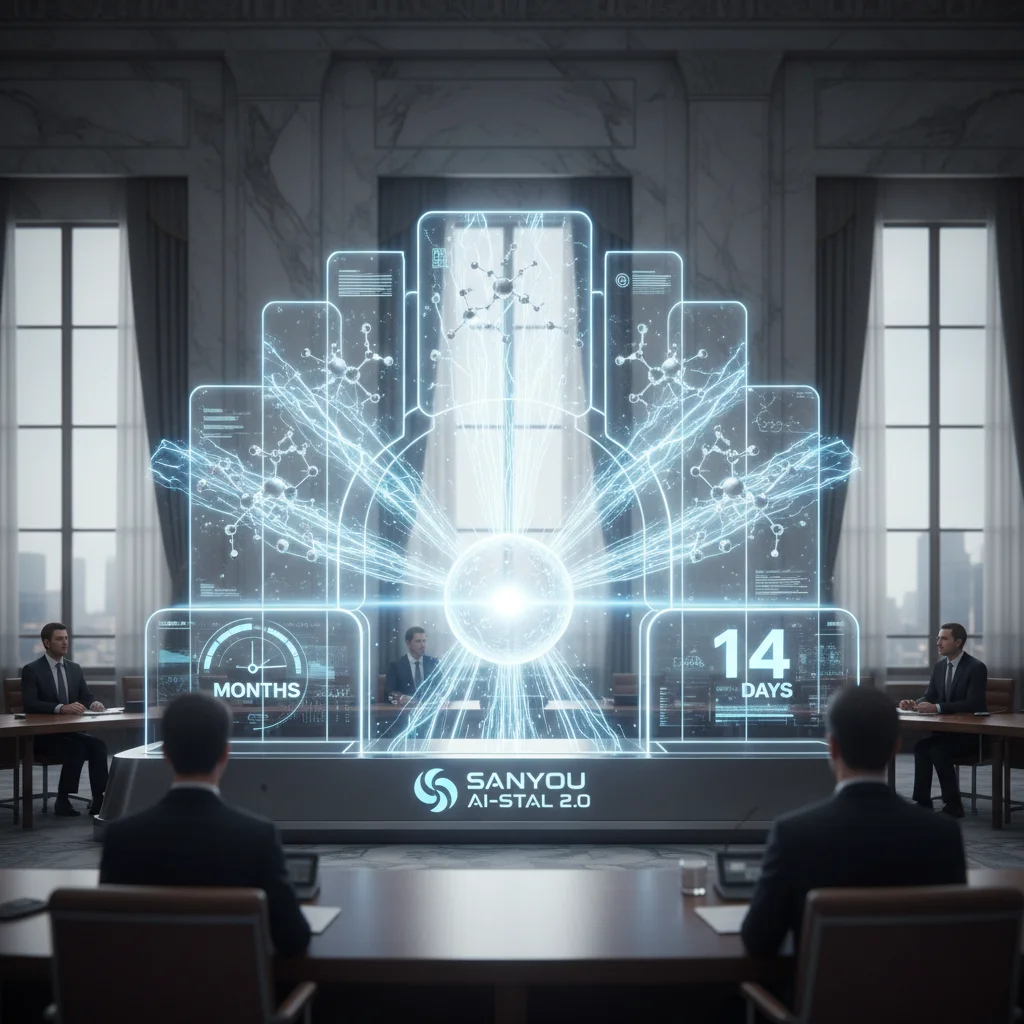
Sanyou AI-STAL 2.0 Reduces Antibody Discovery Time from Months to 14 Days in Drug Development Breakthrough
Sanyou's AI-STAL 2.0 platform revolutionizes drug discovery by reducing antibody development timelines from months to just 14 days, transforming pharmaceutical R&D.

Key Takeaways
- Sanyou’s AI-STAL 2.0 platform reduces candidate antibody discovery time from months to just 14 days
- Technology addresses critical efficiency bottleneck in early-stage drug development that has plagued pharmaceutical industry
- Platform could dramatically lower drug development costs and accelerate time-to-market for new therapeutics across multiple disease areas
Revolutionary AI Platform Transforms Drug Discovery Timeline
Sanyou announced on April 15, 2026, that its AI-STAL 2.0 artificial intelligence platform can identify candidate antibodies in just 14 days, representing a paradigm shift from traditional methods that typically require several months. This breakthrough addresses one of the pharmaceutical industry’s most persistent challenges: the lengthy timeline between target identification and viable drug candidates.
Addressing Industry’s Critical Bottleneck
Traditional molecular discovery processes have long struggled with balancing speed and quality. Conventional screening methods for antibodies, peptides, and novel binding proteins often extend project timelines significantly, making it difficult for pharmaceutical companies to respond rapidly to emerging therapeutic needs or market opportunities.
The AI-STAL 2.0 platform leverages advanced artificial intelligence algorithms to accelerate the identification and optimization of therapeutic molecules while maintaining quality standards. This technology could prove particularly valuable in scenarios requiring rapid response, such as pandemic preparedness or addressing urgent unmet medical needs.
Market Impact and Industry Implications
The pharmaceutical industry spends billions annually on drug discovery, with early-stage molecular identification representing a significant portion of both time and cost investments. By compressing months-long processes into a two-week timeline, Sanyou’s platform could deliver substantial cost savings and competitive advantages to adopting organizations.
This acceleration could be particularly transformative for smaller biotechnology companies that lack the extensive resources of major pharmaceutical corporations. The democratization of rapid antibody discovery could level the playing field and potentially increase the overall number of therapeutic candidates entering development pipelines.
Technology Scalability and Applications
The AI-STAL 2.0 platform’s applications extend beyond antibody discovery to include peptides and novel binding proteins, suggesting broad utility across multiple therapeutic areas. This versatility positions the technology as a comprehensive solution for early-stage drug discovery rather than a narrow, single-application tool.
The platform’s ability to maintain quality while dramatically reducing timelines could reshape how pharmaceutical companies approach portfolio management and resource allocation in drug discovery programs.
Regulatory and Clinical Considerations
While the speed improvement is remarkable, the pharmaceutical industry will closely monitor the clinical success rates of AI-discovered molecules compared to those identified through traditional methods. Regulatory agencies will also need to evaluate and potentially adapt their frameworks to accommodate AI-driven discovery processes.
The ultimate validation of this technology will come through successful clinical trials and regulatory approvals of therapeutics discovered using the AI-STAL 2.0 platform. Early adopters will likely serve as important case studies for the broader industry’s assessment of AI-powered drug discovery.
Future Outlook
As pharmaceutical companies face increasing pressure to reduce development costs and accelerate time-to-market, platforms like AI-STAL 2.0 represent a potential solution to longstanding industry challenges. The success of this technology could catalyze broader adoption of AI-driven approaches throughout the drug development process.
The announcement positions Sanyou as a significant player in the growing intersection of artificial intelligence and pharmaceutical research, potentially attracting partnerships with major drug developers seeking to enhance their discovery capabilities.
Frequently Asked Questions
How does AI-STAL 2.0 compare to traditional antibody discovery methods?
AI-STAL 2.0 reduces antibody discovery timelines from several months to just 14 days while maintaining quality standards, representing a 10-20x improvement in speed over conventional screening methods.
When will drugs discovered using this platform be available to patients?
While the discovery phase is accelerated to 14 days, drugs still must complete clinical trials and regulatory approval, which typically takes 8-15 years total. The platform shortens only the initial discovery phase.
What types of diseases could benefit from this faster discovery process?
The platform can discover antibodies, peptides, and binding proteins for multiple therapeutic areas including oncology, autoimmune diseases, infectious diseases, and rare disorders, with particular value for urgent medical needs.
About the Author
Related Articles
XtalPi-Enabled PEP08 PRMT5 Inhibitor Begins Phase I Cancer Trial Enrollment

Insilico Medicine's Rentosertib Inhalation Solution Receives IND Clearance for First AI-Driven Direct-to-Lung Clinical Trial
Claruvis Pharmaceutical's Retoxin Becomes World's First Approved Recombinant Botulinum Toxin Type A in China