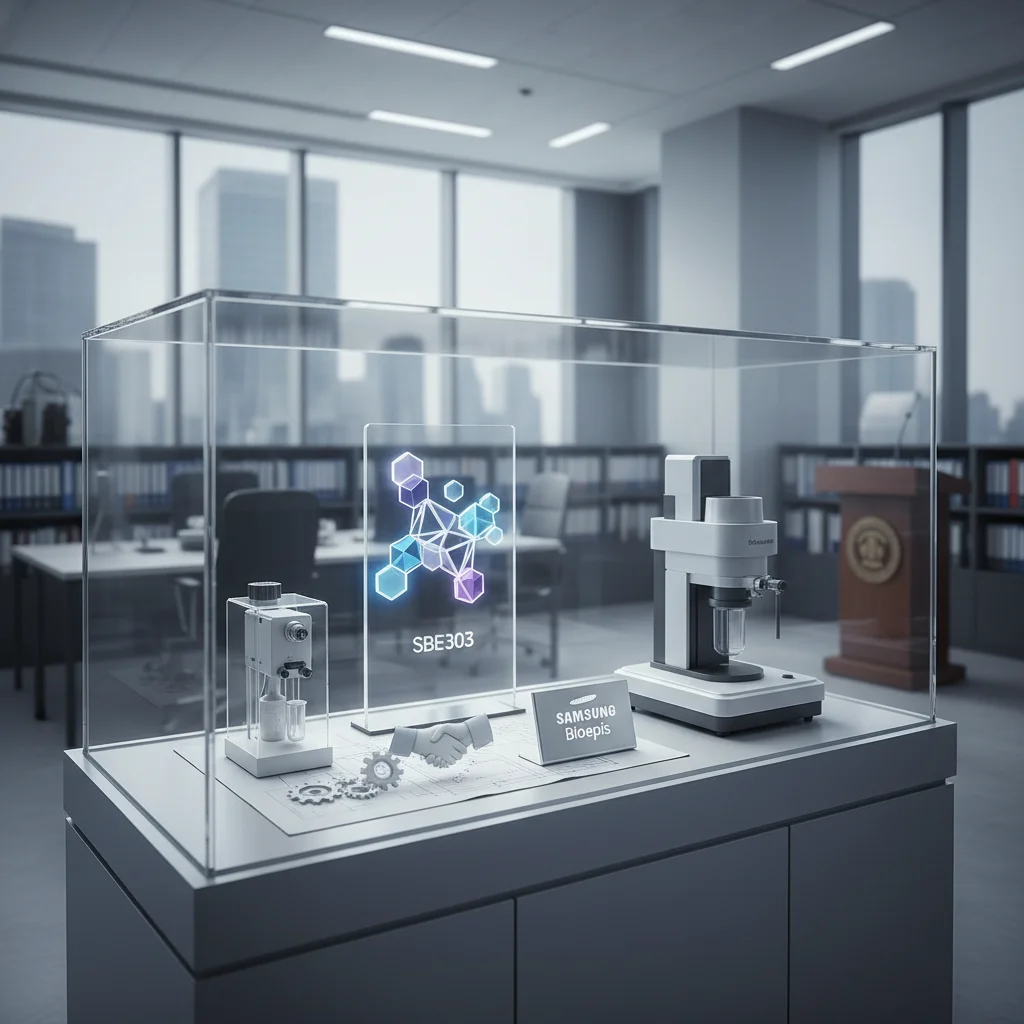
Samsung Bioepis Begins Phase 1 Trial for Novel ADC SBE303, Expands Sandoz Biosimilar Partnership
Samsung Bioepis launches first-in-human trial for ADC candidate SBE303 and expands Sandoz partnership for five biosimilars including vedolizumab.
Intelligence Snapshot
Executive Summary
Samsung Bioepis initiated Phase 1 clinical trial for its first novel antibody-drug conjugate (ADC) candidate SBE303 in March 2026
Key Insights
-
Company expanded development partnership with Sandoz covering up to five biosimilar…
Company expanded development partnership with Sandoz covering up to five biosimilar candidates including SB36 (vedolizumab biosimilar)
-
The moves represent Samsung Bioepis’s strategic expansion beyond biosimilars into…
The moves represent Samsung Bioepis’s strategic expansion beyond biosimilars into novel drug development and strengthened commercial partnerships
Market Impact
| Regulatory | medium |
|---|---|
| Commercial | medium |
| Competitive | low |
| Investment | low |
Executive Scorecard
Heuristic scores · directional, not investment adviceContents4 sections
Key Takeaways
- Samsung Bioepis initiated Phase 1 clinical trial for its first novel antibody-drug conjugate (ADC) candidate SBE303 in March 2026
- Company expanded development partnership with Sandoz covering up to five biosimilar candidates including SB36 (vedolizumab biosimilar)
- The moves represent Samsung Bioepis’s strategic expansion beyond biosimilars into novel drug development and strengthened commercial partnerships
Samsung Bioepis Advances Novel Drug Pipeline with SBE303 Trial Launch
Samsung Bioepis announced significant pipeline developments in March 2026, including the initiation of a Phase 1 first-in-human clinical trial for SBE303, the company’s inaugural antibody-drug conjugate (ADC) candidate. Simultaneously, the South Korean biopharmaceutical company expanded its strategic partnership with Sandoz to develop and commercialize up to five biosimilar candidates across multiple markets.
Strategic Partnership Expansion
The enhanced collaboration with Sandoz includes SB36, a biosimilar candidate referencing Takeda’s Entyvio (vedolizumab), an established treatment for inflammatory bowel diseases including Crohn’s disease and ulcerative colitis. This partnership expansion demonstrates Samsung Bioepis’s commitment to broadening market access for biosimilar therapies while leveraging Sandoz’s global commercial expertise.
Vedolizumab generated approximately $4.2 billion in global sales for Takeda in 2025, making it an attractive target for biosimilar development. The gut-selective integrin antagonist has shown sustained efficacy in maintaining remission for patients with moderate to severe inflammatory bowel disease.
Novel ADC Development Milestone
The Phase 1 trial initiation for SBE303 marks Samsung Bioepis’s entry into the rapidly growing ADC market, which is projected to reach $35 billion by 2030. ADCs combine the targeting specificity of monoclonal antibodies with potent cytotoxic payloads, offering potential advantages in cancer treatment by delivering drugs directly to tumor cells while minimizing systemic toxicity.
Following the trial announcement, Samsung Bioepis presented nonclinical data for SBE303 at the American Association for Cancer Research (AACR) annual meeting, providing initial insights into the candidate’s mechanism of action and preclinical efficacy profile.
Market Implications
These developments position Samsung Bioepis to compete in both the established biosimilar market and the innovative oncology space. The company’s dual approach of expanding proven biosimilar partnerships while investing in novel drug development reflects industry trends toward diversified portfolios that balance near-term revenue opportunities with long-term growth potential.
Frequently Asked Questions
What is SBE303 and how does it work?
SBE303 is Samsung Bioepis’s first antibody-drug conjugate (ADC) candidate that combines a targeted antibody with a cytotoxic drug payload to deliver treatment directly to cancer cells while minimizing damage to healthy tissue.
When will the vedolizumab biosimilar SB36 be available?
SB36 is still in development under the expanded Sandoz partnership. Biosimilar timelines typically require 3-5 years from development to market approval, depending on regulatory requirements and clinical trial outcomes.
How significant is Samsung Bioepis’s entry into the ADC market?
This represents a major strategic shift for Samsung Bioepis from biosimilar development to novel drug innovation in the rapidly growing ADC market, which is expected to reach $35 billion by 2030.
Related coverage
Ask AI About This Topic
Grounded in NovaPharmaNews intelligence. Pick a prompt to start.
Stay Updated on Pharma News
Get the latest drug approvals, clinical trials, and regulatory updates delivered to your inbox.
- Evidence strength
- 71/100
- Last verified
- Jun 17, 2026
- AI-assisted review
- Yes
- Editorial review
- Dr. Sarah Chen
Moderate source quality · grounded in cited primary and secondary sources.
This article follows our editorial standards. Report a correction via editorial contact.